

What Is A White Porch Light For?

There are so many different colored porch lights that it can be hard to keep track of what they all mean. For example, some people install purple porch lights to show their support for survivors of domestic violence, especially in October. Gold porch lights have a touching purpose, as they shine a year-round light on the difficulties of childhood cancer. But is there also a special message if your neighbor has a plain white porch light? The short answer is: No, there really isn't a hidden meaning. While it's always possible that an organization might choose white for their awareness campaign in the future, right now it's simply the default porch light option for most folks.
White lights tend to be clear and bright, giving anyone visiting the front porch after dark plenty of visibility. While colorful lights often represent great causes (or can simply look fun — like orange for spooky season), sometimes they make it a little bit harder to see. White porch lights offer safety to the homeowner, as they will be able to clearly see who is on their porch (whether through a peephole or home security system). It also keeps the visitor safe, as they can see where they are going and navigate any steps or decorations on the porch without tripping over anything.
Making the most of white porch lights
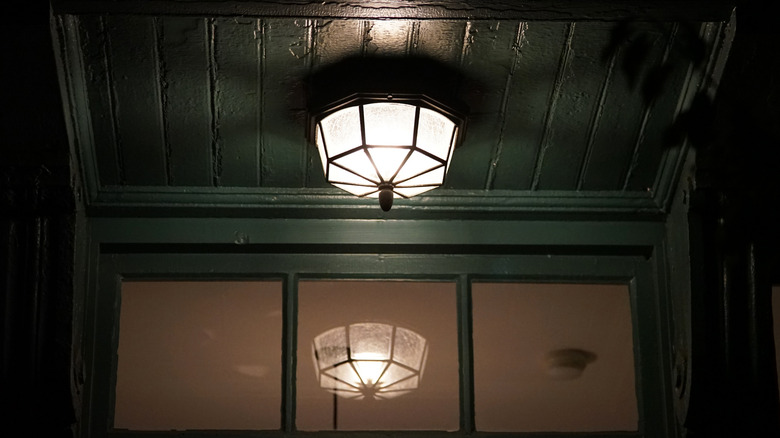
Accessibility tops the list of likely reasons white porch lights are so widespread. White bulbs are the default option at plenty of stores, even if they do come in a range of tones. Because as anyone who has ever chosen paint colors for their house knows, white isn't just white. There is always a range, which is typically 2000K and 6500K, which takes you from soft white all the way up to daylight. Yet this range of color can also cause issues if you don't pick the right one. Bright lights being on all night can cause disruptions for nocturnal animals. You can reduce your impact by installing warm-toned white lights. In addition, if you have adjustable portions of your porch light, always point them towards the ground to not interfere with animal flight paths.
Another option is to install a motion-triggered porch light. This way, the light will only be on when someone needs to use it, thus reducing the overall visual pollution for wildlife. However, you might be apprehensive about this because of safety concerns. After all, you might also choose a bright white porch light to keep potential intruders away. Yet a continuously blaring porch light can also signal that no one is home, as can lights on a set schedule. Instead, bright motion-triggered lights give you the element of surprise. While this won't always prevent crime, it can help act as a better deterrent.