

3 Things Your Lawn Needs In September To Remain Healthy
Your lawn has made it through the heat of summer. Just like you, it's ready to welcome the shorter days and cooler nights that fall brings with it. Or at least, it will be, if you give your lawn some care and attention this September. Three things will help your lawn bounce back from the challenges of summer and prepare itself for the chilly winter to come. This month, reseed any bare spots, fertilize cool-season grass, and take on the weeds.
Before you get started tackling September lawn care, be sure you know which type of grass you have. While fall is the ideal time to fertilize cool-season grasses, which will most likely need a bit of boost to recuperate from the heat of summer, it's not the right time to fertilize warm season grass, which is about to go dormant for the winter, once that first frost hits. With warm-season grass, focus on battling weeds and do what you can to prevent winter weeds from popping up.
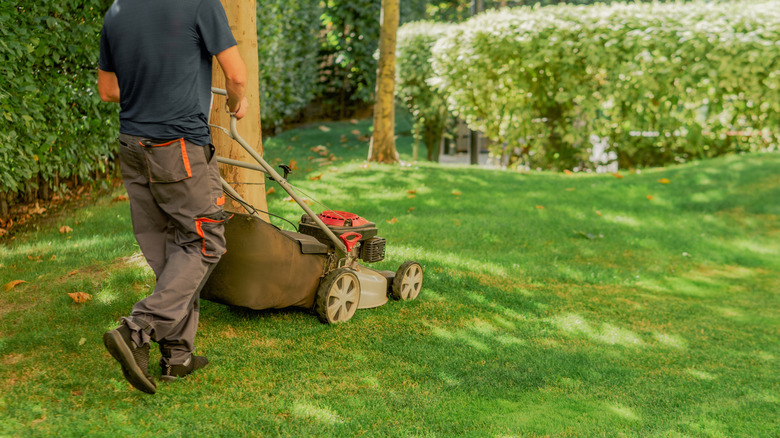
Whether you have a cool-season or warm-season lawn, now's the time to reseed or overseed your lawn. Since warm-season grass isn't likely to germinate and grow in the cool temperatures of fall, pick a cool-season grass, like tall fescue, to fill in any bald patches that have formed over the summer. Along with reseeding, feeding, and weeding, keep on mowing in September. Wait until the grass has finished growing for the season before you store your mower for the winter.
Feed, weed, and reseed this September

Fertilizer gives your lawn the nutrition it needs to recover from the stress of summer and build strong roots before winter arrives, so apply a slow-release fertilizer at the beginning of September. For cool-season grass, pick a balanced fertilizer or one with a bit more nitrogen. While you generally don't want to fertilize warm-season lawn in September, you may do so, using a slow-release, balanced fertilizer, as long as you apply it at least six to eight weeks before the expected first frost in your area.
After feeding, it's time to focus on weeding, to keep winter weeds out of your yard. For a cool-season lawn, this means tackling weeds like dandelion and clover, which may have thrived during the summer. You can try hand-pulling them or use a post-emergent herbicide if you prefer. In a warm-season lawn, consider using a pre-emergent herbicide to kill winter weeds right after they germinate.
Finally, it's time to reseed or overseed your lawn, especially if it has bald patches. Whether you have warm- or cool-season grass, overseed with cool-season grass, as it's now too late for warm-season grass seed to thrive. If you're going to overseed a warm-season lawn and you plan on using a pre-emergent herbicide, seed first, and give the grass time to grow and get established, usually after mowing a few times, then apply the herbicide.