

Skip The Chemicals: How To Remove Rust Using Your Drill Press
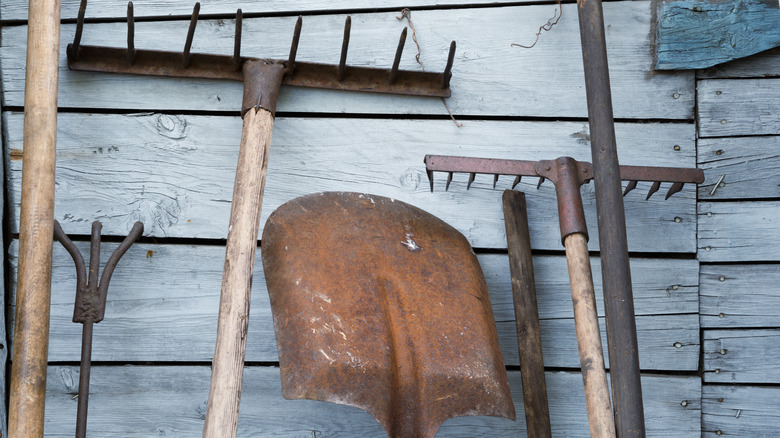
High humidity doesn't just cause frizzy hair on a hot summer day. It also speeds up rust on outdoor supplies, decorations, fencing, and more, leading to unsightly blemishes. But before you call in the heavy-duty chemicals, tools can be a better way to remove rust – and a drill press might be your best bet. YouTuber D, from Parts and Restoration, shows just how easy it is to attach the wire wheel from a bench grinder to a drill press for rust removal.
There are several types of wires for removing rust from metal using a wire wheel, including knotted, crimped, and stringer bead wires. Knot wires are best for heavy-duty cleaning, crimped wires work well for general rust removal, and stringer beads are good at cleaning places that are difficult to reach. Wire wheels vary in size, too, ranging from 4 to 12 inches. D uses a 6-inch wheel to tackle rust on a decent-sized shovel, which is a good size for average projects. Consider using a smaller wheel size for smaller surfaces and a larger wheel size for big surfaces.
You may be able to get by with vinegar for light rust issues if you don't have a drill press on hand. Likewise, more extensive rusting may require a chemical rust remover to successfully remove the rust. For the purposes of this guide, we'll show you how to use a drill press for some of the most extreme rust removal projects to have your metal as good as new.
Steps for removing rust from metal
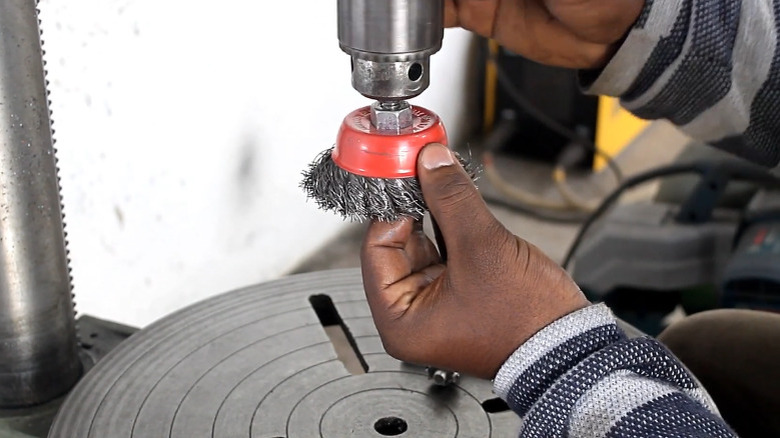
To prepare for removing rust from metal, you can apply WD-40 to the surface beforehand to keep the rust from turning into loose dust as you clean. Always follow safety protocols for removing rust. These particles can be harmful to ingest or inhale when airborne, So be sure to operate in a well-ventilated area. Also make sure to put on goggles, a face mask or respirator, ear protection, thick gloves, and long sleeves.
Once you're properly suited up, mount the wire wheel on your drill press and start operating the tool. Go over the surface lightly, at an even pace, to see how the friction from the wire wheel affects the metal and ensure it doesn't gouge the surface. Increase the pressure as needed. After removing the rust, wipe the metal clean with a rag.
The best way to clean future rust is by preventing it from happening in the first place. Rust prevention starts with good maintenance, so remember to clean your metal belongings and dry them thoroughly before putting them away. Proper storage can also make or break your equipment, as rust thrives on wet or moist metal. For metal that can't be kept in such conditions, like a metal fence, barn, siding, or other outdoor equipment, applying a coating or paint is another option.