

Fertilize Your Garden Before Fall With A Leftover Fruit Scrap That Isn't Banana
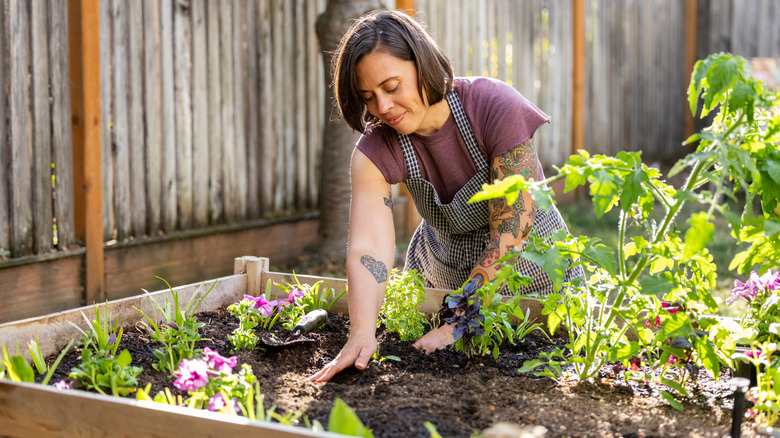
As the weather transitions from the warmth of summer to the cooler days of fall, you ought to be giving your garden beds a once-over with fertilizer. Doing this will provide an extra boost to the fall vegetables and herbs that are still growing, while mimicking the natural decay and dormancy of the upcoming season. Using leftover food scraps to make a DIY fertilizer for your garden is one of the best ways to help it thrive. But don't think you're limited to using just banana peels; apple cores are also an excellent addition to your compost pile.
Whether you grow apples yourself or buy them from the store, the beloved fruit is in season from late summer to early fall, so you may find yourself with a lot of leftover cores. Typically, people don't eat apple cores, so they're most often relegated to the food waste bin, just like banana peels or eggshells. Apple cores contain important nutrients that soil requires, such as potassium, phosphorus, calcium, vitamin C, and numerous antioxidants. The average American consumes upwards of 9 pounds of fresh apples annually, which produces a great amount of waste that could be used to fertilize your garden soil, provided you're using them properly.
How to use apple cores to fertilize your garden
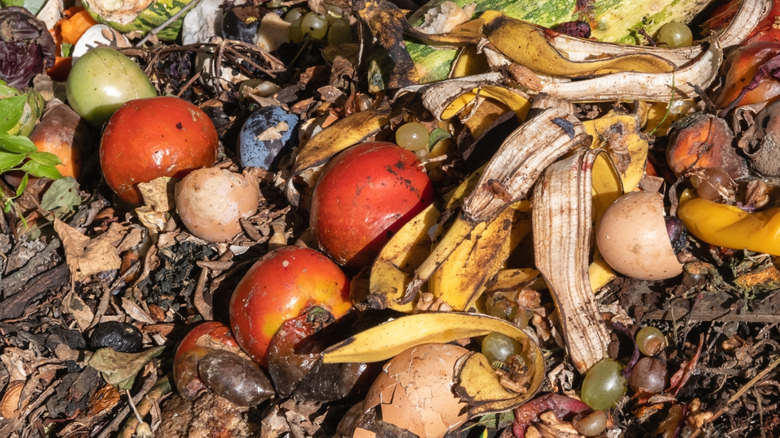
Probably the easiest way to use apple cores to fertilize your soil is to add them to your compost pile. Apple cores are considered a green material because of their water content, though they don't add much in the way of nitrogen. The main downside to the composting process is that it takes time to get the end product that can then be used as fertilizer.
One way you can get around this is to add the apple cores directly into your soil. Chop them up into smaller pieces so they will decompose faster and bury them 8 to 12 inches deep in the garden. This will deter any pests from digging them up. Many gardeners suggest burying apple cores in the early fall in garden beds that are resting for the winter, as the cores will feed the microorganisms in the soil and improve the overall structure going into spring.
If you're just beginning to get into vermicomposting, or already have a setup, worms absolutely love apple cores. The worms will consume the cores quickly and then turn them into castings containing important microbes. So, while they may not be as magically beneficial as other more loaded composting materials like coffee grounds, grass trimmings, or eggshells, apple cores still have a place in your garden fertilizing schedule.