

Your Lawn Mower Blades Do More Than Cut Grass: How To Use Them For Composting
We may receive a commission on purchases made from links.
Your lawn mower's blades can do a lot more than cut grass. You can use them for a wide variety of tasks, including collecting fallen leaves, cleaning up overgrown pathways, winterizing your lawn with mulched grass clippings, preparing garden beds, and picking up loose debris your rake might have missed. However, one of the most beneficial tasks you can put your lawn mower blades to is to use them to create compost.
Composting is a process by which organic material is broken down into nutrient rich soil amendment. While there are different methods you can use, including making compost in a 5-gallon bucket, the basic ingredients remain the same. You need green material, such as grass or food scraps, that's rich in nitrogen to get the decomposition process started, and brown material, like leaves or newspaper, that add carbon and bulk. This combination of heat and food allows the process of decomposition to happen.
Here's where your lawn mower comes into play. Your blades have the ability to chop up the greens and browns into smaller pieces, which will allow them to decompose faster. You can chop up leaves, twigs, grass, and even the tomato, squash, or flower stalks from the garden (provided you're already finished with them). Not only does this allow the compost to decompose faster, but you end up getting a richer, more balanced compost, too.
Use the right mulching blades to make compost with your lawn mower
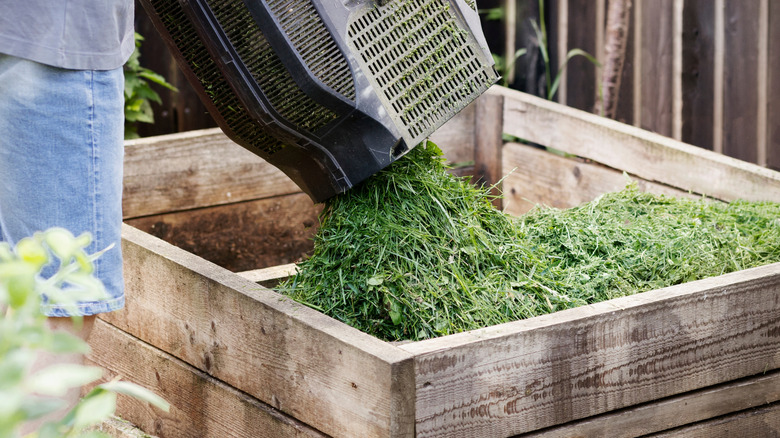
When it comes to preparing your lawn debris for composting, there are a few ways you can go about it. By far the easiest is to swap out your standard mowing blade for a mulching blade. The difference between these two types of lawn mower blades is in the construction. A mulching blade is specifically designed to chop matter up into much smaller pieces, which makes them much easier and faster to decompose.
If you don't have mulching blades, you can still get your lawn clippings to a compostable state. In this case, mow the areas you want to compost at your mower's highest setting, then go one setting lower with each pass. On your final pass, use the bag attachment on your mower to collect the lawn debris and transport it to the compost pile. You could also do this as a two-mower operation, with one of you doing the mulching and another following behind with the bag.
The mulching blade, however, is simply the more efficient way to get the job done, as it reduces the need to make multiple passes. You can find mulching blades like Oregon Gator G3 Mulching Blades on Amazon, or at any local hardware store or garden center.