

Grassy Weeds Vs. Broadleaf Weeds: How To Identify What's In Your Yard
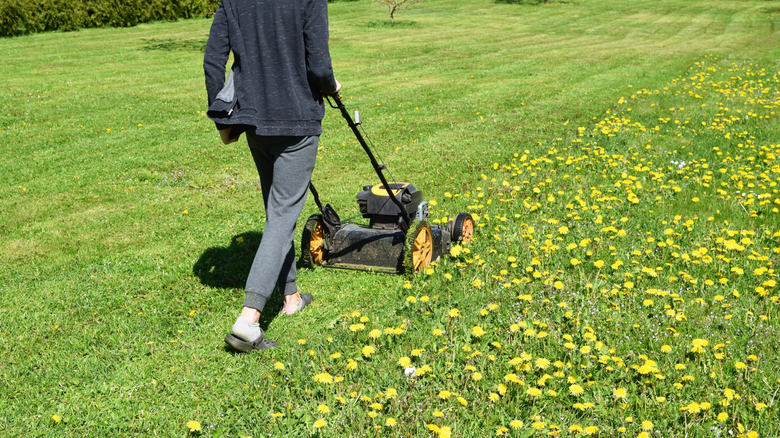
You've worked hard on your lawn in hopes of making it the envy of the neighborhood. With carefully sown seeds in thin areas, sprinklers set up, and it mowed, your yard now adds enormous curb appeal to your home. Keeping it looking pristine means you must stay on top of things. This includes properly identifying common lawn weeds such as grassy and broadleaf weeds that might invade your turf.
The best way to get rid of a few weeds is to pull them by hand or use a weeding tool. But what if you come back from vacation and a whole area of your yard has been taken over? To fix it, you must first determine what type of invaders you're dealing with. Grassy weeds, such as smooth crabgrass (Digitaria ischaemum) and quackgrass (Elymus), look like real grass. They spread quickly and make your yard look uneven. These weeds have thin, narrow blades with parallel veins and rarely produce flowers. The roots of these plants spread fast, so getting rid of them usually requires ongoing maintenance.
Broadleaf weeds, including clover (Trifolium repens) and dandelion (Taraxacum officinale), are very different. The leaves are wide with a large center vein and smaller side veins. They also have thicker stems, larger main roots, and brightly colored flowers. Both types of weeds will compete with your healthy grass by stealing sunlight, water, and minerals. If you let them grow, they will eventually die off on their own, leaving bare patches across your lawn.
The best way to get rid of grassy and broadleaf weeds in your lawn and garden
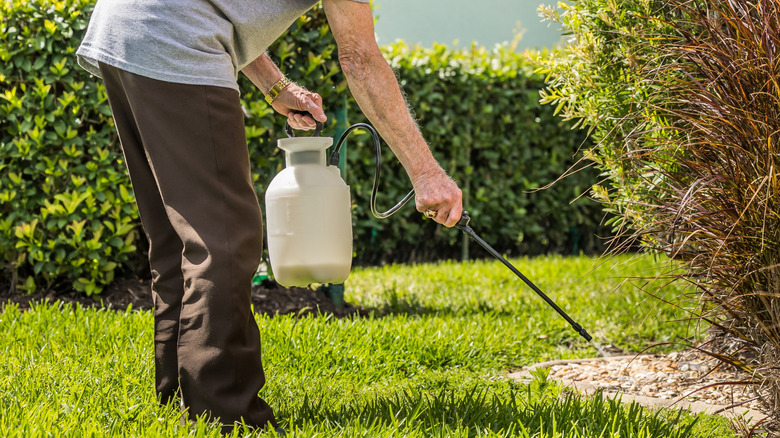
Once you successfully identify your lawn's invaders, you can turn your attention to eliminating. An easy way to remove weeds without harming your grass is by applying selective post-emergent herbicides. Because chemical formulas are highly specific, grassy weed herbicides only kill grassy weeds, while broadleaf herbicides target broadleaf weeds. To prevent future weed growth, you should also apply a pre-emergent herbicide. These form a protective barrier on the soil surface that prevents additional weeds from germinating. If you're dealing with both types of weeds, combination herbicides blend grassy and broadleaf weed killers into a single formula, making it easy to treat multiple issues at once.
Weeds can be very hard to get rid of once they've started growing. Depending on how severe the problem is, it can take a few weeks to an entire season. Some weeds, like smooth crabgrass, can have as many as 100,000 seeds per plant, so a single is rarely enough. The most effective strategy is to combine early spring pre-emergent herbicides with post-emergent spot treatments later in the year. To ensure success, carefully read the product label and always wear the recommended protective gear when spraying.
Timing is everything. Apply pre-emergents early in the spring, when soil temperatures are around 50 to 55 degrees, to catch seeds before they begin to sprout. Post-emergent treatments should be applied to actively growing plants. For best results, treat broadleaf weeds in the fall and grassy weeds throughout spring and fall. Spray early on a cool morning when there's little wind to help the weeds absorb the chemicals. Typically, you'll need to reapply post-emergent herbicides every 10 to 20 days, but be sure to follow the label instructions for best results.