

Grass Spider Webs Look Different: How To Identify The Difference From Wolf Spiders
Not all spider webs are alike. While most common spiders build webs for survival as a way to catch their food, not all of them do. Examining different types of webs around your home and yard is an excellent way to identify what kind of spider it is. For example, the webs created by grass and wolf spiders differ in design and purpose.
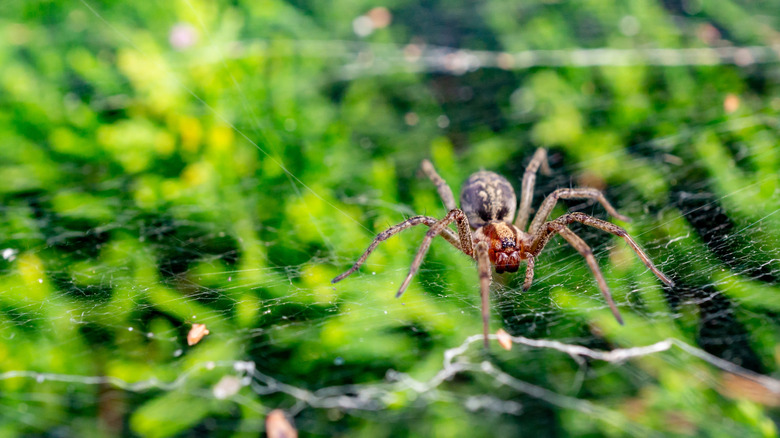
The most noticeable difference in grass and wolf spider webs is their basic construction. Some spiders produce a sticky like glue with their silk, which helps them create intricate patterns and hold prey to the web. Grass spider webs aren't sticky at all. Their webs are thick sheets that stretch flat over grass, pine straw, and other low-lying vegetation. A small funnel can be found along one side where the spider hides, awaiting its prey. When flies and other insects land on the web, it sends vibrations to the spider hiding inside. It then rushes out to finish capturing its meal.
In contrast, wolf spiders ambush their prey and don't build webs to catch food. Instead of suspended webs or sprawling sheets, wolf spider silk is used to create hidden homes in dark corners and in the dirt. The visual difference is that grass spider webs are usually easy to see because they are above the ground. Wolf spider webs are shallow and camouflaged in the dirt and used for shelter. The silk reinforces the walls of their dirt homes, preventing them from caving in.
Additional information about wolf and grass spider webs
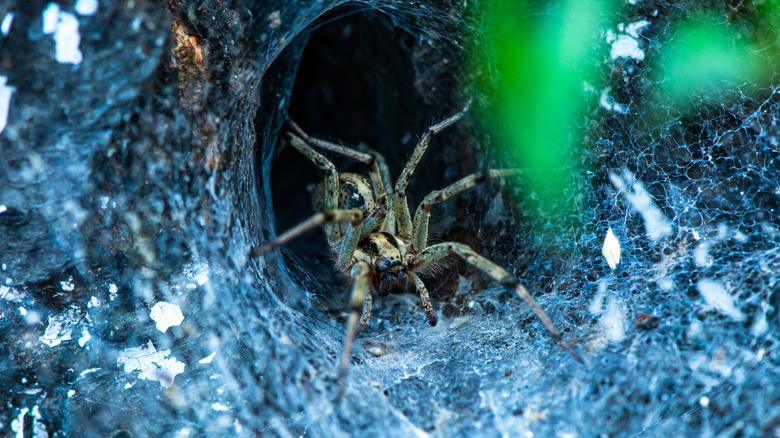
Many common backyard spiders build their webs at night and take them down during the day to recycle silk protein. Grass spiders leave their webs up permanently during spider season, from early spring until late fall. Instead of taking the webs down, they add new layers to repair damage, so the webs get thicker as cooler weather approaches and can also start to appear messy. They can be as small as a few inches in diameter to several feet in size.
Since the silk from wolf spiders is used for housing rather than trapping, you may have a difficult time spotting them. If you're truly interested, try looking under logs and rocks or in crevices in the soil for a small hole that's no bigger than the width of your finger with a slightly raised opening. Females also weave a specialized waterproof globe of silk to hold their eggs to their backs.
Geographically, you don't have to look far to study both wolf and grass spider webs. Both spiders can be found throughout the United States. The good news is that neither of these spiders likes to live indoors. If you see them hanging out in your home, it's likely at the beginning of the cooler months when they are seeking warmth.