

Purple Vs. Blue Painter's Tape: What's The Difference?
We may receive a commission on purchases made from links.
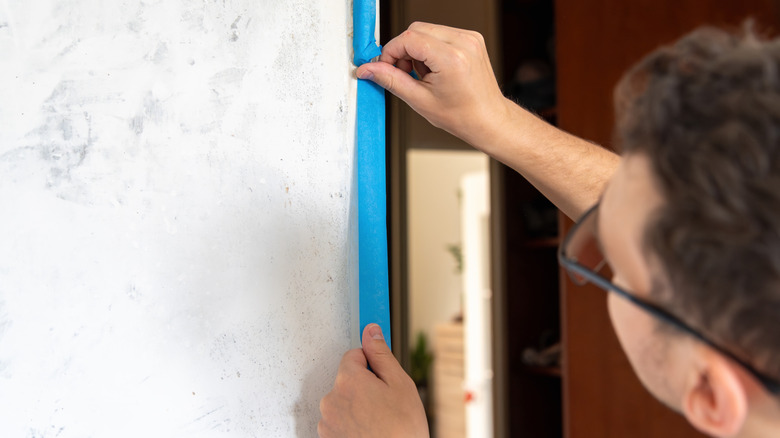
Painter's tape is less about selecting the right color and more about choosing the right adhesive for the surface. Each tape has a different strength, as denoted by its color. Focusing only on Scotch tape manufactured by 3M, we can see how these differences play out. Purple Scotch painter's tape, for example, uses a gentler adhesive. Blue Scotch painter's tape, on the other hand, uses a stronger, medium-strength adhesive. As a result, purple Scotch tape is better for decorative work on delicate finishes and recently painted walls and indoor projects. Blue Scotch tape is better for projects that require a firmer hold.
There are other subtle differences, too. Depending on the adhesive strength of the product, each will have different clean-removal windows. A clean-removal window is the maximum time a tape can remain on a surface and still come off without leaving residue or causing damage. It's up to 60 days for purple Scotch tape and 14 days for blue Scotch tape.
It's worth remembering that these characteristics aren't universal to all blue and purple tape. For example, Trimaco, a different tape brand, uses light blue and dark blue painter's tape for gentle and medium adhesion respectively. Meanwhile, FrogTape, another brand, offers blue tape with a medium-strength adhesive similar to Scotch. Shoppers and painters should check the packaging when buying.
When to use purple or blue painter's tape
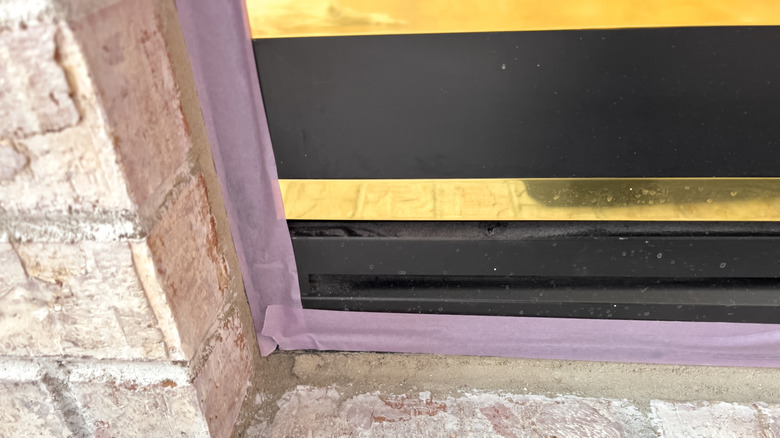
If the surface where you are placing the tape could be easily marked, then purple Scotch tape is a good choice. The brand recommends this tape for surfaces such as wallpaper, cabinets, wood floors, painted drywall, and walls painted at least 24 hours earlier. Use it to protect the edge of wallpaper while painting nearby trim, cover a finished wood floor beside a baseboard, or create stripes over a recently painted accent wall. It can also protect finished sections during a kitchen cabinet painting project. Also, remember that the 24-hour figure is Scotch's minimum. This means that the paint manufacturer's drying and curing instructions should still be followed and other tape brands might recommend different timeframes.
Blue Scotch tape is designed for smooth or lightly textured walls, trim, baseboards, tile, and glass. The stronger adhesive allows it to stick to rougher surfaces. For example, you can use it for masking baseboards before painting a wall. You can also use it to protect windows or glass while painting a frame, or to cover cabinets and trim when painting a kitchen tile backsplash. It can resist moisture and sunlight, which makes it more appropriate for outdoor projects. ScotchBlue Original Multi-Surface Painter's Tape on Amazon is one example of blue tape that fits this description.
For some projects you might need both: purple to protect the more delicate surface, and blue to provide a firmer hold elsewhere. Whichever color is selected, the product label should confirm that the tape is appropriate for the particular surface.