

What To Do If You Find A Rattlesnake In Your Yard Or Near Your Home
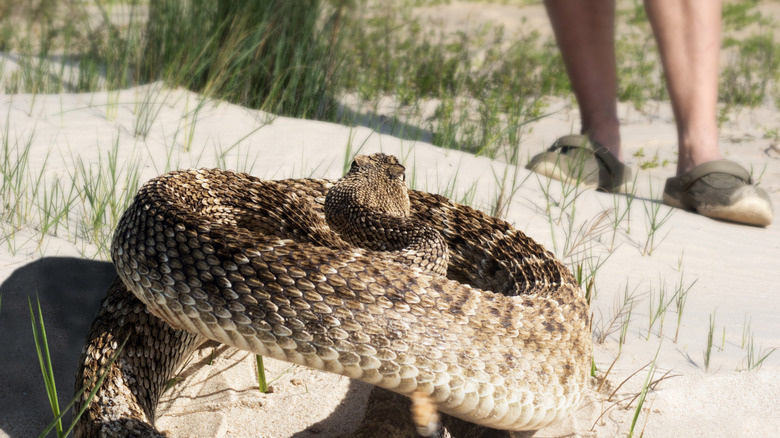
Finding a rattlesnake in your yard or near your home can be a thrilling and terrifying experience. One of the deadliest snakes in the United States, the venomous pit vipers have hollow fangs and hinged jaws that allow them to bite and deliver a painfully toxic blow to predators. The rattle from which the snakes get their name is designed to give warning, but the snakes still end up striking thousands of people each year. In an exclusive interview with Hunker, H. Bobby Fokidis, Ph.D., Professor of Biology at Rollins College, encouraged readers to respect the fascinating creatures by leaving them alone unless removal is absolutely necessary. In that case, it's important to call a wildlife professional for help.
"Rattlesnakes are primarily a North American story, with the greatest diversity across the western U.S., Southwest, Great Plains, and parts of the Southeast. But the idea that there is a clean line between 'rattlesnake country' and your backyard is very much a human concept," Dr. Fokidis explained. "Rattlesnakes can travel considerable distances in search of food, mates, water, shelter, or suitable seasonal habitat."
If you're worried about keeping snakes from slithering into your yard, it's important to understand that rattlesnakes aren't necessarily targeting residential areas. More often than not, they may just be passing through. According to Dr. Fokidis, "To a rattlesnake, a subdivision is not a subdivision. It's habitat with some very strange-looking rocks and an astonishing number of swimming pools ... Often, the habitat simply extends farther into the human landscape than we realize."
Leave rattlesnakes alone or call a wildlife removal professional for help
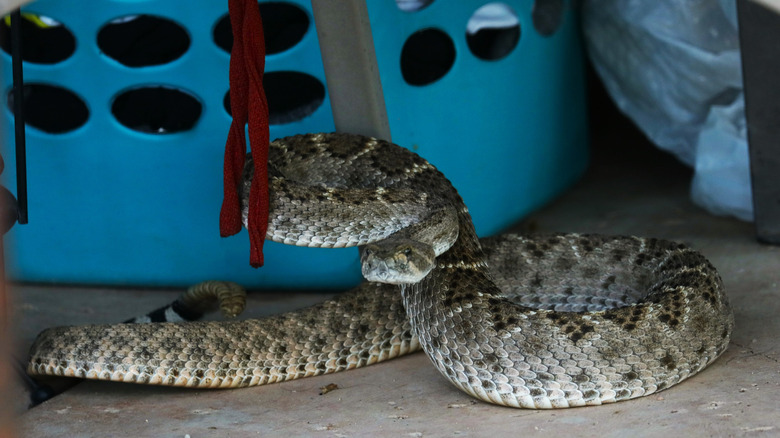
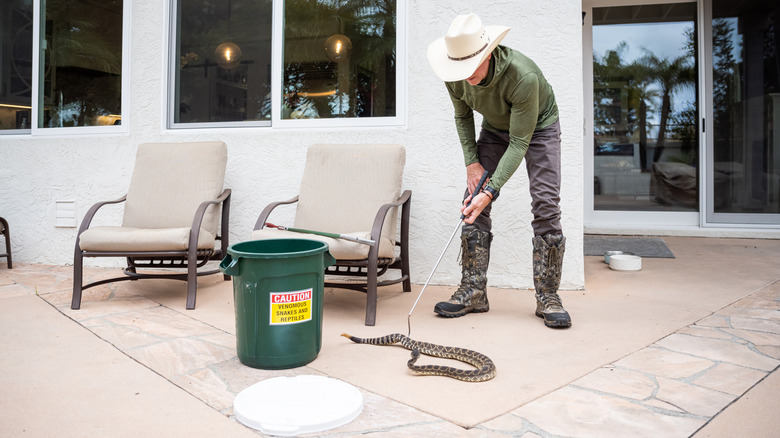
If you spot a rattlesnake, the best idea is to leave it alone. Dr. Fokidis admits this can be challenging since spotting a rattlesnake can be exciting. Still, it's the safest move. "Bring children and pets inside, back away, and give the snake plenty of space," he recommended. The same goes for the shocking experience of finding a rattlesnake inside your home. Do your best to isolate it and immediately call animal control or a professional wildlife removal expert who specializes in humane pest control. "Don't try to kill it. Don't try to grab it. Don't pin it down with a shovel. And don't attempt the backyard equivalent of 'Crocodile Hunter' with a broomstick," the biology expert urged before explaining that the majority of snakebites happen when people disturb or handle a snake. "Distance is your friend," he added.
Although thousands of people are bitten by rattlesnakes each year, only a few of these are fatal. In those cases, most deaths are due to anaphylactic shock or failing to get help right away. "If someone is bitten, seek emergency medical care immediately. Don't cut the wound, suck out venom, apply a tourniquet, or waste time trying to capture the snake," Dr. Fokidis emphasized. You also shouldn't handle a rattlesnake after dispatching it yourself, because it can strike even after its head has been severed from the body.
Fortunately, there are less lethal methods available. "You don't necessarily help an animal by driving it twenty miles away and dropping it in the nearest patch of woods," Dr. Fokidis told Hunker before recommending snake-proof fencing instead. "The goal isn't to hunt down every snake on the property. It's to make the places where people spend time inaccessible to them," he said.
How to prevent rattlesnakes from congregating in your yard or home in the first place
Of course, it's also a good idea to prevent rattlesnakes from wanting to hang out in your yard or near your home in the first place. According to Dr. Fokidis, they're attracted to properties that offer food and shelter. "The biggest food-related issue is often rodents. If you're feeding birds, leaving pet food outside, storing animal feed improperly, or allowing garbage and compost to become rodent restaurants, you're potentially putting a neon sign over the property," warned the biology professor. He added that certain landscaping features can attract snakes to your yard, including rock walls, woodpiles, and irrigated gardens.
While rattlesnakes can seem intimidating, crossing paths with one presents an opportunity to live in closer harmony with nature. "Ultimately, rattlesnakes aren't invading our neighborhoods nearly as much as our neighborhoods are invading theirs," Dr. Fokidis explained. Instead of seeing them as an enemy to be crushed at the earliest opportunity, he strongly urged coexistence. "Make your home less attractive, keep people and pets away from snakes when they appear, and let professionals handle the situations where removal is actually necessary," he said.
The biology professor's final word of advice? Don't be fooled by snake repellents like herbal or chemical mixes for your yard or sonic emitters plugged into every room in the house. "There is no evidence for them working — so it's simply snake oil," he said. "In fact, actual snake oil might work better."