

Keep Snakes From Slithering Into Your Yard With A DIY Solution
We may receive a commission on purchases made from links.
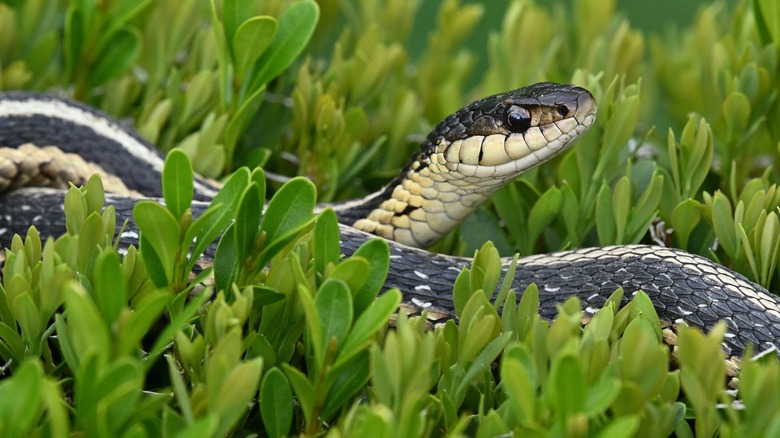
You're not alone if you don't like snakes, but that shouldn't stop you from appreciating the way they benefit your property by helping to control slugs, snails, insects, and rodents. Nevertheless, revulsion is a real thing, and if you live in an area that's home to venomous species like rattlesnakes or copperheads, it's entirely warranted. You want to keep them out of your yard, and a humane way to control pests is to erect a mesh fence.
A snake fence has to keep out all snakes, both large and small, or there's no point in erecting it. To keep out the small ones, the mesh size should be no larger than 1/4 inch. Chicken wire doesn't come with such a tight mesh, so go for 1/4-inch hardware cloth instead. It's a significant investment if you have a large yard, but if you live in rattlesnake country, it's worth it.
To keep out the large snakes, the fence should rise at least 30 inches above the ground (some experts recommend 36 inches), be buried from 4 to 6 inches in the ground, and the bottom of the fence should splay toward the outside to discourage burrowing underneath it. If you choose a 48-inch roll, you'll get the height and depth you need without doubling up shorter rolls and potentially leaving gaps that a snake could slither through. If that happens, the snake may not be able to get out, and that's worse than having no fencing.
Tips for erecting mesh fencing
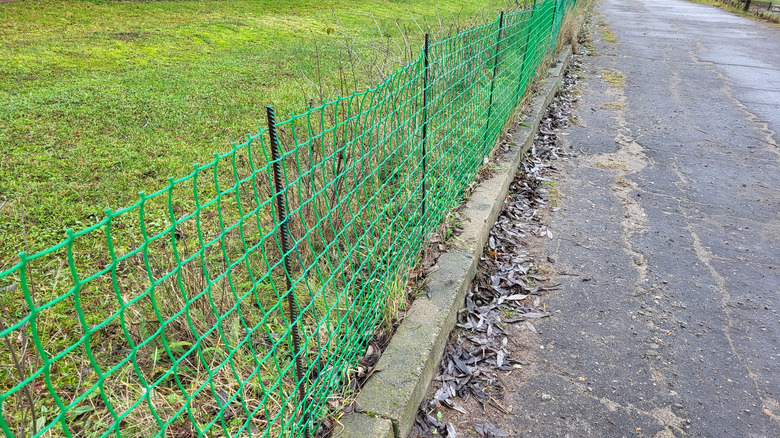
The easiest way to support a snake fence is to attach it to an existing fence, and if you do that, it should be on the outside. If you put it on the inside, snakes may be able to climb the textured surface of the existing fence, nullifying the purpose of the snake barrier. In the absence of an existing fence, you can secure the snake fence to sturdy posts driven into the ground. When attaching the mesh to a gate, ensure there is no gap wider than 1/4 inch when the gate is closed.
Use exterior-grade screws to secure the fencing to support posts or existing fencing. They are weatherproof and won't deteriorate in the sun the way plastic cable ties will. You don't want one of the fasteners to break or slide out of position, because that could potentially make an opening for a snake. Besides, you can remove screws easily when you need to make adjustments or repairs to existing fencing.
When you go to the trouble of erecting snake fencing, it helps to avoid attracting snakes in the first place. Keep your yard free of food that attracts them, such as bird seed and pet food. Mow the grass frequently to deprive them of hiding places, and don't overwater. Finally, avoid over-mulching your garden, and clean up lawn waste regularly.