

There's An Overlooked Plant That'll Help Keep Mosquitoes Out Of Your Yard
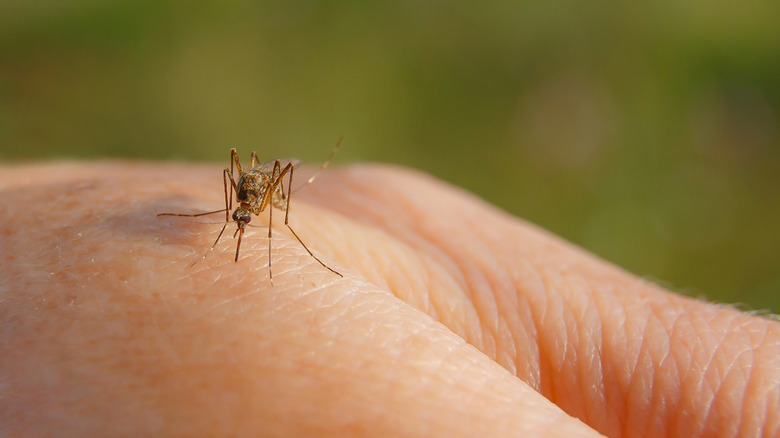
Mosquitoes are the worst. Not only do they leave behind bites that can itch for days, but they also pass along a number of harmful diseases such as West Nile virus and Eastern equine encephalitis. As such, you want to make sure you're doing what you can to keep mosquitoes at bay. Before you reach for the chemicals or DIY bug sprays, consider bee balm, an overlooked flower with a distinct fragrance that could help you ward off mosquitoes.
The bee balm family (Monarda) includes perennial flowers, such as eastern bee balm (Monarda bradburyana), wild bergamot (Monarda fistulosa), and scarlet bee balm (Monarda didyma). While they come in a variety of flower colors like scarlet, pink, and purple, bee balm can be overlooked as a plant that repels mosquitoes because it is usually planted specifically for attracting pollinators like butterflies, bees, and hummingbirds. The rich citrus, mint, and spice combination scent is what draws the pollinators in, but it is also what supposedly keeps mosquitoes away.
The scientific reason behind this is because certain species, like spotted bee balm (Monarda punctata), contain high amounts of thymol, which is one of the essential oils that gives the plant its distinct scent. According to a study published in Discover Nano, thymol was as effective as DEET at repelling mosquitoes. Of course, this was in its concentrated oil form, but it does stand to reason that the strong thymol scent of bee balm will also work to keep mosquitoes out of your yard.
Planting bee balm to repel mosquitoes
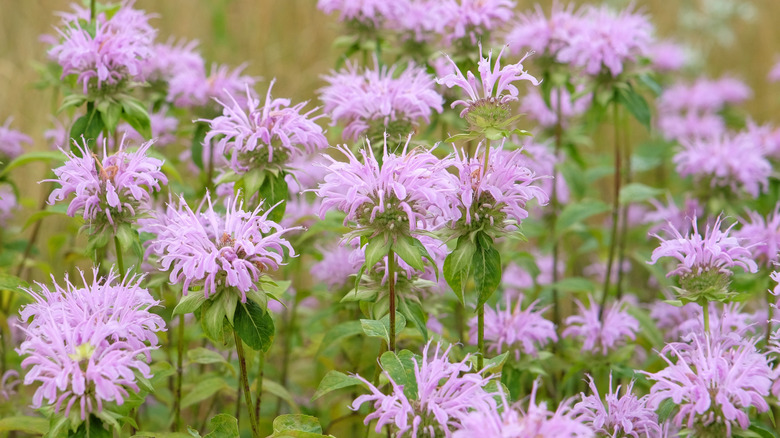
While planting pollinator-friendly flowers is one of the hottest gardening trends in 2026, you should make room for bee balm in your garden regardless of what year it is. Bee balm is native to North America, and hardy between USDA zones 3 through 9, giving it a wide distribution among cooler and warmer climates. However, regardless of planting zone, the soil requirements for all types of bee balm remain the same: well-drained.
Well-draining soil means that the soil is loose enough to promote root development, allow oxygen flow, and take on water without draining too quickly or forming pools. Because mosquitoes love to lay their eggs in standing water, any spot in your garden that you're hoping to grow bee balm in needs to be free of pooling not just for the plant's sake, but also the added benefit of reducing where mosquitoes can breed. Bee balm also requires at least six hours of full sun a day to grow at its best, so the sunniest spot in your garden would be good for it.
While it does contain thymol, there is no guarantee that bee balm will effectively keep away all mosquitoes. However, since it is so attractive to pollinators, there is no real downside of planting some in your yard. You can even utilize it alongside other unexpected mosquito-repelling ideas in order to make sure you keep the aggravating insects away from your yard. As always, make sure you take thorough steps to prevent mosquito bites, like wearing protective clothing, when enjoying some outdoor fun.