

Move Over, Roundup: There's A More Eco-Friendly Option For Crabgrass Control

A pristine yard can quickly become infested with crabgrass in the summer, when this pesky plant loves to make its debut. While Roundup's powerful chemicals tackle weeds, many question the safety of the main ingredient, glyphosate. The Environmental Protection Agency (EPA) has disproved that glyphosate is a cancer-causing endocrine disruptor, but the potential ecological impact of spraying glyphosate on plants is enough to make you wonder if there's an alternative. Introducing: Earth's Ally Weed and Grass Killer, an eco-friendly option for controlling crabgrass.
Earth's Ally Weed and Grass Killer contains natural ingredients, including sodium chloride, vinegar, and soap. Combined with the powers of the sun, sodium chloride pulls water out of plants, dehydrating them. The product claims to have visible results in just three hours, eventually killing common lawn weeds like chickweed, dandelions, crabgrass, ivy, and more at the root level after seven days. The crabgrass killer tackles patios, garden beds, driveways, and sidewalks.
Products like Earth's Ally Weed and Grass Killer use household ingredients you may already have on hand. To make a DIY weed killer, all you need is vinegar, table salt, dish soap, and a spray bottle. Mix one gallon of distilled vinegar (the higher the acidity, the better) with one cup of table salt and one teaspoon of dish soap. For crabgrass-infested areas with stone, avoid using vinegar, as the acidity can wear down stone over time. Instead, Lisa Bronner from GoingGreen recommends simply using boiling water to kill weeds. However, you don't want to use this method on gardens, as it can kill surrounding plants, worms, and beneficial microorganisms within the soil.
How to get rid of crabgrass the eco-friendly way
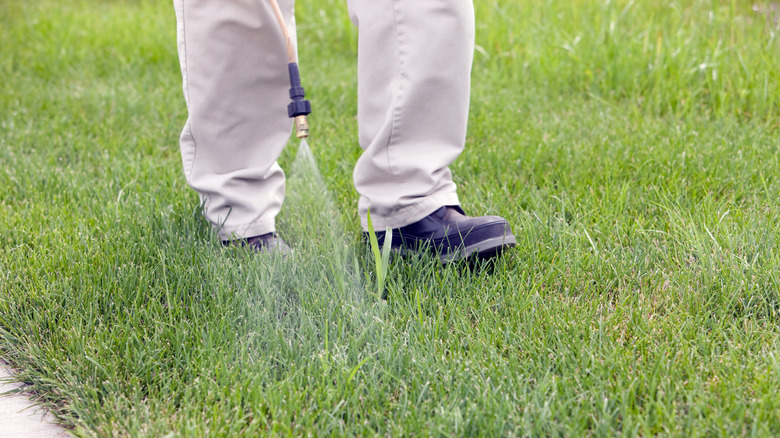
Always use herbicides as directed when getting rid of crabgrass. Choose a sunny day with no prior or upcoming rain to take on the project, ensuring the plants are dry before the application. Then, shake your Earth's Ally Weed and Grass Killer bottle to evenly mix the ingredients. Use the stream setting to coat the leaves and bottom of the plant to help the salt reach the root and dry it from the inside out. Avoid spraying the solution onto plants you want in your lawn to prevent them from dying off.
Though an effective spot-treatment, not everyone has complete success with Earth's Ally Weed and Grass Killer. Product reviews suggest that the product does not prevent future weeds from popping up, it's hard to use on large infested areas, and the solution does not fully kill stubborn weeds. To prevent crabgrass from coming back, filling the areas previously affected with competitive plants can help. According to the United States Golf Association (USGA), you can further discourage weeds by growing a thick lawn, maintaining a mowing height of 3 inches for cool-season grasses and 1.5 to 2.5 inches for warm-season grasses, and pruning trees to reduce shade.