

Copperhead Snake Skin Looks Different: Here's How To Identify Its Shed In Your Yard
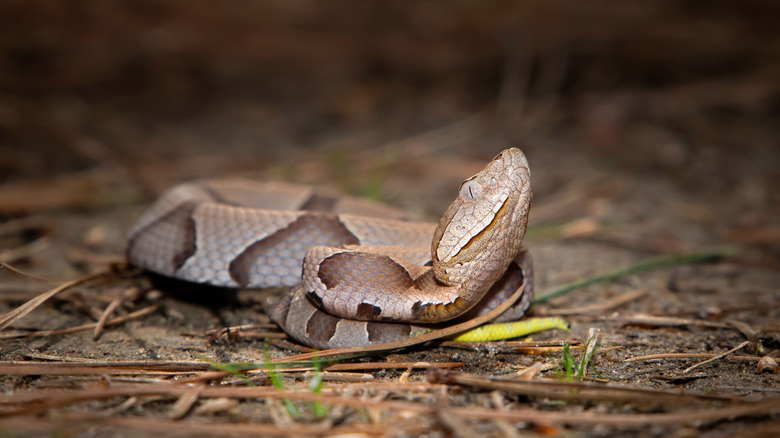
Depending on your feelings about snakes, coming across one of its recently shed skins can either be creepy or fascinating. Confirming the kind of snake from the shed skin in your yard may be especially important if you have venomous snakes in your area, such as eastern, northern, or southern copperhead species. The easiest way to tell a shed skin belongs to a copperhead is by its notable markings, but you don't necessarily need to take any further action beyond identifying and disposing of the skin.
Snakes (and all other types of reptiles) shed their skins from time to time. However, unlike lizards and tortoises who shed their skins in pieces, most snakes do so all in one piece. This is why seeing a snake's recent shed can make your heart skip a beat, as it could look like a snake at first glance. As with other types of snakes, copperheads shed their skins multiple times per year, and more often while they are still growing. These snakes may also reach a maximum length of 48 inches, per the North Carolina State Extension.
By taking a closer look at the shed skin, you may be able to tell if it belongs to a copperhead snake if it has hourglass-shaped banding along its entire length. These bands can also resemble chocolate candy kisses or bowties. Notably, the markings do not touch along the spine of the skin. It's important to know that this pattern is exclusive to copperheads, and this species is among the few that leaves such tell-tale markings behind on their skin sheds.
How copperhead snake sheds compare to other snakes
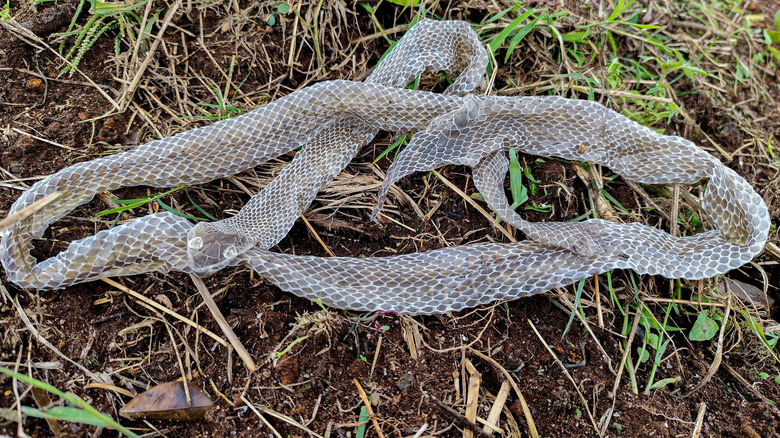
It's hard to mistake copperhead snakes' hourglass shapes on their skins. Yet sometimes copperhead skin sheds are confused with other non-venomous snake species. One example is the northern watersnake, which also has large bands but the markings are narrower on the sides and broader along the spine. Another is the red cornsnake, whose bands are similar in shape yet much shorter and do not touch the ground.
Finding a copperhead snake skin in your yard is understandably concerning, since this species is venomous. However, unless you're seeing multiple live copperheads slithering through your yard and are worried about pets and young children, you may not necessarily have to panic and call for pest control based on a single shed alone. You're also more likely to find shed snake skins in discreet parts of the yard, rather than out in the open. Snakes will only shed while hiding, so you might find the skins in places such as near rocks, bushes, or even next to your home's foundation. This behavior is not exclusive to copperheads.
Next steps to take after finding shed copperhead skins
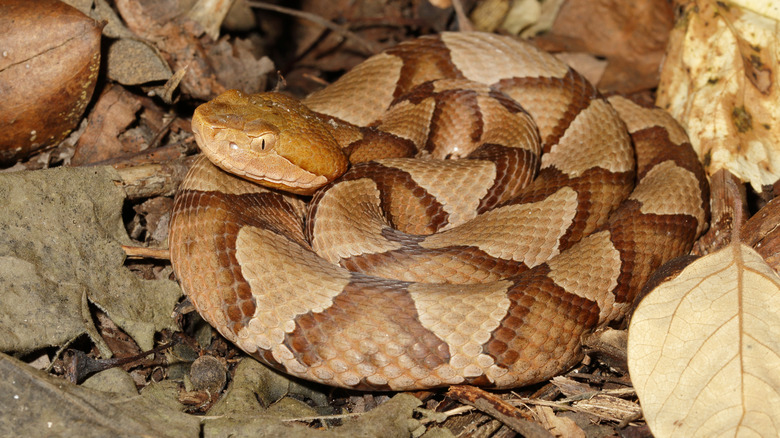
Even though it's not time to panic, you may not wish to completely ignore your find, either. After all, a snake shed ultimately means a snake has been in your yard, or may still be hanging around. However, you should never try to hunt down the snake on your own, as this can increase your risk of getting bitten. Copperheads are not aggressive and do not bite unless they're threatened. You should take pictures of the shed and the area in which you found it for evidence, though. Be sure to wear gloves when disposing of the copperhead's shed skin.
It's also worth looking around your yard to determine if there's anything that could be attracting these reptiles. Such items include hiding spots for shelter and for capturing their prey, including debris piles like rocks, logs, or leaves, tall grasses, kids' toys, or large bushes. Also, since rodents (especially mice) are copperheads' primary food sources, you'll want to take steps to get rid of mice and rats in your yard, too.
If you do start seeing copperheads in your yard, let the snakes be, and keep yourself, children, and pets away from them. Seeing numerous copperhead sheds or live snakes could also warrant a call to a wildlife expert for help and possible copperhead relocation. They can look at your pictures to help confirm whether the snake skin shed does indeed belong to a copperhead. An even more concerning situation is finding a snake's shed skin or droppings in your home, which warrants a call to a wildlife expert right away.