

Found A Snake Skin In Your Yard? Here's What It Means (And What To Do)
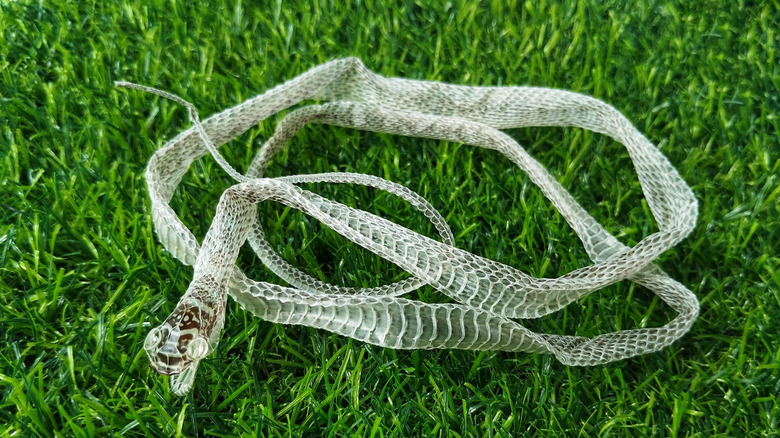
If you've been looking for natural ways to keep mice away, you might be pleased to find a snake skin in your yard. On the other hand, if you have a snake phobia, you might start to panic. However, you should temper your response. Seeing a snake skin doesn't necessarily mean there's a snake living in your yard. A snake may have also passed through, left its skin, and kept going. You should be cautious, though, as the snake may still be close by if the skin was shed recently. Start by looking around for other evidence of the snake that left it. Being able to confirm whether or not the snake is still nearby will help you determine what to do next.
If you have patches of bare earth in your yard, you may be able to see snake tracks. Droppings, which are typically dark with white patches, can also tell you if a snake has spent time in your yard. If you find some, don't touch it. Instead, observe how fresh it is. If the only droppings you find are old and dried and you don't see any other evidence, the snake may have already moved on. You can leave the snake skin where it is, throw it away, or preserve it to use as art or for display. Don't touch the skin directly with your hands, as it could be carrying diseases.
However, if you find fresh droppings, or see other evidence of snake activity, the snake may be nesting in or near your yard. Where it's nesting will determine what you should do next. Wear shoes and clothes that cover your skin to reduce the risk of accidental bites, and try to locate the snake's nest. Pay close attention to brush piles and shady, overgrown shrubs.
What to do if you find a snake
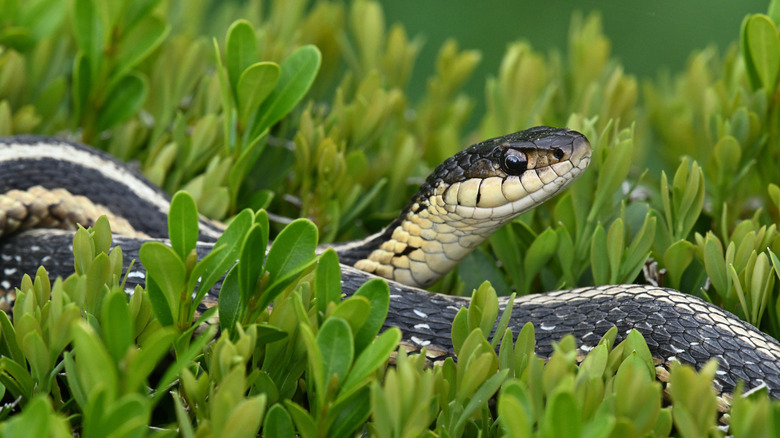
If you've confirmed that the snake skin came from a snake that is still living in your yard, then start by watching from a distance and trying to identify it. Snakes are useful to have around, but you won't want a venomous one near your home. If you can, it's helpful to take a photo or video of it. You can compare it to online guides more easily or even send it to an expert for help identifying it. If you can't get a clear look at the snake, the shed skin can actually help you identify it! Identifying a snake based on the shed skin is more difficult, since it doesn't have the same coloration as the live snake, so you may want to contact an expert for assistance.
If the snake is venomous or invasive, you'll want to contact a professional to remove it. Venomous snakes should be safely relocated further away from your home, but relocation can be tricky. Moving the snakes too far or releasing them improperly can harm them, so it's best to leave this to a professional. However, if the snake is non-venomous and native, you may be able to coexist with it peacefully.
You may still want to encourage native, non-venomous snakes to move along if they're living too close to your home. While you can call a professional to relocate it, environmental changes will encourage it to leave on its own. Remove hiding spots by clearing out brush piles and trimming shrubs, especially ones near your home. Add plants that repel snakes to your garden, and seal up possible entrances to your home. You don't want the snakes to seek shelter inside, so brush up on ways to repel snakes from your basement.