

Disposable Air Filters Aren't Your Only Option: Try This Eco-Friendly Alternative Instead
We may receive a commission on purchases made from links.
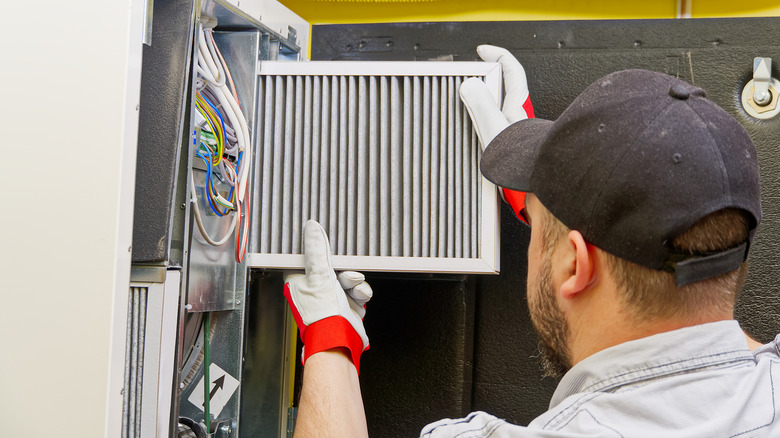
Many homes, and nearly all newer ones in the United States, rely on central heat and air conditioning to keep indoor temps cool in the summer and warm in the winter. Before the air is conditioned and recirculated into your living space, it passes through a filter. These filters trap dust, dirt, and impurities that both improve indoor air and protect interior moving parts from damage, which can cause problems with HVAC systems. While disposable filters are the most common option, washable filters are another choice that saves money and is much better for the environment.
The biggest downside to disposable filters is the endless cycle of buying, changing, and throwing them away. Standard disposable filters range in price from around $5 to over $30, while high-efficiency versions cost as much as $50 each. They need to be replaced every one to three months, so the cost over time adds up. Disposable filters also add a lot of waste to landfills. The average home throws away as many as 120 filters over 10 years, and they generally cannot be recycled.
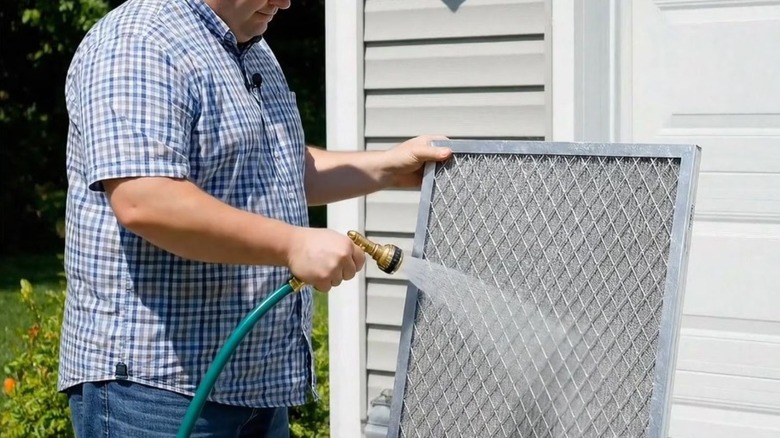
Washable filters may seem like they are the pricier furnace filters up front, because they cost between about $10 and $200 each. However, they can last up to 10 years, so you may only have to purchase two to three filters over the lifetime of your unit. Another trade-off is that washable filters require more maintenance. Every six to eight weeks you remove the filter, vacuum it out, rinse it in warm water and scrub with a soft brush and warm soapy water. Once the filter is clean, it must dry before reinstallation.
Choosing the right washable air filter for your home
Choosing the right filter can make all the difference in how your HVAC system operates. The most important factor is size. The filter must fit perfectly and match the intake slot of your unit. If the filter is too small, unfiltered air can slip through the gaps and damage your unit. To find the correct size, remove your old filter. Typically, the size will be printed somewhere on the frame. If you don't see the size, check your HVAC system owner's manual. Filters are measured by their external dimensions — length, width, and thickness — so it's also possible to measure the casing to find the right replacement.
All HAC filters have a MERV rating. This rating lets you know how well the filter removes small particles from the air. The higher the MERV rating, the more efficient the filter is going to be. High-efficiency filters carry a rating of 13 or higher. They are often used in hospitals and for individuals with respiratory illnesses because they are strong enough to remove smoke and bacteria. While many household disposable filters have a MERV rating between 8 and 12, permanent filters tend to have lower ratings, between 4 and 8.
Finally, washable filters come in both pleated and flat forms. Pleated filters have a larger surface area, so they tend to hold more dirt than flat filters. Because of this, you may also be able to go longer between cleanings when using a pleated filter provided you're also regularly cleaning your HVAC registers and vents.