

Skip Traditional Curtains: There's A Cuter Way To Cover Windows & Add Vintage Charm
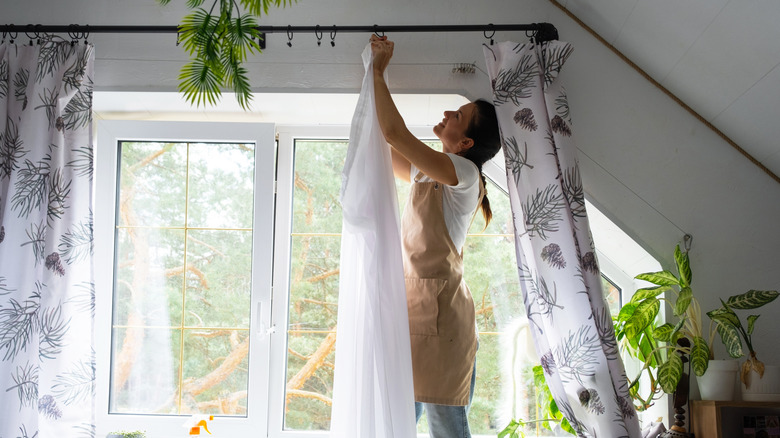
If traditional curtains aren't for you, you may be looking for ways to make your own. But what fabric should you choose, especially if you love an old-fashioned vibe? A 100% cotton, tightly woven, soft fabric that lets light in is perfect for window coverings. Vintage flour sacks fit the description perfectly. Using flour sacks for their fabric has been a tradition since the 1800s, when lightweight sacks replaced storage barrels. Historically, flour and feed sacks were made from tight, plain-weave cotton. When the Great Depression hit, families used empty cotton flour sacks to make everything from clothes to quilts. Flour and feed sack dresses became so popular that companies began to print fashionable patterns on the bags to boost sales. In 1926, a patent was issued for a washable ink for brand logos so that the company information would fade away after washing and the material could be reused. This traditional hack for reusing old fabric can be used today to create unique curtains.
Cotton sacks were plentiful throughout the late 19th and early 20th centuries and can still be found today in antique stores, yard sales, and online. Antique Fabrics offers authentic vintage feed sacks for purchase, like this bright Orange Clover Border print. If authentic vintage sacks are out of your price range, replicas are now available in charming colors and patterns, like this faux Park Designs Seed Sack print from Amazon. It's possible to hang window treatments without drilling, so this project is great for renters and homeowners alike. Simply pick your flour sack pattern and get ready to let the light in.
Show off your vintage flour sack curtain
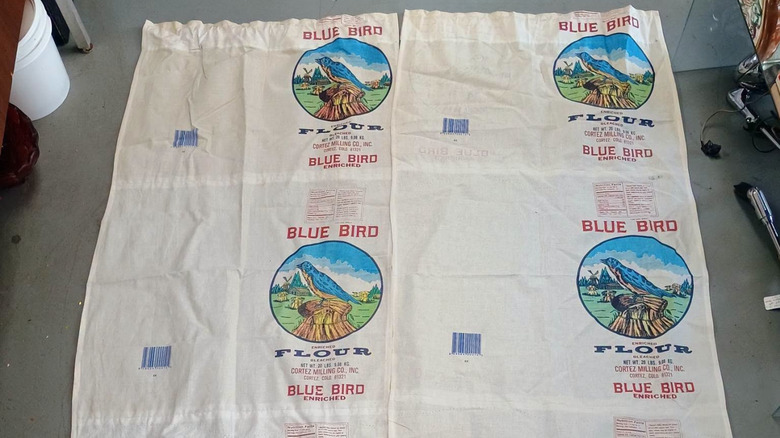
Materials required for this vintage charmer depend on whether you plan on sewing your sacks. Unlike other vintage projects, like this vintage doilies curtain, flour sack window coverings require no sewing or gluing unless you want to. A traditional curtain panel will need a hem sewn in for the rod to go through, also called a curtain header or a rod pocket. Some flour sacks may already have a hem at the top that can be used as a curtain header. Modern replicas may also be ready to hang.
If there is no space for the rod, you will have to do a little DIY sewing or purchase clip-on rings. Clip-on rings (or drapery rings) attach to the top part of your curtain, and the rings are threaded through the rod. It's a quick and easy way to evenly hang and space your curtain. Another option is a pinch pleat drapery hook, which uses a sharp pin to grip the fabric and hooks onto the curtain rod.
There are tips to hang your curtain rod just right, but for this DIY design, it's all about the fabric. If there is a logo or printing on the fabric that you want to display, try not to gather the fabric too much, as it could block the image. Purchase more than one flour sack to fully show the logo, and hang them so that they lie as flat against the window as possible. If the fabric is patterned, it can still hang flat to show it off. If only one vintage sack is to be the showpiece of your window, supplement it with linen or white cotton fabric that matches to fill out the remaining space on the rod, covering the window.