

Mouse Nests Look Different: Here's How To Identify One In Your Home Or Garage
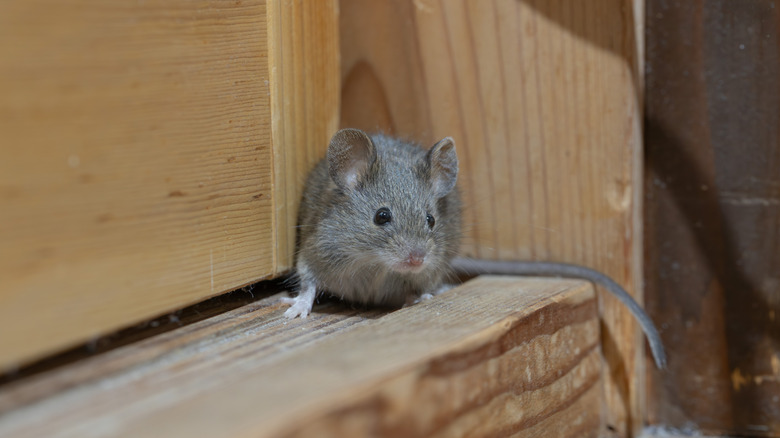
Finding signs of mice in your home or garage is undoubtedly alarming. Not only can mice transmit diseases to humans, but they can also destroy structures once they take up residence and multiply their numbers. Due to their rapid growth and maturation, one pair of mice can easily turn into several thousand, according to the Alabama Cooperative Extension System. Mice are also more common in homes than rats, and they cause more destruction. Needless to say, proper identification of a possible mouse nest in your home or garage is important in figuring out the next steps you need to take. You may be able to tell a mouse nest apart from those of other pests based on its shape, materials, and location, along with other signs of mice in the area.
A mouse nest looks like a small cloth-like ball, and is similar in size to a baseball. You might see bits of fabric, paper, cardboard, and even insulation. Mice use these materials to help keep their nests warm, particularly during the winter months. Such characteristics of mice nests also differ from the features of other possible rodents. Rats may use similar materials as mice for their nests, but these tend to be significantly larger, and are also misshapen. Depending on the rat species, these rodents may build nests within walls, underneath structures, or up in attics. Squirrel's nests, on the other hand, consist of large dreys covered with dry leaves, and may sometimes show up in home attics. If you do think you've found a mouse nest in your home or garage, refrain from touching it. Not only can this be dangerous, but any mice inside may scatter.
Other telltale signs of a mouse problem, and what to do
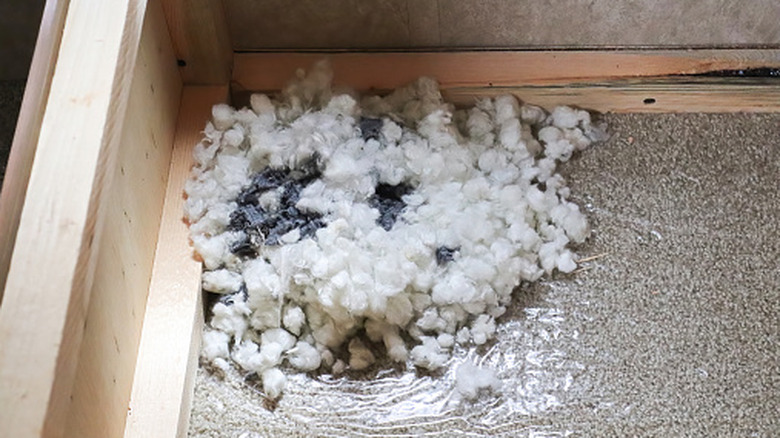
When mice build nests in human structures, they tend to pick spaces that are unlikely to be disturbed. Aside from attics, mice may build nests inside drawers, furniture, toolboxes, and even cardboard boxes. In fact, you might see other signs of a mouse problem in addition to seeing a nest (or before even finding one). Seeing mouse droppings are often a first clue to the presence of these rodents in a home. These are dark brown or black, and can be pointed at both ends. Mouse droppings are shaped like grains of rice, and can be as long as ½ an inch. Finding scattered dried foods or pet foods around your home can be other signs of pests, especially if you find holes gnawed through bags or boxes containing such items.
If you do see a mouse around a quiet part of your home or in your garage, any possible nest would likely be close by. As the University of Kentucky Department of Entomology notes, mice do not typically venture out any further than 10 to 25 feet from their nests. An unexplained musty odor can also accompany mice and their nests. Since both mice and rats are nocturnal creatures, seeing them during the daytime is another key sign of a severe infestation – regardless of whether you have seen a nest or not. At this point, it's a good idea to talk with a pest control expert. Not only can they help solve a possible mouse infestation, but they can also help to safely remove a rodent nest.