

Better Than WD-40: Other Ways To Lubricate A Garage Door
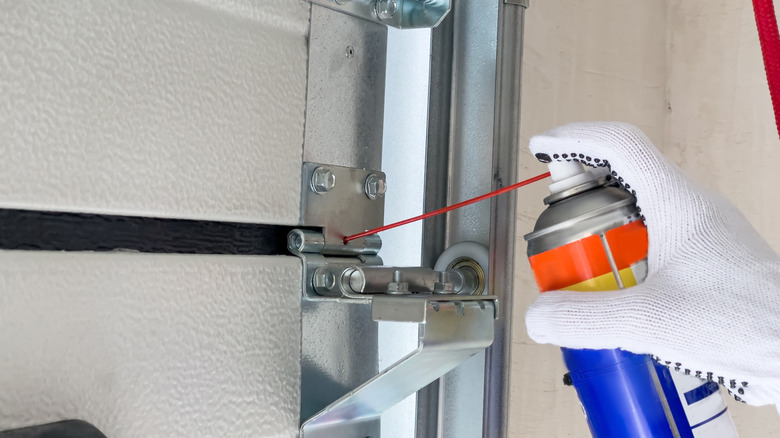
If you've ever opened your garage door and been met with a noise like a raccoon being crushed by a truck full of crunchy taco shells, then it is probably time for you to lubricate your garage door components. Well-lubricated rollers, springs, and drive trains will allow your garage door to operate smoothly and quietly. But don't reach for WD-40 to do this job. No, for this you need some proper lubricants.
Hang on, why shouldn't it be used to lubricate a garage door? There are already so many genius ways to use WD-40 in the garage, so having it around to lubricate the door only makes sense. Here's the thing: WD-40 is not a long-lasting lubricant, although it does loosen stuck bolts and is great for cleaning grass off your lawn mower blades. The "WD" in WD-40 stands for "water displacement." This means its job is mainly to drive out water and prevent it from causing corrosion on metal. So, while you can absolutely use it to clean your garage door components, it is not a legitimate lubrication solution.
Instead, you should be looking for proper garage door lubricants that are silicone-based, such as 3-IN-ONE Garage Door Lube or BLASTER Premium Silicone. These are specifically designed to provide lubrication for the opening components of your garage door. There are also other lubricants like white lithium, dry lube, and biodegradable all-purpose lubricant you can use that will do the trick better than WD-40.
Silicone and white lithium grease are the best options
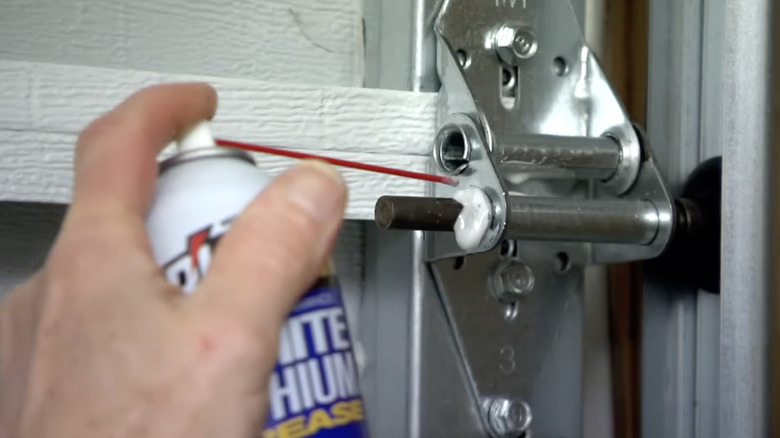
Since noise and inefficient opening are incredibly aggravating, using the right kind of lubricant is the best way to make sure you fix this common garage door issue. Now, if you're hunting specifically for labeled garage door lubricant, you're going to be looking at silicone-based sprays like the aforementioned BLASTER. When the silicone dries, it creates a smooth, tack-free film that will stick to the surface of the sprayed area and repel the dust, grime, and moisture. While you can use it on the whole door, silicone is best for use on the nylon rollers that move up and down the door tracks because it won't degrade the material.
White lithium lubricant, like BLASTER High Performance White Lithium, is another option that is thicker and more heavy-duty than the silicone. Essentially thickened lithium soap, this is best used on the metal-to-metal parts of your garage door, such as the torsion springs, metal hinges, bearing plates, and the drive train chain. Both sprays are delivered via aerosol cans and can be used together for optimal garage door lubrication.
The reason both of these are better than WD-40 for a garage door is that they are actual lubricants designed to withstand consistent use and repel debris buildup. Remember, WD-40 does not provide long-term lubrication and can actually start collecting grime and debris.
Other types of lubricant to use on garage doors
While the silicone and white lithium garage door lubricants are your best options for this job, there are other choices available that can keep you from reaching for the WD-40. PTFE dry lubricant, such as DuPont Non-Stick Dry Film, is a spray that goes on dry and uses small particles of Teflon to create a thin, grime-resistant film that allows for smooth operation. It is commonly used on runners, chains, hinges, and cables, making it ideal for garage door use.
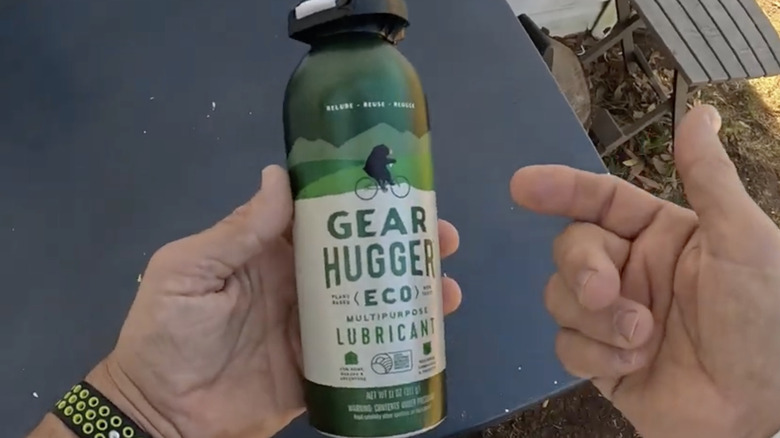
Now, if you're someone who prefers a plant-based, eco-friendly lubricant option over synthetics, you can check out the Gear Hugger brand of lubricants. Their Multipurpose Lubricant is USDA certified as biodegradable and plant-based, meaning that you won't have to worry about any potential environmental damage. While not specifically a garage door lubricant, it can be used for this purpose, though it might not provide the kind of long-lasting lubrication silicone or white lithium will.
Now, we don't want you to write off the WD-40 brand altogether. There are numerous different types of spray the company makes, including silicone and white lithium. Just steer clear of the traditional formula. You also never want to use cooking oils or spray like olive oil, as they are not intended for mechanical use and will not provide long-lasting protection.