

What Happens If You Mix Baking Soda And Hydrogen Peroxide?
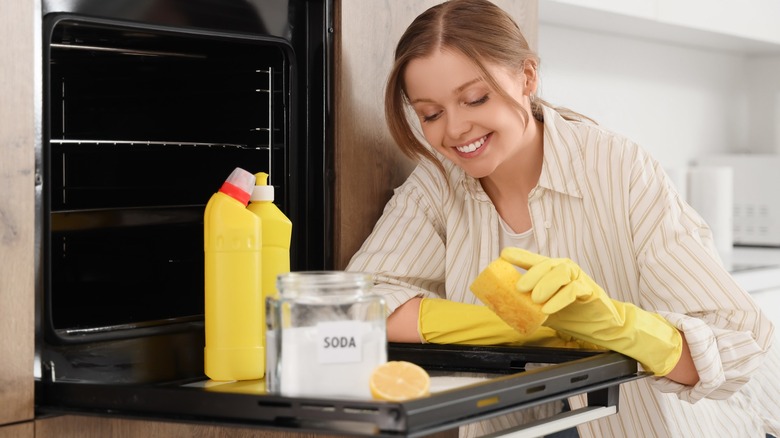
By themselves, baking soda and hydrogen peroxide are useful cleaning and disinfecting agents. Baking soda is a mild abrasive that's good for scrubbing. Peroxide, meanwhile, is a mild oxidizing agent that brightens and disinfects. It seems like mixing them together should produce a good household cleaner and disinfectant, and it does. You can use them one after the other or turn them into a paste to use for general cleaning and laundry purposes.
Baking soda is alkaline, and peroxide is mildly acidic, so the two neutralize each other somewhat in combination, but not to the same extent as vinegar — which is more acidic — and baking soda. The impressive fizz, caused by a release of carbon dioxide, that happens when you combine vinegar and baking soda basically cancels out the cleaning abilities of both compounds. Combining baking soda and peroxide also releases this gas, but not to the same extent. The components fizz less and retain more of their original properties, and as a bonus, they produce sodium percarbonate (oxygen bleach), which is a good cleaning agent in its own right.
If you're looking for a foam volcano to clean clogged drains, you won't get it by mixing baking soda with peroxide, but you will get an effective scrubbing agent that can brighten and disinfect. Note that it isn't a soap — before using it for cleaning, wash surfaces first with soap and water to remove greases and oils.
Ways to use hydrogen peroxide and baking soda together
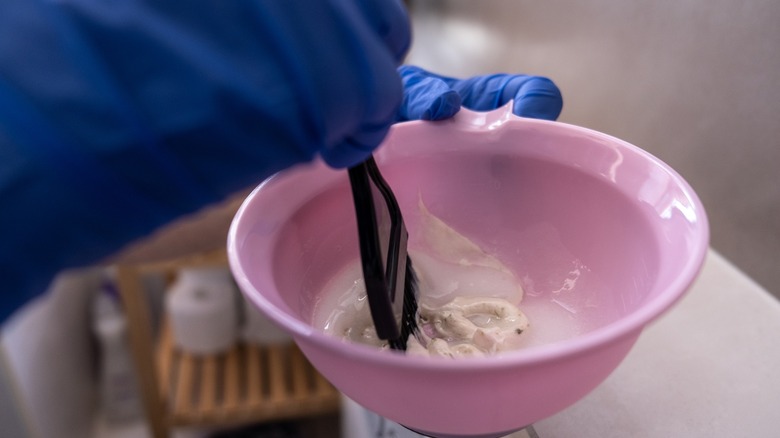
It's easy to make a cleaning paste to use around the house. Add a half-cup of baking soda to a bowl and pour in just enough 3% hydrogen peroxide (the concentration available at the drug store) to make a paste. Use the paste right away, as it loses its effectiveness over time as the two products react. Don't store it in a sealed container, because the gases the mixture releases build up and could cause a messy explosion. It's a good idea to wear kitchen gloves while cleaning as hydrogen peroxide can be mildly irritating.
Use the mixture as a scrubbing agent, much like you use a commercial scrubbing cleanser. Remember to first clean off loose dirt, greases and oils with a soap-and-water solution, because the paste won't do that. When the surface gunk is gone, use the paste to remove stains and mold from tile grout, plastic food containers, ovens and bakeware, and carpets. In the laundry room, you can use the paste to remove stubborn stains from bedding and white shirts.
While this combination is an effective cleaner, it isn't a miracle one. It won't remove hard water stains — a job for an acid such as vinegar — and it isn't recommended for natural stone, because it could bleach or etch it. Moreover, sometimes these ingredients are more effective when used separately. For example, if you only want to disinfect, use peroxide on its own, and if you just need to scrub or deodorize, use pure baking soda.