

House Sparrow Nests Look Different: Here's How To Identify One In Your Yard
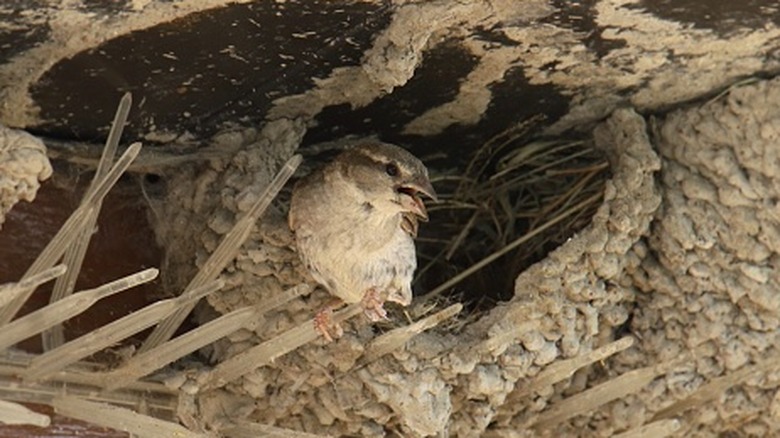
If you've ever looked up at your home and spotted a mass of twigs tucked under the eaves, you may have found a house sparrow nest. There are a few birds out there that didn't get the memo about traditional nest building, and the house sparrow is one of them. Instead of crafting an open-top design, these birds prefer a messy, round cavity with dome-shaped openings. Their nests are typically made with dry grass, straw, string, paper, and feathers.
House sparrows get their name because they like building close to where humans live. They tend to seek out tight spaces in buildings, like soffits, rain gutters, dryer vents, and nesting boxes. Tucking their homes in these locations is actually a survival tactic. It helps keep their eggs out of reach of hawks and neighborhood cats, and out of the weather.
Having these birds around your yard comes with its own mix of pros and cons. On the positive side, they eat insects such as cutworms that can harm desirable plants. Unfortunately, they also have an appetite for seeds and grains and can destroy certain crops. They also tend to be very aggressive towards other backyard birds, such as bluebirds, which prevents them from nesting nearby. If you like birdwatching, house sparrows are definitely ones you don't want to spot flying anywhere in your yard.
Keeping house sparrows out of your yard
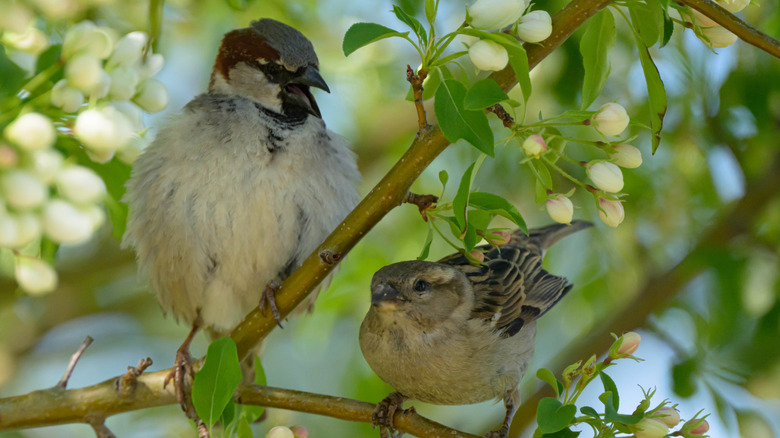
To keep house sparrows out of your yard, you first need to know how to identify them. If you live anywhere in the United States other than Alaska or in southern Canada, there's a good chance these birds are close by. Their nesting period starts late winter or early spring and runs through the end of summer. Females lay greenish-white to bluish-white eggs that take 10 to 14 days to hatch. Adult birds are around six inches long with a large head, short tail, and a cone-shaped bill. Their backs are mostly brown and gray with a white or grayish underbelly.
They may look small and unassuming, but they can be very annoying to have around. Because they are aggressive, sparrows have been known to kill other species, so it's a good idea to get rid of these birds near your home. Since most house sparrows claim their nest location before the first of April, simply delay putting out any nesting boxes until the middle of the month.
When you put out birdhouses, choose ones with a small entrance of no more than an inch in diameter. This is one of the best ways to attract other birds while keeping house sparrows out because they can't fit through the smaller openings. You should also protect your home by installing mesh screens over the dryer vent and gutter opening. If you do happen to see house sparrow nests being built, remove them immediately to keep your yard safe for other songbirds.