

What Is The 1/3 Rule For Perfect-Looking Hydrangeas?
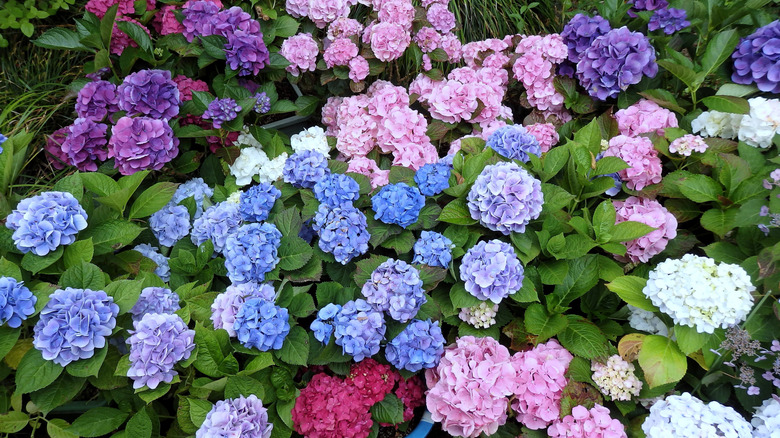
To prune, or not to prune, that is often the question with hydrangeas. While some say hydrangeas don't need to be trimmed, others argue that doing so can encourage bigger blooms and healthier plants, particularly with bigleaf hydrangeas (Hydrangea macrophylla) and other varieties that produce new flower buds on old wood. Before you break out the shears, though, it helps to know how to prune properly by following the 1/3 rule.
Simply put, the 1/3 rule for hydrangeas means pruning back one-third of the plant each year, tackling another third in the second year and the final third in the third year. This keeps you from over-pruning the shrub and reduces the risk of prune shock. While old wood hydrangeas benefit the most from the 1/3 rule, you can use it with new wood varieties, too. In fact, following the 1/3 rule when pruning new wood hydrangea, such as smooth hydrangea (Hydrangea arborescens) may help the plant thrive in the long run, as pruning too much can weaken the plant.
When you should put the 1/3 rule to the test depends on the variety, too. For big leaf hydrangea and other old wood varieties, like climbing hydrangea (Hydrangea petiolaris), the ideal time to prune is in August. Wait until the end of winter to prune smooth hydrangea and other new wood varieties, like panicle hydrangea (Hydrangea paniculata).
Tips for pruning hydrangea
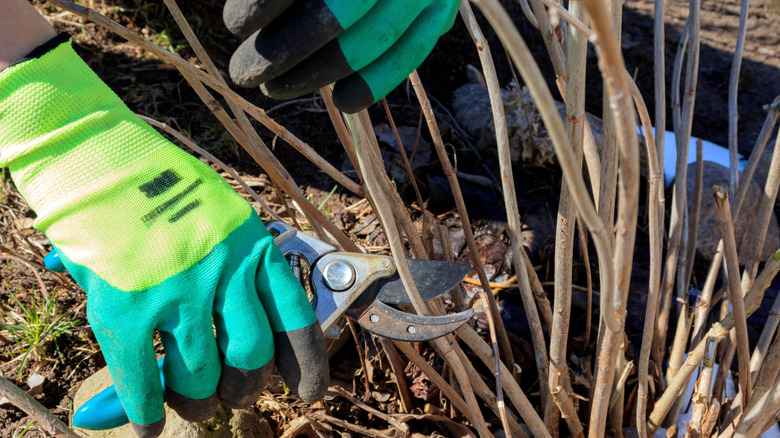
When you know how to care for hydrangeas, they'll reward you by sticking around for years, in some cases, decades. Proper pruning is part of proper care, as it encourages new growth. When you prune too much — removing more than 1/3 of the hydrangea — you're actually telling the plant to produce too much new growth, making it weaker.
Before applying the 1/3 rule to your hydrangeas, keep in mind that it works best on established old-wood varieties that are at least 5 years old. If you prune a younger plant, you risk removing too much of the old wood growth, and along with it, next year's flowers. Since new wood varieties bloom on new growth, you have more room for error when pruning.
When you're ready to prune, look for the stems that appear the oldest, which are usually the thickest. Cut these down to the base, and remove any dead or crisscrossing branches. To avoid accidentally over-pruning your hydrangea, stick to the 1/3 rule during a single pruning session and resist the urge to cut it back again later in the year. Once you've cut back one-third of your old-wood hydrangea after the blooming season, you're done until next year. You can still deadhead to remove spent blooms, but avoid trimming any additional stems or branches.