

The Flowering Perennial That's Just As Shade-Tolerant As Hostas And Coral Bells
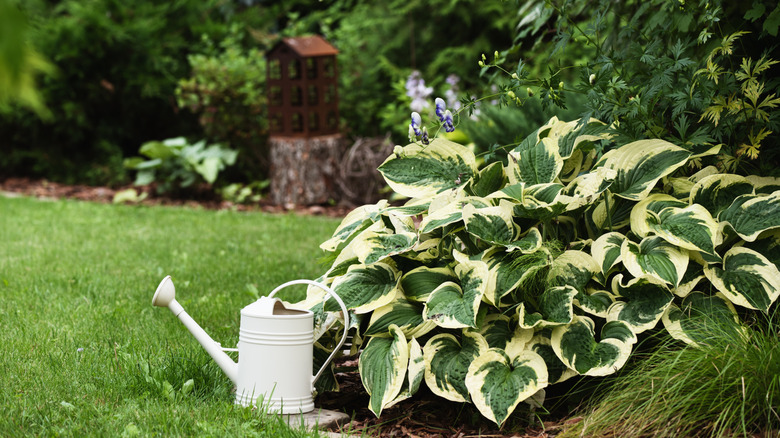
Gardeners with plenty of sun have many options when choosing what to put in their gardens. For those with shade gardens, the choices are much more limited, especially if you want a flowering plant. While coral bells and hostas are typically the shade gardener's go-to, they aren't without their problems — hostas especially have a lot of downsides. Luckily, there's another shade-loving, flowering perennial to add to the list — heartleaf brunnera (Brunnera macrophylla), also known as Siberian bugloss or false forget-me-not.
In the spring, heartleaf brunnera bursts into a cheery display of tiny blue flowers, which resemble forget-me-nots (giving the plant one of its common names). When not in bloom, heartleaf brunnera is still ready to show off, with large, heart-shaped leaves that may have silver marks or white variegation on them. The plant's leaves are what give it its Latin name — macrophylla translates to "large leaves."
Heartleaf brunnera is hardy in USDA zones 3 through 8 and does best in areas that have cooler nights. If you're in the southeastern part of the US, you may want to skip planting heartleaf brunnera, as it doesn't tolerate high humidity or hot weather. Since it is a shade-loving plant, pick an area of your garden that gets less than two hours of direct sunlight per day. Bright sun will scorch the plant's leaves.
How to grow heartleaf brunnera
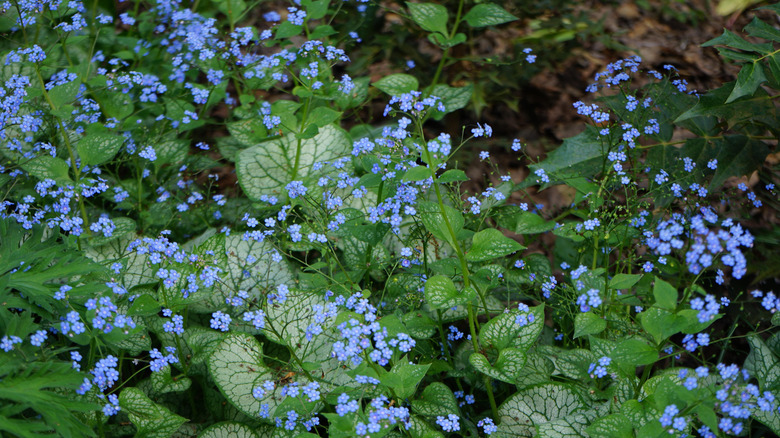
In its native habitat in the North Caucasus region, heartleaf brunnera grows in mountain forests. For best results, you'll want to imitate the conditions of its native region as best you can at home — brunnera is another plant that's perfect for growing under trees. Place brunnera in a shaded part of your garden, in moist soil that drains well, keeping in mind that while the plant can tolerate a bit of moisture, it doesn't like soggy soil. If the soil is too wet, the plant can develop root rot. When it gets too dry, the plant's leaves crisp up and turn brown.
Add a layer of mulch over the soil to lock in moisture, especially during the summer, and water regularly, particularly in the first season after planting. While you don't need to deadhead the blue flowers, you may want to do so to make the plant look better. You may also want to prune the plant throughout the growing season to keep it looking neat and to remove any damaged leaves.
Under the right conditions, brunnera has few problems in the garden. While it's not quite the slug magnet that hosta is, the slimy mollusks have been known to nibble a brunnera or two. You can set up traps to get rid of backyard slugs or try to make the area around the brunnera as inhospitable to slugs as possible. Keep the sun off the plant's leaves, make sure it's got enough water, and keep it relatively cool, and brunnera will repay you with years of growth and attractive flowers and foliage.