

Cleaning Wipes Vs. Disinfecting Wipes: What's The Difference?
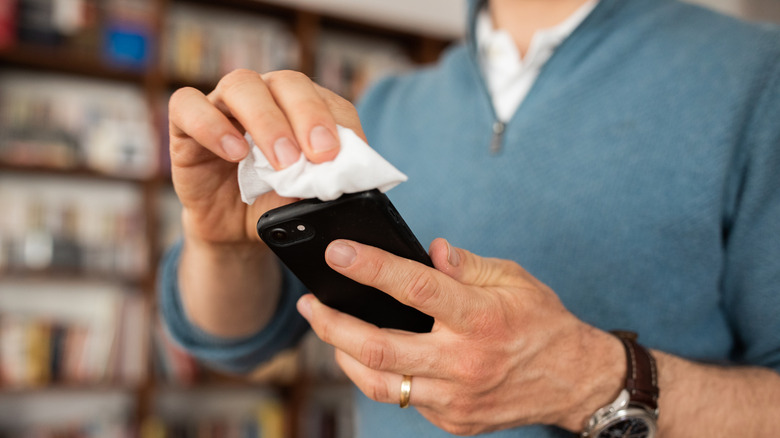
When you need to wipe up a spill on your kitchen counter, what do you grab: a cleaning wipe or a disinfecting wipe? Do you know the difference? Knowing the different types of cleaning agents and what each one does means you can keep your home spotless while protecting the health of everyone who lives in it. When it comes to cleaning vs. disinfecting wipes, the thing to remember is that some wipes only clean while others clean and can also disinfect. But to understand the difference, you first need to first the difference between cleaning and disinfecting.
When you clean something, you remove surface-level dirt, grease, grime, and some germs. Disinfecting goes a step further — it kills germs, like bacteria and viruses. For a disinfectant to work, it typically needs to be left on a surface for at least several minutes before it dries. For best results, you may need to clean a surface before you disinfect it.
While you can use a disinfecting wipe as a basic cleaning wipe — skip the prolonged drying process — you can't use a basic cleaning wipe as a disinfectant wipe. Disinfecting wipes typically have an active ingredient known to kill viruses, bacteria, and other germs, such as n-Alkyl (C14, 60%; C16, 30%; C12, 5%; C18, 5%) Dimethyl Benzyl Ammonium Chloride or thymol, which is extracted from thyme, while cleaning wipes will only have cleaning agents, like soap, in them.
When to clean, when to disinfect
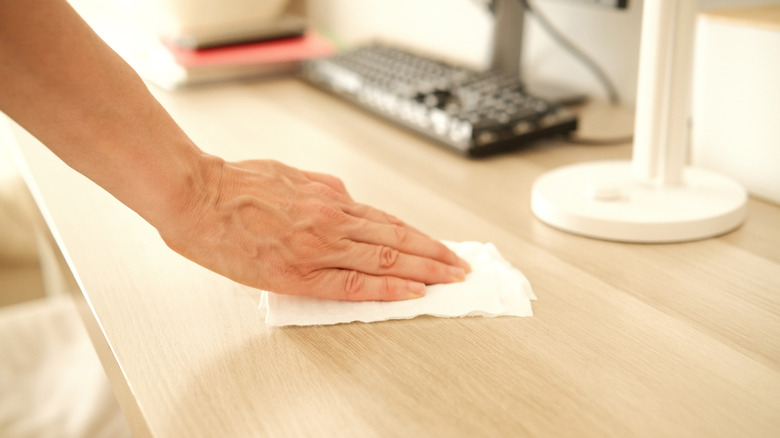
Another significant difference between cleaning wipes and disinfecting wipes is when you need to — or should — use them. As a general rule, think twice before using disinfecting wipes to clean your home. You usually don't need to disinfect surfaces unless someone in your home has been ill. Cleaning, on the other hand, is something to do regularly.
There are some areas of your home you want to clean every week, and some areas that call for daily cleaning, if not several times a day. Feel free to use a basic cleaning wipe to remove dirt and grime from the sink in your bathroom, the kitchen counter, and other high-touch surfaces, like doorknobs and light switches, daily.
Whether you're using a cleaning wipe for a run-of-the-mill cleanup chore or a disinfecting wipe after an illness, follow the package instructions closely. The directions for disinfecting will let you know the required contact time — how long the surface needs to stay wet for the disinfectant to work. It can vary from brand to brand — Clorox and Lysol have a contact time of 4 minutes, for example, while Seventh Generation, which contains plant-based thymol, needs 10 minutes to work. If you're using a disinfecting wipe on a surface that's used for food preparation, rinse it with water after it dries. Once you've finished cleaning or disinfecting, wash your hands thoroughly with soap and water.