

The Kitchenware Essential Ancient Greeks Couldn't Live Without
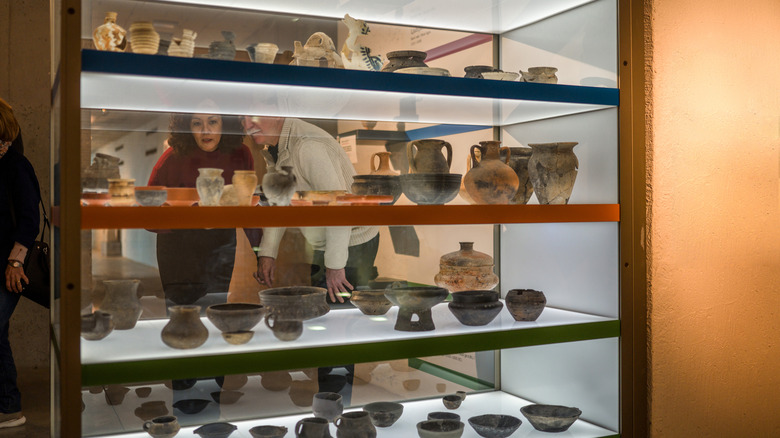
Maybe you love thrifting for vintage kitchenware brands like Pyrex, Le Creuset, and Rosenthal. Collecting older dishware shines a light into how people prepared and ate food back in the day. The same is true of the kitchenware and dishes used by people centuries ago, like the ancient Greeks. One example is the chytra, a multi-purpose earthenware cooking pot that most likely saw daily use by the average household at the time.
Most of what we know about the ancient Greeks comes from the pieces that they left behind, discovered in archaeological digs. Pottery, whether intact or in shards, provides insight into the cooking habits, rituals, and beliefs of the culture. The beauty of ceramics is that they are durable, surviving for thousands of years, long after the people who used them are gone. You can sometimes find valuable antique or vintage pottery at a thrift store, flea market, or estate sale. However, to get your hands on an ancient chytra, you'll likely have to shell out a bit more cash.
The uses of the chytra
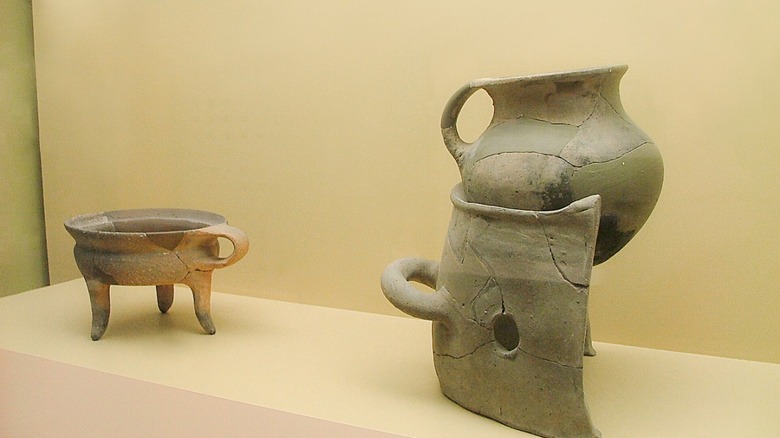
Chytra is actually a catch-all term for ceramic cooking pots used in Ancient Greece, sort of how casserole dish is used today to refer to dishware in a range of sizes and shapes. While there were many different shapes of chytra, a commonly used one had a rounded belly, flat bottom, prominent neck, and a single handle. Another common shape for the chytra resembled a cup that was wider than it was tall with either one or two handles.
Archaeologists can ascertain that the Greeks used chytra for cooking by examining the markings left on the pots. Often, the pots have smoke marks on the side opposite the handle. This suggests that the chytra were set on a hearth with hot coals under them and piled up over rounded sides. Just as you might use a Dutch oven for slow cooking techniques like stewing and braising, the Greeks may have used their chytras for the same. The shape of the cooking vessel may help heat move about, so that a cook could set the pot down on the hearth and leave it, without having to stir the contents.
And, just as cookware comes in a wide range of sizes these days, it did in the time of the ancient Greeks as well. A very large chytra, with a capacity greater than 18 liters, may have been used when cooking for a large group. Miniature chytra, measuring just about 2 inches high, were likely used in rituals rather than for everyday cooking.