

Disadvantages Of Using An Electric Weed Eater
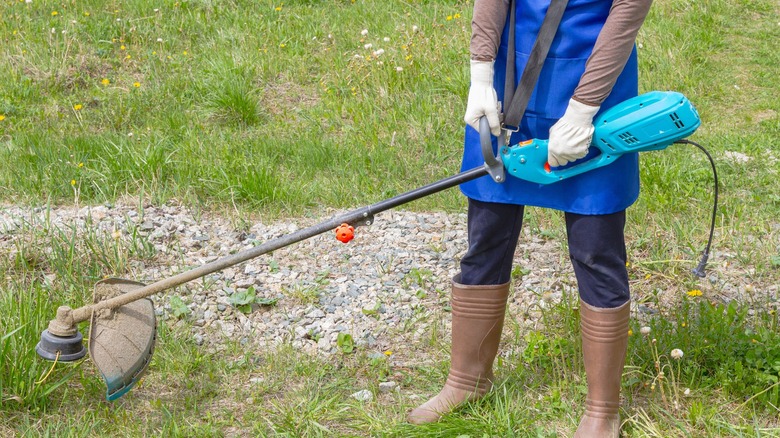
Before George Ballas invented the Weed Eater in 1971, landscapers had to use manual tools like shears and clippers to cut grass and weeds that a lawnmower couldn't reach. While the Weed Eater was a big step forward in lawn care, electric string trimmers (the generic name for the tool, since Weed Eater is a brand name) do have disadvantages when compared to gas-powered ones.
The first and most obvious one is the cord. Most electric trimmers these days are cordless, but light-duty corded ones are still available. The cord limits the range of the tool — although you can increase the range with an extension cord — and it just generally gets in the way. Cordless trimmers, on the other hand, aren't limited by cord length, but by battery life, which can prevent you from using the tool for more than an hour at a stretch without recharging.
One more drawback of electric trimmers is that they are generally less powerful than gas ones, although this isn't as true today as it was in the early days of string trimmers. However, a budget electric model won't cut through heavy brush or very long grass as efficiently as a gas model.
Batteries can be problematic
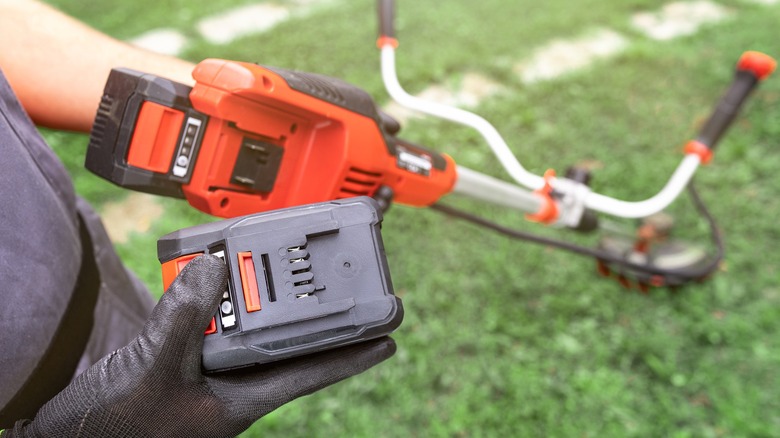
A major problem with cordless tools in general is that the batteries are manufacturer-specific. Most cordless string trimmers come with a battery and charger, but sometimes you have to buy them separately. You'll need at least one extra battery if you have a large area to trim and you want to work continuously. If you already have cordless power tools, it makes sense to choose a trimmer from the same manufacturer so you can use the batteries you already have, but this limits your choices. You may not end up with the most functional or economical trimmer, or the one with the best reviews.
Another caution to keep in mind is that batteries for cordless tools don't last forever. When one eventually wears out, you have to replace it, and it isn't cheap. Some cost almost as much as the trimmer itself. You won't have this problem with a gas trimmer, because all models use the same fuel.
Despite these drawbacks, cordless trimmers have a lot going for them. They make less noise, require less maintenance, and are more environmentally friendly than gas trimmers. Plus, they are easier to start. However, the final choice really comes down to what you need the trimmer for. If you want to use it for edging or heavy-duty jobs, a top-quality cordless trimmer can be almost as good as a gas one, but the ones that match its power and efficiency tend to be expensive.