

The Real Reason Clover Is Taking Over Your Lawn
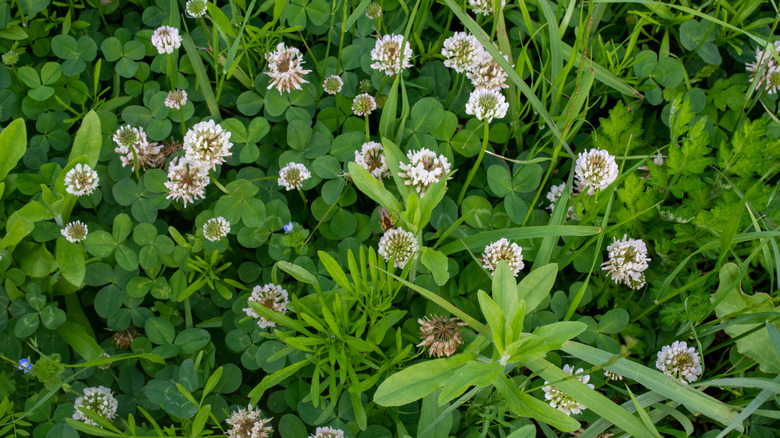
Have you noticed more and more clovers popping up in your yard? Though it may seem like random weeds at first, having an excessive amount of clover growing in your lawn points to larger issues with your soil. White clover (Trifolium repens) commonly sprouts up alongside turfgrass, but too much can be a sign of compacted soil. Compacted soil makes it difficult for grass roots to survive, while clover thrives. By improving the soil structure in your backyard, you'll help your grass grow into a healthier lawn and outperform the clover.
When your soil is compacted, plants will often grow misshapen, shallow roots, and your lawn will be prone to issues with pests, diseases, and weeds (like clover). Other signs of compacted soil include bare patches throughout your lawn or yellowing grass.
A lush, green lawn is a coveted goal for many, and there are ways to kill clovers without killing your grass. However, clover's designation as a weed doesn't mean it's not a beneficial plant. Growing clover can actually break up or improve soil compaction. The small, white flowers are beloved by pollinators, and these plants can actually add nitrogen to the soil as well. Still, it's a good idea to improve the compacted soil to support your grass.
What is compacted soil and why clovers thrive in it
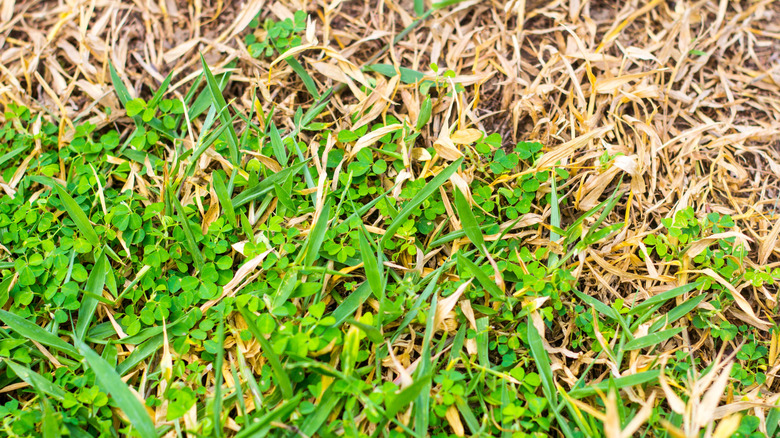
Playing in the yard, walking through your lawn, and sitting on the plush grass are normal outdoor activities. Unfortunately, this kind of heavy traffic often leads to soil compaction. Soil is made up of minerals and has pockets of air throughout the dirt, which are also known as pores. This allows air and water to move through the soil, helping your grass to get the oxygen, water, and nutrients it needs. When soil becomes compacted, the dirt is squished together, greatly reducing the amount of pores and their size.
Grass prefers to have room for longer roots, but clover has a denser, shallow root system that readily grows in worse soil conditions. Not only does compaction make it difficult for your grass roots to get air or water, but the density of the dirt also prevents them from stretching down into the soil. On the other hand, clover's shorter roots aren't as restricted.
When the ground becomes overly wet, the soil is more prone to compaction. Plus, clovers thrive in moist areas, making these conditions perfect for the common weeds. Compaction causes poor drainage for your lawn as well, keeping the soil overly wet to continue supporting the weeds. Luckily, fixing the structure of your soil is fairly simple, and there are a few ways you can help your lawn.
How to improve compacted soil and reduce clovers
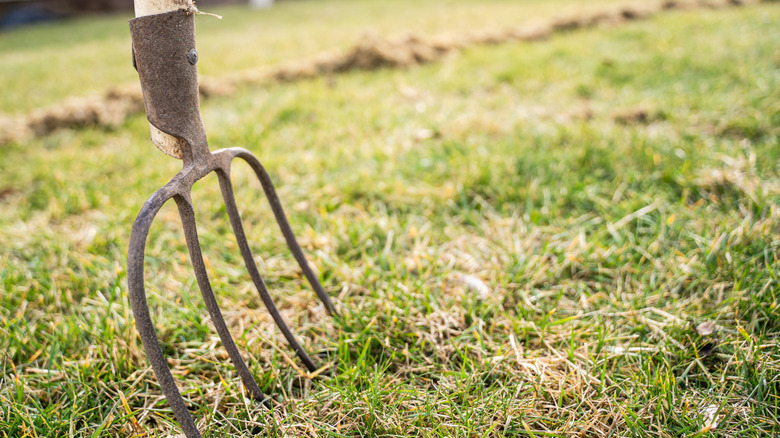
Aerating your yard is the common solution for compaction and clovers. Though it sounds complex, you can easily break up compacted soil with a common tool. Stab a pitchfork into your yard to create holes throughout the soil. If you have really hard ground, there are machines for core aerating lawns. With extremely compacted soil, you may need a landscaper to help break up the dirt. Make sure that the ground is as dry as possible when you aerate, since attempting to break up moist soil can actually worsen compaction. Top dressing your lawn should help to loosen the dirt as well. Simply use a rake to spread compost or sand throughout the top layer of soil.
Once the soil structure has been improved, overseeding your lawn works to fill in patches and thicken your grass. Additionally, mowing your grass so it's a little taller could help support deeper root growth. Helping your grass to thrive is likely the best method to choke out clovers. However, there are other steps you can take to eliminate them. A selective broadleaf herbicide will get rid of clovers in lawns.
Aerating your yard once every year will help to prevent it from becoming compacted or having drainage issues that encourage clovers. Additionally, the way your water your yard could help to prevent compacted soil. Try giving your grass deep, long drinks less frequently instead of quick waterings more often to help it grow deep roots.