

How To Easily Break Up Compacted Soil With A Common Tool You Probably Have
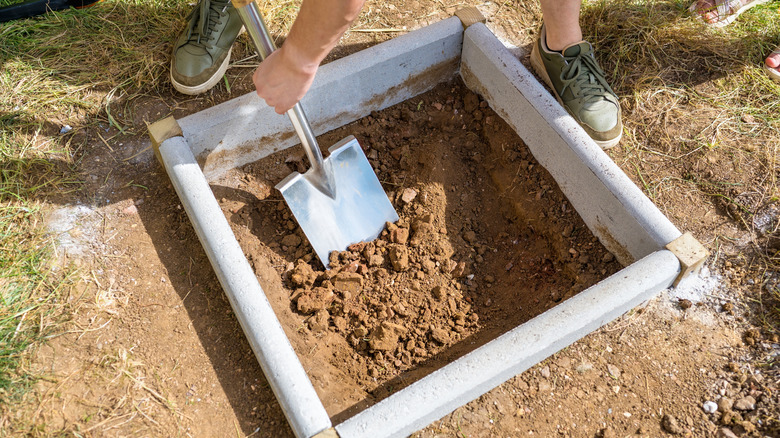
Compaction happens when soil is so tightly packed that the essential pores necessary for water and nutrient absorption become blocked. This leads to bare or patchy ground that greatly reduces a plant's ability to grow. If you want to grow a garden, plant a tree, or even grow grass in this hard dirt, you need to break up this compaction. And one of the easiest ways to do that is with a common digging fork.
A digging fork is composed of a straight pole with a handle to which a metal fork with four to six straight tines is attached. From experience, I can say that these are great, simple tools that work exceptionally well at loosening tough soil. I have two digging forks I inherited from my wife's grandfather, which are at least 50 years old. I've used them to establish planting spaces for blueberry bushes and apple trees, and to start raised garden beds for my wife.
The secret to using them to break up compacted soil is all about leverage. Using your foot, the way you would with a shovel, push the fork directly into the ground. Pull back towards you, and the soil will lift and begin to break apart. Repeat this process, moving around the area you're working in overlapping increments until you have a bed of loose, fluffy soil. Any spots that are still compacted can be stabbed and lifted, almost like tossing a salad.
Benefits of using a digging fork to break up soil compaction
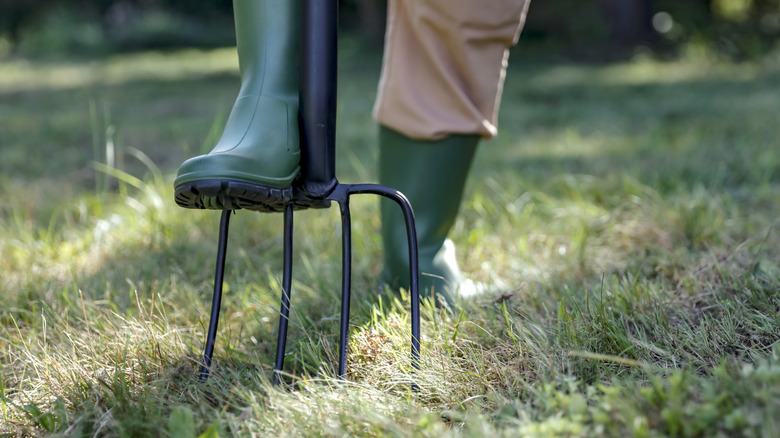
Depending on just how compacted your soil is, you might need to repeat the forking process, also known as spading, several times until the soil is sufficiently loosened. You can then use the fork to mix in soil amendments such as compost or to remove stubborn, deep-rooted weeds. This can be a time-consuming process, but a digging fork can help break up compacted areas. They are easily portable, so you can use them in places where a larger machine like a rototiller might not fit.
Speaking of rototillers, they are another common tool used to prep garden beds or reduce the compaction of soil in a specific area. They are excellent at this, but they often won't reach deeper than 10 inches, depending on the direction you spin the blades. As such, they are unlikely to handle compaction deeper than that. A digging fork, on the other hand, can reach 12 to 14 inches into the earth, breaking up deep compaction.
Addressing compaction when planting because the soil needs to be loose in order for the roots to grow without stress and receive water and nutrients. However, you can also use a digging fork as a substitute for a pricey aerator if you find a compacted patch in your lawn that could use some loosening.