

How Long It Actually Takes To Repair A Lawn After A Pest Infestation
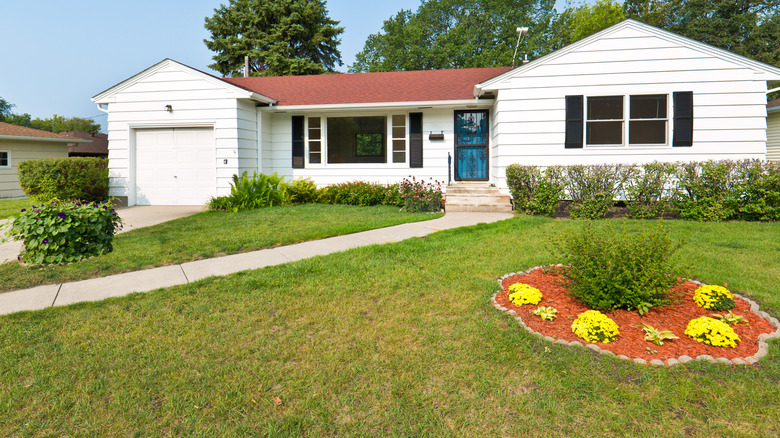
Anyone trying to maintain a healthy and beautiful lawn knows it's not as easy as it may seem. Besides regularly mowing your lawn, removing weeds, and watering it on the right schedule, you also have to deal with pests — which can eat away at your grass (and its roots) before you have a chance to notice. If your lawn has been damaged by ant mounds, sap-sucking chinch bugs, or grubs, your first step will no doubt be to call a pest control company and address the issue with insecticides. But that doesn't mean your lawn will automatically turn bright green again as soon as the last bug has left your yard. So, how long does it actually take for your grass to recover?
The truth is, there is no one-size-fits-all answer. It's helpful to look at some aggregate timelines for answers. If your lawn has been completely ravaged by pests to the point that you have virtually no grass left, you'll need to wait about 12 weeks after re-seeding for your grass to grow back. If you're looking to overseed a few bare spots, your lawn could start to look normal again in under two months. Should you decide to use sod to fix large bare spots, the seams will become unnoticeable within a few weeks. Maybe your grass hasn't actually died, and instead has just turned brown from pest activity — in this case, once the issue is solved, your grass could become green again in about a week.
How to help your lawn recover after a pest infestation
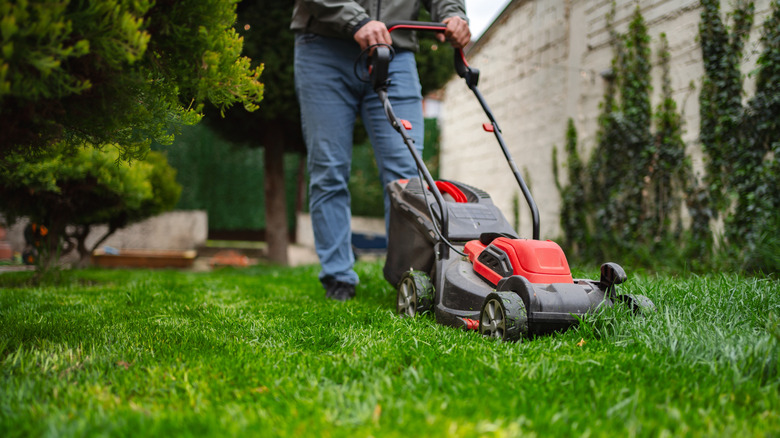
How fast your grass recovers from a pest infestation depends, in part, on how you care for it. There are a few key steps you can take to fix your lawn after the pests are gone. First, identify any dead patches of grass. If a clump of grass lifts away from the soil easily when you pull at it gently, the grass is completely dead and must be removed (if it resists, it's only damaged, and will soon recover). Once you've taken care of that, you'll want to overseed or sod to fill in the bare patches.
As your lawn recovers, continue to fertilize and water it regularly. As long as the grass is tall enough to mow — about 1 to 2 inches high – you should do so, to encourage it to grow faster. During fall (for cool-season grasses) or spring (for warm-season grasses), you'll also want to aerate your lawn, so that your soil becomes looser and less compact. This helps water and fertilizer reach your grass' roots more quickly and consistently, aiding in its recovery.
You'll also want to continue your lawn's pest control throughout the year. Pest prevention is just as important as addressing an active infestation — after all, once you've dealt with one lawn outbreak, you certainly won't want to go through another. Not sure where to begin? Take a look at a beginner's guide to managing pests for tips and tricks. Keeping up on your prevention and control also ensures that your lawn can recover without more pests destroying its progress.