

Skip White And Cleaning Vinegar: The Best Option For Killing Weeds
We may receive a commission on purchases made from links.
A walk around your yard or garden may leave you with a troubling sight: Weeds. Despite doing your best to prevent them, occasionally having to deal with weeds is a common struggle. Once you spot new weeds though, swift removal can help minimize further growth and spread. Before you head inside your home to grab a battle of white or cleaning vinegar to "naturally" kill weeds, consider horticultural vinegar (vinegar herbicides) instead. Such products are undoubtedly more efficient at eradicating common weed issues, but there are also some safety risks to consider before using them.
Aside from certain types of vinegar fueling an influx in vinegar cleaning hacks, this acid also appeals to people looking for greener solutions to a variety of home and garden tasks. However, it's important to understand the different classifications of vinegar. All types of vinegar have acetic acid as their active ingredient, with high concentrations able to kill certain weeds by causing significant burning.
When it comes to acetic acid content though, not all vinegars are created equal. Distilled white vinegar, which is made from grain alcohol, is most commonly used for pickling foods, and it contains about 5% acetic acid (or "50 grain"). True cleaning vinegar contains about 6% acetic acid and impurities that make it unsafe for human consumption. Yet even this strength may not be able to take on weeds as effectively as horticultural vinegar.
Why horticultural vinegar can treat weeds more effectively
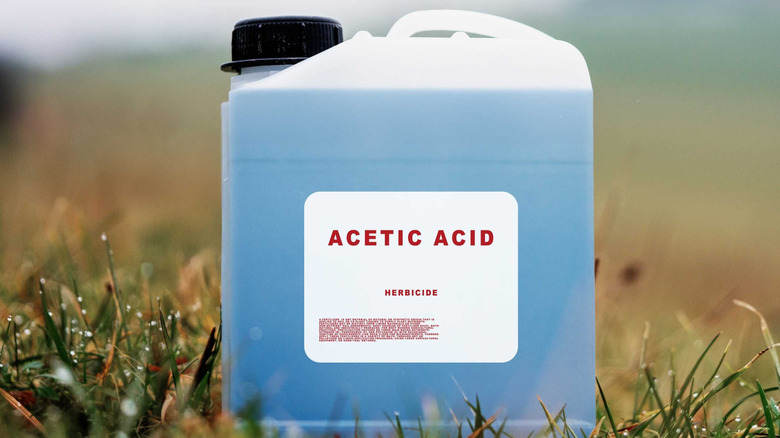
Horticultural vinegar has even more acetic acid content of 10% to 20% on average, with higher concentrations generally more effective. For example, this Natural Armor Horticultural Vinegar Concentrate has 30% acetic acid. Some horticultural vinegar products may contain up to 75% acetic acid, per Penn State Extension. Needless to say, this type of vinegar is not suitable for foods or for cleaning common household surfaces. Its strength does make it an effective weed killer though, so long as you follow all product label instructions. In fact, when used as directed, treated weeds may die within 24 hours, according to the University of Maryland Extension.
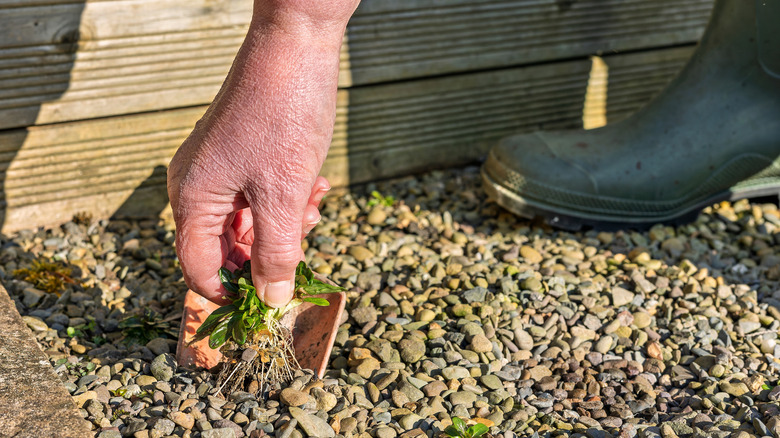
This type of vinegar may be effective against young broadleaf weeds, especially annuals. If you do decide to try horticultural vinegar, keep in mind that it impacts weed foliage by contact only so you should pull the plants out of the ground once the product has dried. Apply on warm days for best results, and at least 24 to 48 hours after any recent rainfall so the product has a better chances of sticking to the weeds without running off. Despite its potential capabilities to help eradicate weeds, be aware that horticultural vinegar generally works best on small weeds within a couple of weeks of germination.
Limitations and risks associated with horticultural vinegar
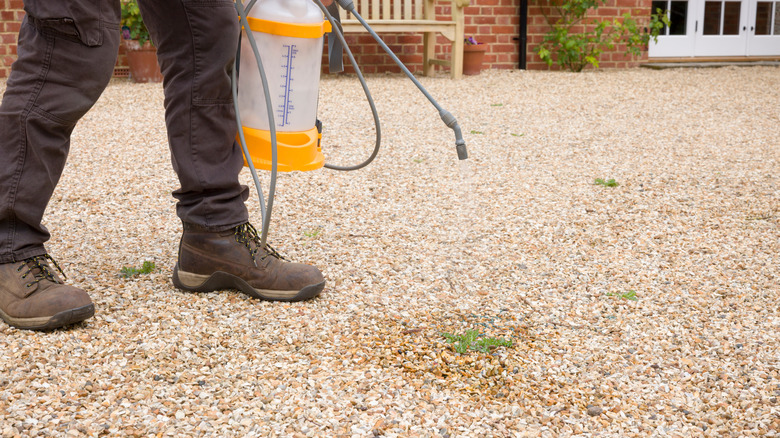
Note that the product may not be able to tackle all types of weeds that may sprout up in your yard or garden. Perennial weeds such as dandelions, horsetail and morning glory may not respond to horticultural vinegar, says Oregon State University Extension Service, because it does not affect their roots very effectively. It's also not the best option for common weeds you may have in your lawn, as it can burn the grasses around them. With this point in mind, you'll want to exercise care when using the product near other plants, as it can burn them. For these reasons, horticultural vinegar tends to be a better option for killing weeds in gravel driveways, as well as around sidewalks and patios.
Unfortunately, some of the biggest risks associated with horticultural vinegar involve some of the confusion over its acetic acid content. Since this type of vinegar is much, much stronger than its distilled white and cleaning counterparts, it can be harmful when used without the right precautions. This entails wearing gloves, masks, and protective eye goggles during use, similar to safety precautions associated with other chemical-based weed killers. Direct contact with horticultural vinegar can cause permanent damage to your eyes and skin. Follow all product label instructions, and keep any pets and young children away from recently-sprayed areas until they've completely dried.