

Does Vinegar Kill Weeds In Gravel Driveways?
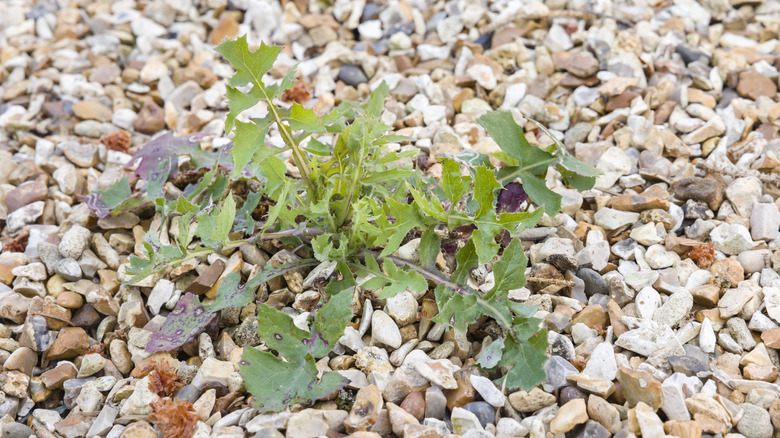
Vinegar has a lot of homeopathic uses, but you may be able to do more than just clean your home with vinegar. The acidic properties and affordability that make it a popular cleaning solution may be able to help you outdoors as well. If your gravel driveway is constantly spotted with scraggly, unsightly weeds that you just can't stand, vinegar could be part of the solution. It can be used safely on gravel driveways and is able to kill some weeds. However, it isn't a miracle cure, and how helpful it is will depend on when and how you use it.
Vinegar works as a weed killer due to the acetic acid it contains, which breaks down the cell walls of plants and dehydrates them. When sprayed directly onto the leaves and stems, the plant is unable to retain water and wilts. If the weed is young, this may be enough to kill it. Younger plants are more vulnerable to stress, and without their leaves, they have no way to absorb light and support themselves. However, vinegar only kills the parts of the plant it touches. The roots are typically unaffected, and established weeds can survive the vinegar and regrow. Additionally, some weeds have seeds that can lie dormant for quite a while, and the vinegar won't kill them unless it's sprayed directly onto them. As new seeds sprout, you would need to get your spray bottle out and target them individually. If you're only relying on vinegar to take care of the weeds, you'll need to act fast to get the weeds before they're established and check your driveway regularly for new sprouts or regrowing roots.
Using vinegar as part of your driveway weed killing strategy
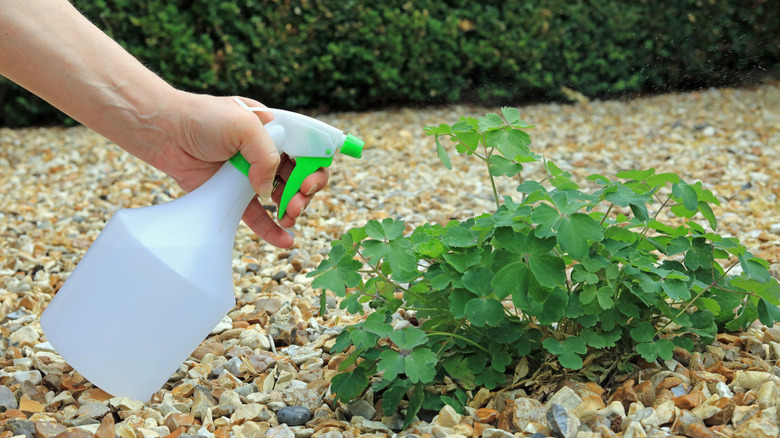
Vinegar on its own may not be the most effective weed killing solution for everyone, but it may still be helpful when combined with other strategies. If you're planning a new gravel driveway, consider preventing driveway weeds with a sub-base layer. To deal with weeds that are already growing, however, there are a few options. Spray small and young weeds directly with vinegar, targeting specific plants rather than spraying it over a broad area. Avoid spraying it just before or after it rains, as you don't want the vinegar to be washed off. You may be able to find horticultural vinegar, which has a higher concentration of acetic acid. This makes it more effective on larger weeds, but it also makes it somewhat more dangerous to handle. Be sure to follow the instructions on the label carefully and wear protective skin and eye coverings.
For the larger or more mature weeds, you can also turn to other ways to remove weeds from gravel driveways. Digging them up by hand is an effective way to get rid of some weeds, but that may not be an option. In layered driveways, digging through the different layers can destabilize it and cause problems. Plus, the ground may be compacted from being driven on, making it harder to dig through. You can also try using salt or even burning the weeds, provided your area isn't under a burn ban. For particularly stubborn weeds and the seeds they leave behind, chemical herbicides may be the best option.