

Forget Plastic Edging: There's A Tougher Material To Keep Weeds Out Of Gravel Driveways
We may receive a commission on purchases made from links.
There's a lot to be said for gravel driveways. They're a durable and DIY-friendly option that creates English cottage garden vibes even when you're on a tight budget. But the charm can quickly wear off once you start seeing little tufts of green poking up between every other rock. Gravel driveway maintenance is a major hassle, since seeds and other debris can get blown over, dropped by birds, and even tracked in by your tires. Installing plastic edging is a commonly attempted solution. However, it overpromises and underdelivers on keeping grass clippings and other weedy things where they belong since it quickly shifts and cracks after exposure to the elements. Instead, metal hammer-in edging is a tougher material that can help keep weeds out of gravel driveways by providing a crisp and durable edge that requires minimal maintenance.
Typically made from aluminum or steel, metal landscape edging is an extremely practical and durable way to say goodbye to grass growing in your gravel driveway. Cor-Ten steel edging is a popular option with DIYers who don't want to spend days digging trenches during the installation process. Instead, the product is sold in strips with a sharply serrated edge on one side. This allows it to be directly hammered into the ground, using a small piece of scrap wood to avoid bending or warping from the blows.
The tough material is sold in several widths, lengths, and thicknesses by several different manufacturers, including EdgeRight, Straightcurve, and EverEdge. The right solution for most driveways is the 6-inch-tall size. You can purchase Cor-Ten Steel Edging Kits from Amazon starting around $70 for 20 feet.
Metal landscape edging prevents driveway weeds in several ways
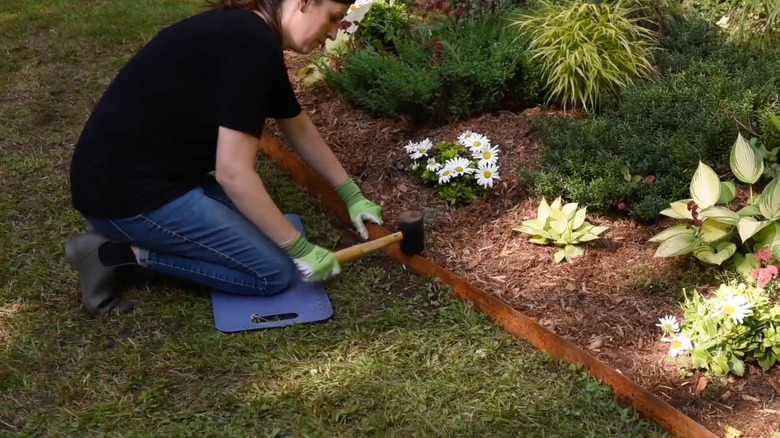
When it comes to the best types of landscape edging, hammer-in metal beats plastic hands down. We'll be the first to admit metal isn't as affordable. Steel also lacks flexibility, which can be challenging if you need to keep weeds out of a gravel driveway that's on the curvy side. (In that case, aluminum is a good solution that offers the performance of steel, the flexibility of plastic, and a price that lands somewhere in the middle.) However, plastic edging lasts just a few years while metal edging stays durable for decades.
But it's the weed prevention factor that really makes a difference. Plastic's flexibility is great until a particularly pernicious weed system is trying to work its way into your gravel. The soft material tends to yield and shift with pressure, which means it's no match for Mother Nature when she decides to move her favorite weeds out of the yard and into your driveway. Hammer-in metal edging, on the other hand, is designed to anchor firmly enough into the ground that it can withstand shifting soils and persistent roots without allowing them to break through the sturdy barrier.
Metal is also a more eco-friendly option, which impacts weed prevention more than you might realize. Although they will develop a patina over time and may eventually rust after exposure to the elements, aluminum and steel landscape edging will never release microplastics into the soil. According to a 2025 study published in Ecotoxicology and Environmental Safety, the presence of microplastics in soil may disrupt soil microbes in a way that gives certain weeds an advantage. We think that's just another reason to forget plastic edging in favor of steel alternatives.