

Mole And Vole Holes Look Different: Here's How To Identify What's In Your Yard
We may receive a commission on purchases made from links.
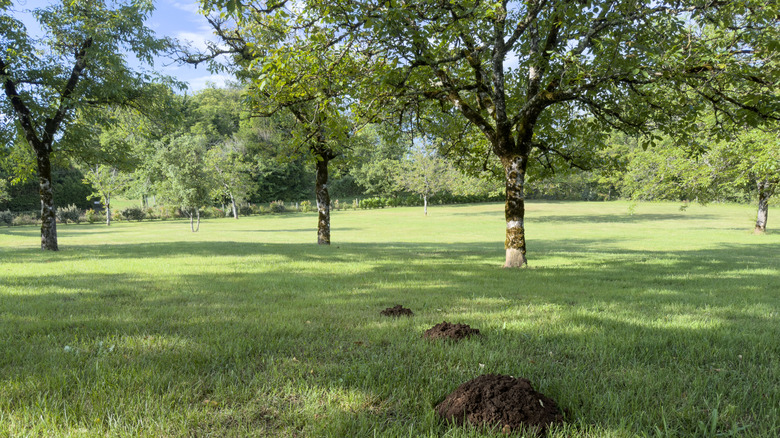
Is some critter digging up your yard and leaving it a mess? It's frustrating to deal with animals destroying your lawn, but the problems you can expect depend on what is digging tunnels through your grass. Both moles and voles are small mammals that burrow underground, but they don't cause the same types of damage. Catching sight of them can be tricky, but they're easy to distinguish from the evidence they leave behind. Moles dig much larger, more expansive holes and tunnels with soil mounds near the entrance, while voles stick to small burrows and surface runs.
The different evidence they leave behind stems from their behavior. Moles live primarily underground, as they eat the insects that live in soil, and only surface if something blocks their path or if their tunnel becomes unsafe or unable to support them. The displaced dirt from their tunnels has to go somewhere, which is why mole holes are often surrounded by piles of dirt. You may also be able to see or feel the tunnels stretching away from the hole, though this isn't always the case when the tunnels are deep or run beneath a hard surface. Voles, by contrast, spend half their time above ground, as they eat plants. You'll likely see paths in the grass, called surface runs, leading to and from the hole. However, you're less likely to see dirt piled around the hole. Additionally, voles live in colonies, while moles are largely solitary. That means you may see multiple vole holes close together.
What to do when you find mole or vole holes
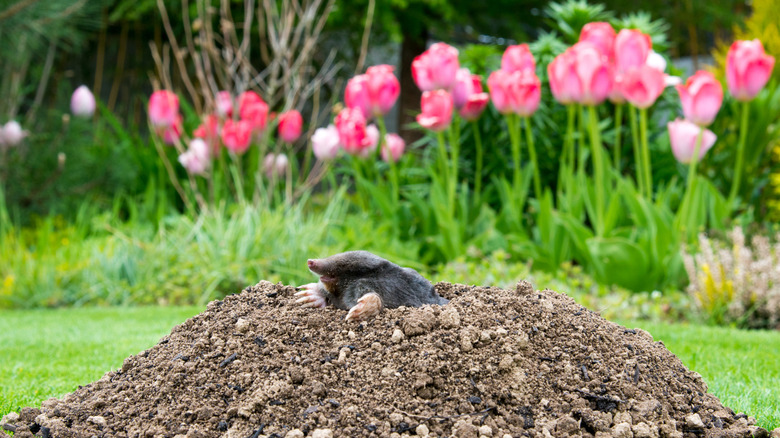
When you spot a hole that you believe is from a mole or vole, keep an eye on it, but don't go poking around inside. While moles and voles themselves are not particularly dangerous, they can bite if threatened. Plus, other animals can dig holes, and some, such as snakes, may move into an abandoned burrow for shelter. If the holes in your yard lack the distinctive traits of mole hills or vole surface runs, setting up an outdoor camera may help identify the animal. This can also help you determine whether the mole or vole is still living there, either by catching sight of the critter as it comes out or by tracking changes in the surrounding area. Alternatively, you could fill the holes, then check back regularly. If the holes reappear, you'll know that there is an active mole or vole in your yard. If they don't, you can move on to repairing mole damage in your yard.
Identifying whether you have moles or voles is important, as the recommended pest control method differs depending on the animal. Moles can be eliminated through traps placed over their tunnels. Catching voles with traps isn't quite as effective. Voles can be caught in mouse traps, while moles are caught more effectively in scissor-jaw, pincer, or harpoon traps. Voles can also be controlled by trimming the plants near their holes, as they dislike being exposed. Finally, you can try attracting owls or other predators to your yard for natural vole control.