

The Collectable Vintage Dishware Brand That Once Came In Oatmeal Boxes

We may receive a commission on purchases made from links.
In the midst of an economic crisis like the Great Depression, people tighten their belts and curtail spending. During the Depression, several major glassware companies, like the classically identifiable Federal Glass, began mass-producing glass dishware, including cups, saucers, and bowls. Mass-producing glassware significantly reduced the cost of creation — so much so that pieces were often included as a gift inside boxes of oatmeal. That's right, just as it's common for kids' cereal today to have a toy or other surprise inside, during the Depression era, you might open a box of oats, pour some into a bowl, and have a piece of glass come tumbling out.
While Depression-era glass was meant to be so cheap that it could be given away for free, it's a valuable object to look for at estate sales today. One brand in particular, Anchor Hocking, was behind the freebie oatmeal glass, thanks to a partnership with Quaker Oats, but there were others giving out their glassware as promotional items. Knowing what patterns to look for and what features to spot will help you find authentic, rather than reproduced, oatmeal glass.
How to identify oatmeal glassware
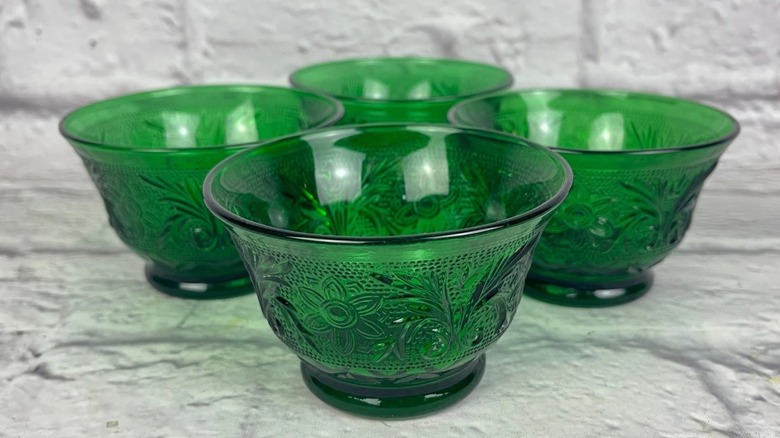
Back in the day, identifying a piece of oatmeal glass was easy — all you had to do was tip the canister of oats into a bowl, sift through the contents, and voila! There was your piece of glass. These days, spotting genuine Depression-era glass, particularly oatmeal glass, is a little more tricky.
Many pieces don't have backstamps or maker's marks on them, meaning it's all but impossible to determine if what you're looking at is the real deal without doing a bit of research. It's helpful to know what patterns and colors to look for, such as pink, green, and yellow. Although produced decades after the Great Depression, in the 1960s, Anchor Hocking's Early American Prescut glassware included a line produced exclusively for inclusion in Quaker Oats oatmeal boxes. Oatmeal Prescut glass is clear and features a fan motif. Pieces include a water glass, sherbet bowl, juice glass, and coaster.
Beyond pattern and color, a surefire way to know if you've got your hands on an authentic piece of Depression-era glass, whether or not it came from a box of oats, is to look for imperfections. Production was cheap and dirty, meaning bubbles and seams weren't only common on the glassware, they were expected. Given the age of the glass and its lower quality, signs of use should also be evident, such as scratches and dings. The beauty of the glassware is that it's far from perfect.