

Skip The Paint: There's A Better Way To Restore Oak Cabinets Using A Laundry Staple
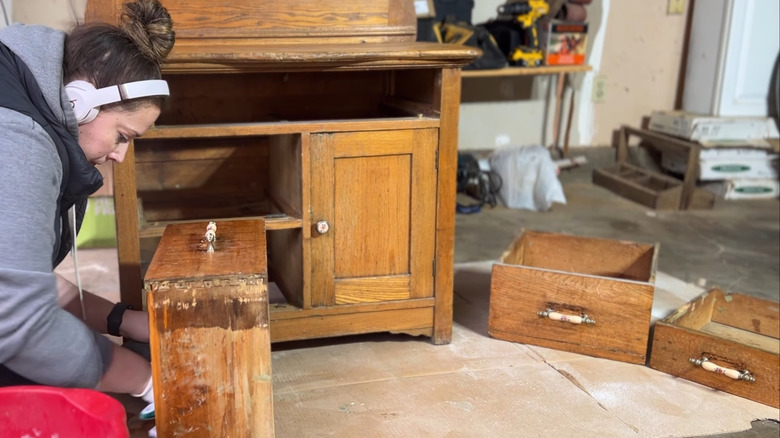
Any old oak cabinet you find at a thrift store can be a moneymaker if you know how to restore it, and the older it is, the better. A common problem with old furniture, of course, is that it's well used, and after you've stripped and sanded the wood, you may find stains and discoloration that your sander won't remove. Rather than trying to hide such defects with paint, you could bleach the oak cabinet. That's right, the same chlorine bleach you use to get your laundry whiter and brighter can also help restore tired-looking wood.
Chlorine bleach is one of four types of wood bleach (if you count hydrogen peroxide as a standalone bleach), and it has specific uses. It will lighten the wood somewhat, but it won't change the natural color — you need two-part sodium hydroxide and hydrogen peroxide wood bleach for that. Chlorine bleach will also lighten stains caused by mold, wine, and other organic sources, and it can make discoloration from water-soluble dye-based stains (but not pigment-based stains) disappear. It may even lift some ink stains, but it won't remove rust stains; that's a job for oxalic acid.
Because it can damage lignin, the compound that strengthens the cell walls of the wood fibers, chlorine bleach is best used as a spot stain remover. It could damage the wood or interfere with the adhesion of a new finish if you overuse it, and you should avoid using it on wood veneers since it can dissolve the glue holding the veneer.
How to use chlorine bleach to lighten stains on oak cabinets
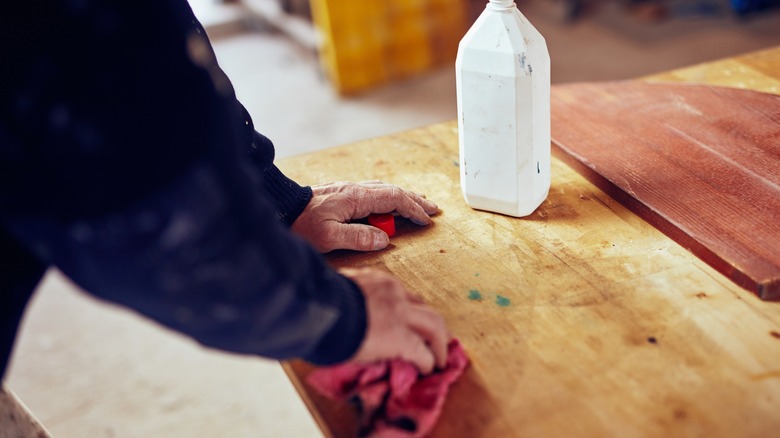
Once you have stripped and sanded the oak cabinet, use a rag to apply standard household bleach, which is a 5.25% to 6% sodium hypochlorite solution. A stronger solution is more effective, so if all you have in your laundry room is a 5.25% solution, it's worth it to go out and buy an extra-strong 6% one. Bleach is caustic, so wear gloves and goggles when handling it, and definitely don't let any splash into your eyes.
Simply wipe a thin coat onto the stained area, wait for it to dry, and apply another coat as needed. You can repeat this process as many times as it takes to lighten the stain to your satisfaction. If you're trying to lighten an oak cabinet that has been dyed, go ahead and spread the bleach over the whole surface. If you notice a difference when it dries, that means the bleach worked. You can apply more coats if you want to remove more of the dye color.
After the final application of bleach has dried, it's important to sand the wood, using 100- or 120-grit sandpaper, to remove any crystals left on the surface. In most cases, sanding will help lighten the stains you're trying to remove even more, so it's an important step. Finally, wipe away the sanding dust, and the wood is ready for refinishing.