

For Perfectly Smooth Mulch, Turn Your Rake Up-Side-Down
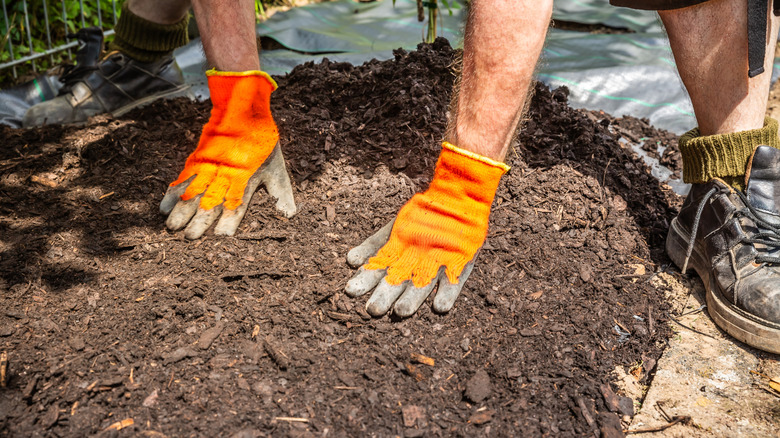
Using wood mulch in your garden is an eco-friendly way to help prevent weeds and add nutrients, among other things. Along with benefiting your garden's health, mulch does a lot to make it look more finished and beautiful. Uneven layers can affect how well mulch performs, though, since thicker areas may hold too much moisture while thin spots may leave soil exposed. A well-maintained, even layer of mulch can help regulate soil temperature, protecting plant roots from extreme heat and cold. Clumpy, messy mulch, however, can have the opposite effect. The problem is that mulch can be rather difficult to spread out smoothly. Fortunately, there is a simple trick you can try to get perfectly smooth mulch every time — turn your rake upside down.
Mulch is simple enough to use without any fancy techniques, but there are always ways you can take your landscaping game up a notch. Backblading mulch is a landscaping technique that breaks up clumps and helps create a smooth, uniform look. This trick uses the back of your garden rake to smooth out your mulch after you place it. It works because the shape of the back side of the garden rake — with its smooth, paddle-like tines — presses and levels, while the tines work like a filter to break up any clumps.
How to use your rake to get smooth mulch
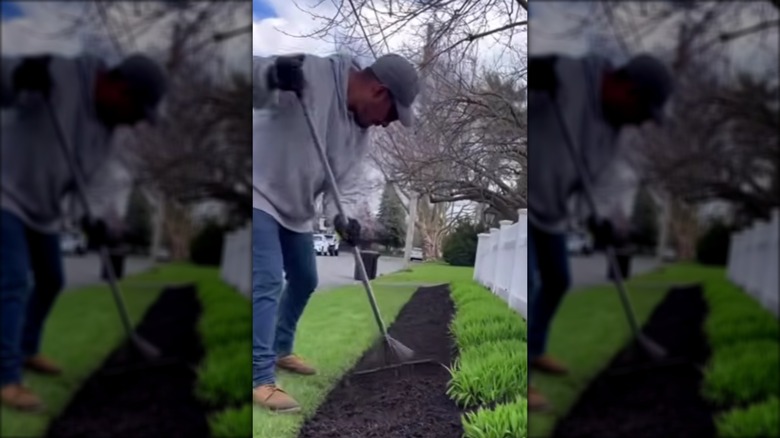
Backblading is a relatively simple and self-explanatory technique. The first thing you need to do is spread your mulch in the designated area. This can be done by hand or by pouring the mulch directly out of the bag. After everything is on the ground, use the front of your garden rake — tines down — to spread it out. You want the mulch to be 2 to 4 inches deep across the whole garden bed. Using too much mulch can starve your plants of moisture and oxygen, while using too little can reduce the benefits of mulching altogether. Once it's evenly spread, it is time to flip your rake over so the tines point up and the back of the rake is against the ground.
You will then use the back of the rake to glide over the mulch and smooth it out. You want to use gentle downward pressure to press and smooth it as you go. Long, even strokes with the rake will help keep everything consistent and avoid creating rake lines. The goal is to use the rake to fill in any low spots and smooth out bumps. The tines will break up any clumps as you work. Make sure to be careful when working around the base of your plants so that you don't accidentally damage them. To keep everything looking crisp and clean, try to keep any mulch from scattering over the edges of the garden bed. Stray pieces can be carefully raked back into place or picked up by hand.