

Forget Bricks And Stone: There's An Easier Way To Build A Sturdy Retaining Wall
We may receive a commission on purchases made from links.
Building a retaining wall can be a lot of work, especially if you use bricks or stone. It's a sturdier, more attractive sloping landscape, but it can be difficult to put together. However, there is an easier way to build a sturdy retaining wall that doesn't involve traditional material options like bricks or stone. Instead, you can purchase interlocking concrete blocks from big-box hardware stores. The nature of how these blocks fit together makes building the wall much easier from the get-go. Their bond also makes it strong. While there are many stores and brands available, the Pewter Concrete Retaining Wall Block from Home Depot is one well-reviewed example. Labeled as a best seller, this block comes in many finishes and maintains a 4.5-star rating across more than 6,500 reviews.
The blocks are easier to use than flat bricks or stones because they are specifically engineered for retaining walls. Unlike other materials that might need to be carefully placed to fit the bill, these ready-made blocks have two features to make installation a lot easier: a self-aligning rear lip and a trapezoidal shape. The ridges on the back help them lock into place when they're stacked, so they are less likely to slide forward. The shape allows them to be installed in straight lines as well as curved shapes.
Building a retaining wall with pre-cut, interlocking concrete blocks
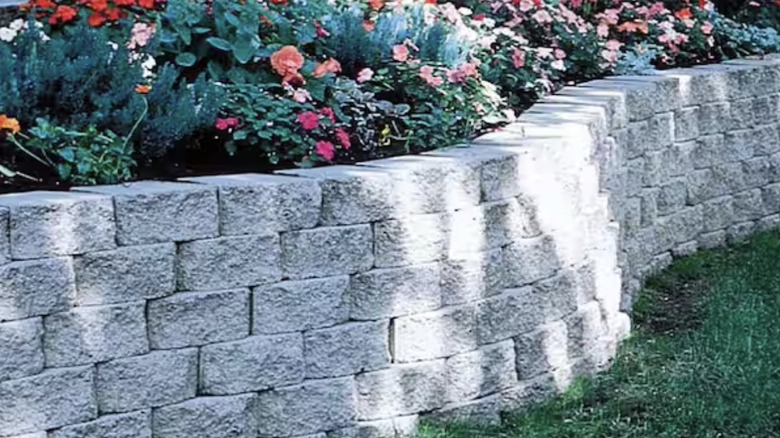
While purchasing interlocking blocks makes building a retaining wall for your garden easier, it still is a physically involved project. For these blocks to do their job, you must select the location of the wall carefully as well as dig and level a trench for the first row of blocks to rest inside. This base layer is so crucial as it quite literally sets the foundation for the overall success of the wall. Then, once you start stacking, the shape of the blocks is what makes the rest of the job a little easier. Their interlocking nature automatically adds some sturdiness to the structure. These blocks are specifically designed to stick together, whereas Individual stones or bricks might still be unsteady during this construction phase. So, there are fewer tools and less overall DIY know-how required. While you can use landscape adhesive between rows for extra security, you don't have to.
Once you've installed a drain pipe and backfilled the blocks with gravel, you've created a sturdy DIY retaining wall. That said, Home Depot notes that because of the nature of dry-cast concrete, various batches of these blocks could end up looking different. So before you start, measure your intended wall space as accurately as you can. Then, purchase all of the blocks for your project in one go, so you don't end up with a patchy final product.