

Vinegar Vs. Bleach For Mold: Which Is Better?
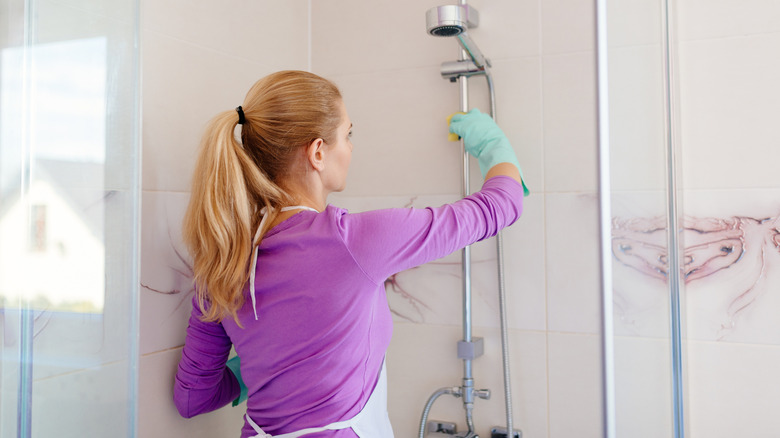
It's small, but mighty — microscopic mold drifts through the air and starts reproducing when it lands on a damp or wet surface. Once it starts growing, mold can be tough to get rid of, especially in humid areas of your home, like the bathroom or near your windows. Fortunately, you don't have to live with mold growth in your home, as there are ways to kill it, using either bleach or vinegar. But which one is better? The answer is — it's complicated. Bleach and vinegar both have their benefits and drawbacks, and in some cases, using one is the right call rather than using the other. Before you reach for the bleach, or the vinegar, know what you're getting into and whether the cleaner you've chosen will do the job.
No matter which one you use to tackle mold growth, remember to always take safety precautions. Wear rubber gloves, goggles, and an N-95 mask to avoid skin or eye irritation and reduce the risk of breathing in mold spores, which can trigger respiratory problems. And, if you have asthma or other breathing difficulties or know you're allergic to mold, this is a job to pass off to another member of your household.
Pros and cons of cleaning mold with bleach
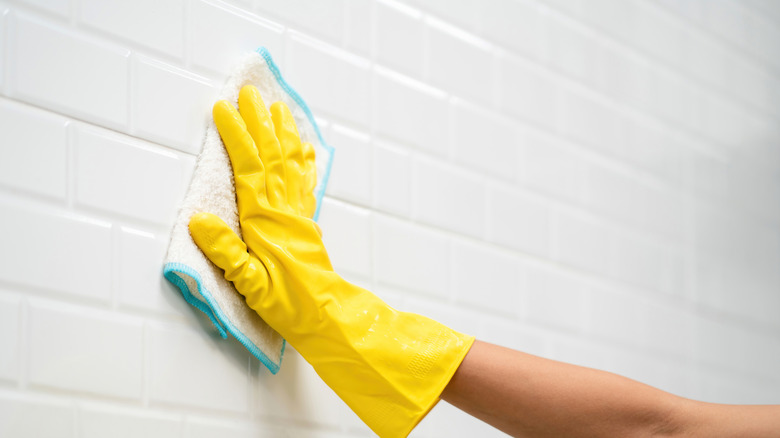
Bleach is powerful stuff, so strong that you should always dilute it with water when using it to remove mold (or any other time you're using it to clean). The biggest drawback of using bleach to clean mold is that it can be dangerous. You should never bleach with ammonia or other cleaners, as it produces toxic fumes. It can also irritate your skin, eyes, and lungs, which is why you want to wear protective gear and should always open the windows or otherwise ventilate a room when using it. On the positive side, bleach is very effective, especially when used on non-porous surfaces like tile, glass, or metal. However, it's not recommended to use bleach to clean mold from porous surfaces, such as wood, as the bleach can damage the wood and won't actually reach the mold spores within.
If you're going to use bleach to clean mold, only use it in a small area, so that it doesn't produce too many fumes. To dilute, mix 1 cup of bleach with one gallon of water. Pour into a spray bottle or bucket and apply to the area with mold, then let air dry.
Pros and cons of killing mold with vinegar
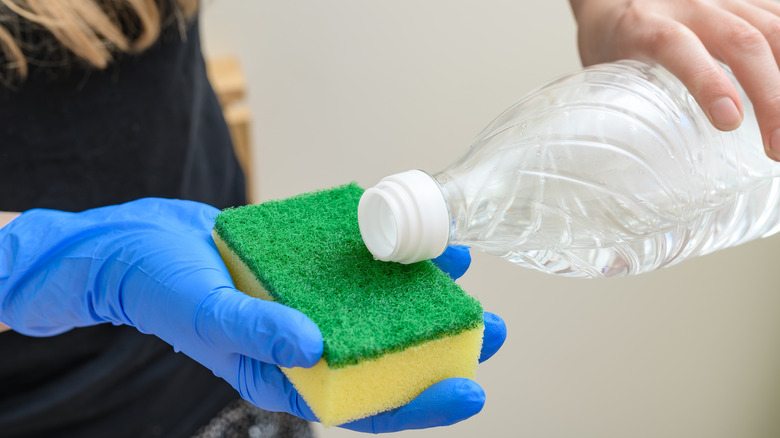
Often touted as a natural cleaner that's safer than products like bleach, vinegar can also be effective at killing mold, thanks to the acetic acid it contains. The vinegar will seep into porous materials, getting at the mold spores within. Unlike bleach, which should always be diluted, you use vinegar at full strength to get rid of mold. And, the stronger the better. The difference between distilled white vinegar and cleaning vinegar is the acetic acid concentration — cleaning vinegars often have at least 6%, and sometimes up to 30%, acetic acid, compared to distilled white vinegar's 5%.
Higher concentrations of acetic acid have their drawbacks, as the stronger the vinegar, the more likely it is to irritate skin, eyes, and airways. And, the distinct smell of vinegar, which can linger, may be a turn-off as well. As with bleach, some materials can't be cleaned with vinegar, such as tiles, which can be discolored by the acid, and natural stone, which vinegar can dissolve. That said, vinegar will help get mold out of textiles, such as carpet, curtains, and upholstery, which can't be cleaned with bleach. To remove mold with vinegar, apply to the area using a sponge or spray bottle and allow to dry for one hour, then use a wet sponge or cloth to rinse the area and let dry again. Repeat the process in a few days to ensure the mold is gone.