

What To Do With Your Tomatoes In August To Ensure They Ripen Before The End Of The Season
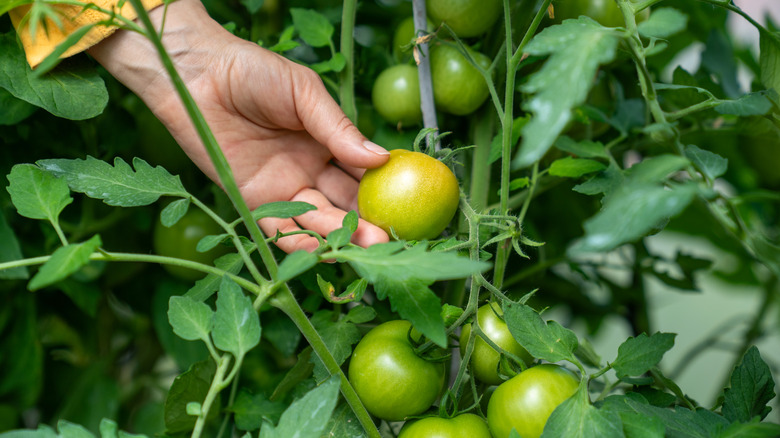
If you're growing your own tomatoes due to the shortage, you should know that caring for your plants doesn't stop once harvest season arrives! Keeping them healthy while your tomatoes finish ripening is important, but encouraging the fruit to ripen faster is also helpful. Early autumn storms, unexpected frosts, or even just back-to-school chaos could leave your tomatoes in the lurch if they aren't ready to harvest. Luckily, there are steps you can take this August to help them finish ripening.
To start, make some simple adjustments to your care routine. Slowly reduce the amount of water you give your plants. This can cause the plant to speed up the development of the fruits and seeds, as it's trying to finish production before it fully dries out. Be careful with how quickly and how much you reduce the watering. Too much of a decrease, or doing so during intense heat, could backfire and lead to smaller fruits and slower ripening. During early August, just water a bit less than you typically do. You can also fertilize your tomato plants to get them across the finish line, but be careful what kind you choose. Nitrogen-heavy fertilizers will cause the plant to focus on leaf growth, not fruits. Stick to phosphorus-heavy fertilizers, as they can help the tomatoes develop and ripen properly. You can also refer to these expert tips for fertilizing tomatoes for more guidance.
Prune your tomato plants
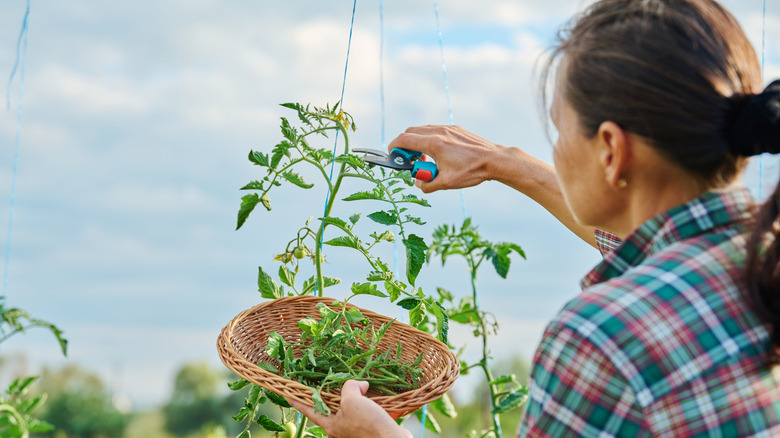
Prune your plants to remove any pest eggs, fungal growth, or diseases before they can spread and impact your fruit, no matter the time or type of tomato. However, there's another type of pruning you can do in August to ripen indeterminate tomatoes specifically. If you aren't sure how to tell if your tomato plant is determinate or indeterminate, look at their growth habits. Determinate tomatoes are bushy and put out most of their fruit around the same time, rather than staggered throughout the season. Indeterminate tomatoes are more vine-like, and their tomatoes grow in waves over the course of months.
In early to mid-August, cut the top of your indeterminate tomato plant off. Remove any tomatoes that won't have time to ripen before the frost arrives, but leave all those that should be ripe by then. This is called topping, and it can be done a little over a month before your first frost date. For most of the U.S., the first frost is expected to come in September or October, making August a good time for the average gardener to top their tomatoes. Pruning in this way serves two purposes. It stresses the plant somewhat, encouraging the tomatoes to ripen in the same way that reducing watering does. It also stops your plant from devoting energy to the new growth, leaving more for the tomatoes that are already ripening.
Ripening tomatoes after harvesting
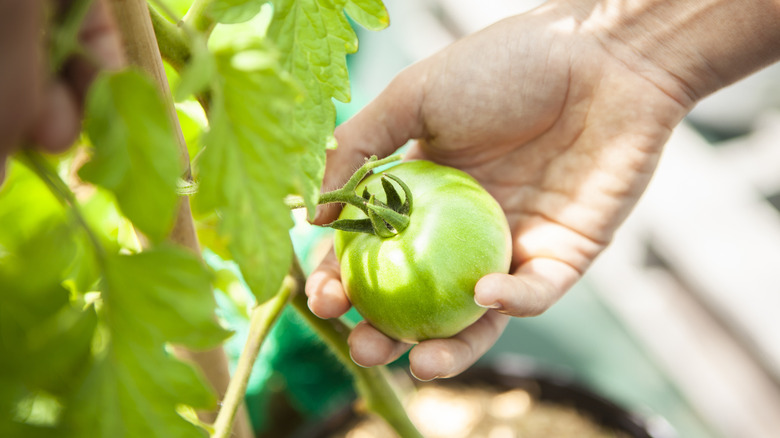
There's always the risk that pests or inclement weather will damage your tomatoes before they are fully ready. The good news is that they can continue to ripen after they've been harvested, provided they have already started the process. You can pick them as soon as you see the colors changing, although some people prefer to wait until they're closer to halfway ripe. Simply leave them out at room temperature to ripen naturally. Alternatively, store them somewhere warm in a bag with a banana. The banana releases ethylene gas, which can help the tomato ripen faster.
Harvesting your tomatoes early is particularly important in August. While warm temperatures are ideal for ripening tomatoes, excessively hot weather can have the opposite effect. Temperatures above 85 degrees Fahrenheit can actually cause tomatoes to stop ripening. Many states have average highs at or above this threshold throughout August. There have also been plenty of above-average high temperatures over the past few summers. This means that even areas where the temperatures would typically support tomatoes ripening on the vine, harvesting them early may be helpful.