

Cinder Blocks Vs. Cement Blocks: What's The Difference?
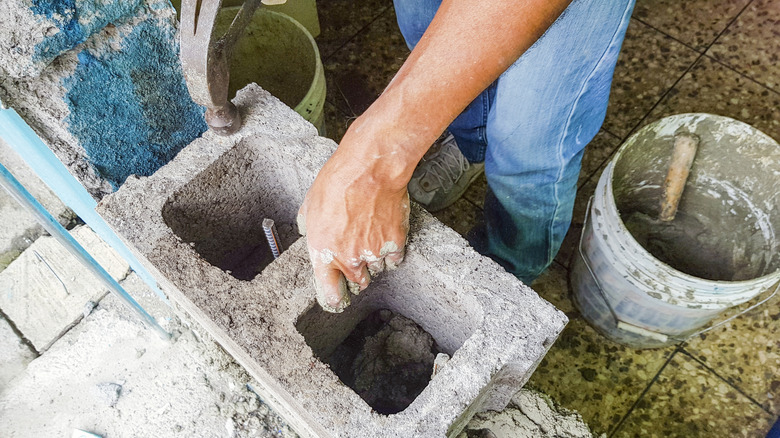
In theory, a cinder and cement block might seem like the same thing. After all, they're both precast and have the same rectangular shape. However, choosing the wrong one can mean the difference between your load-bearing walls standing like a sentry for ages or crumbling with time, especially in moist areas. So, to understand the difference between the two, we got in touch with Peter Kravchuk, a contractor and carpenter, and the founder of New Day Construction. He explains to Hunker exclusively, "The main difference is the aggregate used inside the block. Traditional cinder blocks contain coal cinders or ash, which makes them lighter, more porous, and generally weaker. What people call cement blocks are usually concrete masonry units made with Portland cement and dense aggregates such as gravel or crushed stone. They are heavier, stronger, and better suited to moisture exposure and structural loads."
Consequently, cinder blocks fell out of favor after the middle of the 20th century and were replaced by cement ones instead. The latter's inherent strength and resistance to moisture just couldn't be ignored, says our expert. Today, the former has been mostly relegated to DIY projects, while the latter is necessary for structural integrity in projects, like building partition walls if your open floor plan feels overwhelming. But if you're finding it hard to differentiate between the two based on their appearances, our expert suggests assessing a block by its weight. "If you pick up a true cinder block, it feels noticeably lighter and almost chalky, and you can sometimes see the darker, ashy texture in the aggregate. A modern concrete block feels dense and solid in your hands," he says.
When should you use cinder blocks?
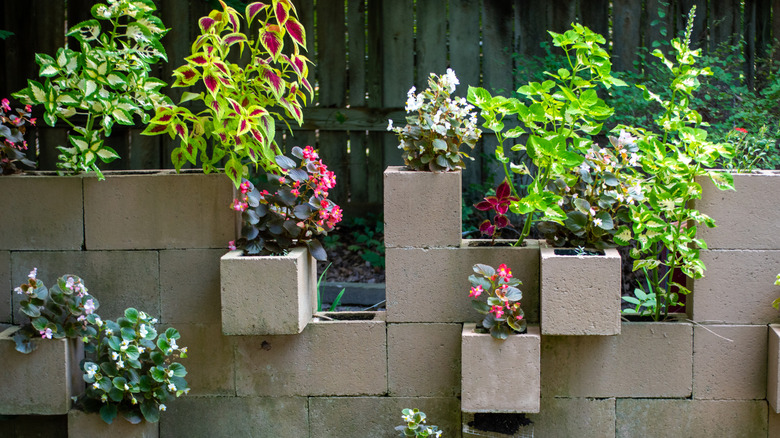
Despite not being used heavily in construction projects anymore, cinder blocks haven't been completely phased out. Citing instances where it's okay to use them, Peter Kravchuk shares in his exclusive chat with Hunker, "I would only consider cinder blocks for lightweight, non-structural projects where easy handling matters. A short decorative garden wall is a good example — the blocks are easier to lift and stack, and there's no real load on them, so the reduced strength isn't an issue." But you'll have to rethink your choice if you want this wall to double as a secure boundary and keep intruders out.
You can even build raised planter beds, notes our expert. "I've found cinder blocks to work well here because the open cores can actually be planted directly, and the lighter weight makes them easy to reconfigure if you change your garden layout," he tells us. However, keep in mind that they can't withstand natural elements as well as cement blocks. So, you'll have to replace them more frequently, especially if you experience a wet climate, he warns.
You can also turn cinder blocks into a stylish backyard bar, a seasonal bench, a portable fire pit, or temporary shelves in your garage or shed, he reveals. Basically, they're a good option for projects you don't expect to last decades or have a decent load-bearing capacity. He elaborates, "They should be avoided for foundations, retaining walls, or anything exposed to repeated freezing, moisture, or heavy loads. Their porous composition simply makes them less durable than modern concrete blocks — in the Pacific Northwest, where I build, that moisture exposure is constant, so I steer clients away from them for anything permanent."
When should you use cement or concrete blocks?
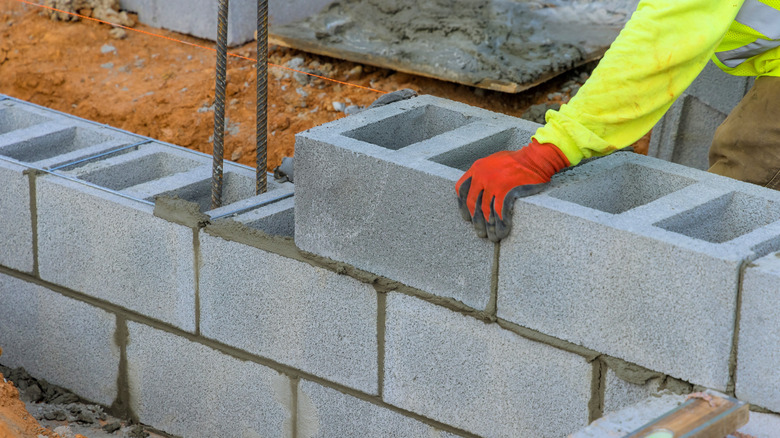
Comparing high-performance cement blocks to lightweight cinder ones, Peter Kravchuk highlights the best use cases for the former in an exclusive conversation with Hunker. "Concrete blocks are the better choice anywhere strength and longevity matter," he informs us. "The first place is foundations and load-bearing walls. On our home additions and ADU builds, concrete masonry units are the standard for stem walls and foundation work because they handle compression loads reliably and meet code requirements that cinder blocks simply wouldn't."
They're also the best material for building retaining walls, feels our expert. Sharing his personal experience, he says, "I've seen too many failed retaining walls built with the wrong materials — once soil and water pressure get involved, you need the density and strength of a proper concrete block, usually with rebar and grouted cores." Considering this, you shouldn't compromise on quality and opt for inferior materials (like cinder), or you'd be making an expensive mistake, he cautions.
Cement blocks are also the right choice if you wish to build a concrete block shed base, or other permanent outdoor structures, such as patio or garden steps, or a detached garage foundation, emphasizes Kravchuk. "Anything sitting on grade and exposed to weather year-round should be concrete blocks," he says. "They handle moisture far better than traditional cinder blocks, which is exactly why concrete masonry units became the standard for structural and below-grade construction." In other words, they're the best option for structural applications and must never be replaced by cinder blocks if you want a resilient structure that stands the test of time, especially in humid regions.