

Swap High-Maintenance Privacy Shrubs For A Self-Seeding, Airy Flower
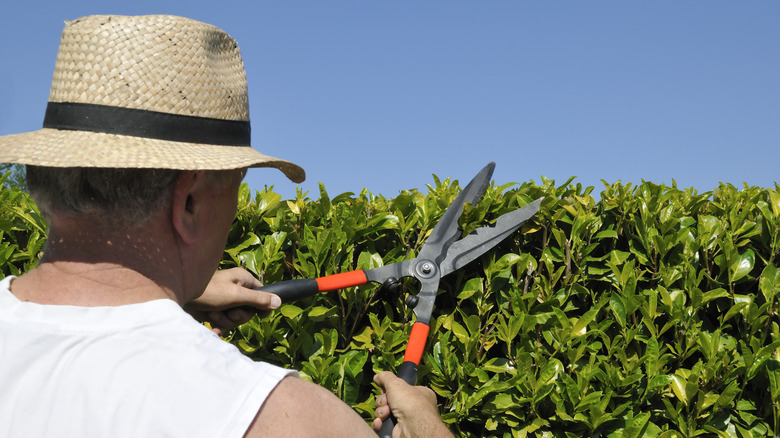
If nosy neighbors bother you while you're trying to enjoy your garden, it may be time to upgrade your privacy. Shrubs and hedges are effective at keeping prying eyes at bay, but they are slow growing and need quite a bit of maintenance to remain tidy. You could install a fence, but the cost of privacy fences makes them an expensive proposition. There's a third option that's affordable and easy to care for: Tall verbena (Verbena bonariensis), also sometimes called Brazilian vervain, is a tender perennial with showy clusters of purple flowers. It can grow to five feet tall, creating an airy curtain of stems and flowers that partly shields you from view while also providing visual interest well beyond what most fences offer.
The flowers are also a favorite of many pollinators, including hummingbirds, butterflies, and bees. As a tender perennial, tall verbena does die back in cold winters, and is only hardy in zones 7 through 11. In cooler climes, it's grown as an annual but don't worry: It can self-seed, meaning you may still see flowers year after year. Tall verbena can even offer some delineation, if not view-blocking privacy, from the neighbors during winter and early spring while seeds are germinating. The stems of this plant are hollow and can be left standing. Plus, certain bee species use them as winter shelter and nests if you leave at least one foot of the stem growing. You can even grow verbena flowers in hanging baskets to create a mini curtain for a little added privacy on your balcony or porch.
Growing tall verbena for privacy
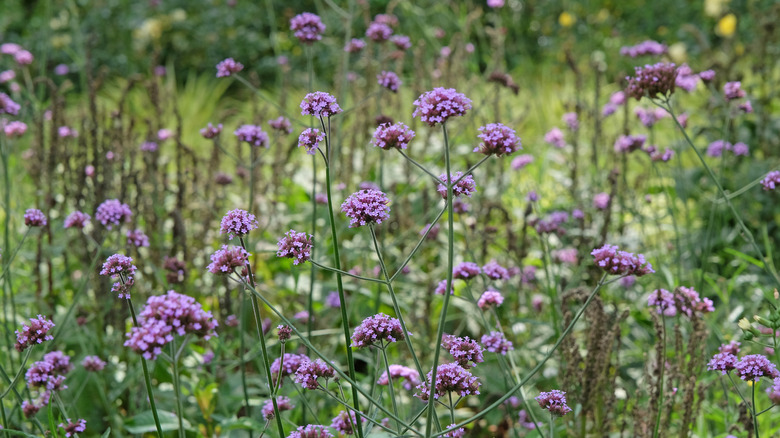
When growing them from seed, it's best to start your tall verbena indoors two to three months before your expected last frost, then transplant them into your graden after the risk of frost has passed. For future seasons, you can take advantage of its self-seeding nature by leaving the ground around and under the plants undisturbed. Tall verbena thrives in full sun and well-draining soil, so avoid planting it in shaded or slow-draining parts of your yard. For those areas, you may want to plant shade-tolerant privacy shrubs like hicks yew (Taxus x media 'Hicksii'). While this isn't as convenient as relying solely on tall verbena, it is still generally easier to care for only a few shrubs than an entire row of them. Space plants one to one-and-a-half feet apart, and water them regularly until they're established. When established, tall verbena doesn't need regular watering or any serious maintenance, so just relax and enjoy your new private oasis.
One thing to be aware of is that tall verbena is considered invasive in certain parts of the U.S., particularly in the Southeast and along the West Coast. Check your state's invasive plants listing before planting tall verbena to avoid potential problems and consider planting native alternatives like penstemon (Penstemon spp.), another self-seeding flower that attracts hummingbirds. If it isn't invasive in your area, but you're still concerned about it getting out of control, limit spreading by removing some or most of the flower heads before they set seeds.