

Stop Hand Pulling: There's A Smarter Way To Remove Weeds From Gravel Driveways
We may receive a commission on purchases made from links.
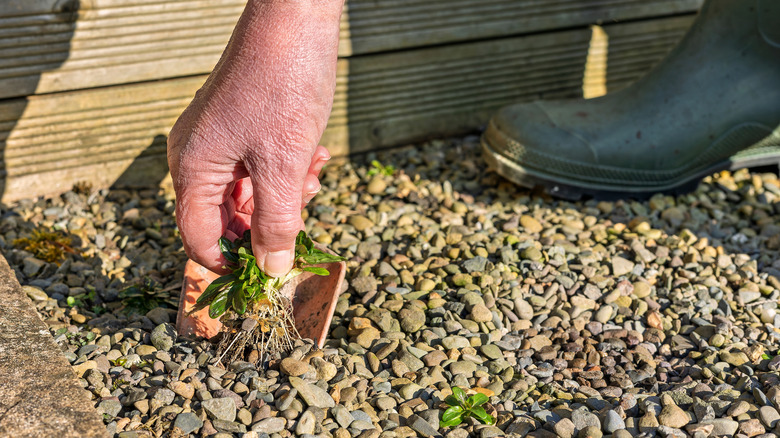
One of the most important takeaways of Landscaping 101? Small details matter. Unsightly weeds, while a small detail, truly test homeowners' patience, particularly when they emerge from gravel driveways. While the stone is cost-effective and drains well, unwanted sprouts still persist. All those who landscape with gravel are used to putting on their gardening gloves, crouching down, and removing these pesky pieces with their hands. However, there's a more effective way to clean up. A tool like the Perwin Hori Hori Garden Knife allows for quicker and more thorough results without overexerting yourself.
An essential gardening tool that can at times go unnoticed, the knife is one accessory that quickly rises in the ranks once gardeners add it to their arsenal. It was designed in Japan hundreds of years ago as a digging and excavating tool. Its original purpose was harvesting root vegetables and bonsai trees. Nowadays, this multipurpose tool with serrated and non-serrated edges is praised for scooping, digging, and dividing plants. It's also helpful for accessing tight spots and light pruning. Since the blade is typically longer, wider, and stronger than other weeding accessories, gardeners are able to get in tight areas with thick soil and get the job done more efficiently. (Fair warning: The item is heavy and sharp, so handle with caution.)
Using a hori hori knife for weeding (and maintaining it)
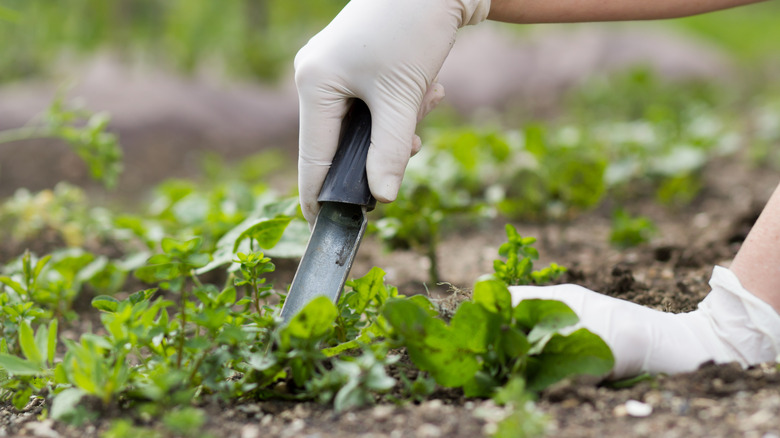
First things first, pull weeds after the rain, or soak them with water, so they're easier to remove. Since the knife blade allows you to dig deep beneath the gravel, remove the roots instead of scratching the surface so you can do away with the source. Slide the blade down near the sprouts while moving the handle in the opposite direction, pulling the roots out in the process. It's one of the more effective options when it comes to a gravel driveway, as the knife's slim shape can get in between the tiny rocks. Other options, like a shovel or a hoe, will be tougher to work deeply beneath the layer and will likely scatter the pebbles.
Keep in mind, some upkeep is required. The knife should be sharpened about every two or three weeks if you're using it a lot. However, it may need to be sharpened even more often since you are cutting through hard gravel. Sharpen the hori hori with roughly 10 strokes at a 20-degree angle with a whetstone or sharpening stone (and two strokes with a diamond sharpening rod or tapered file for the serrated edge). Make sure to take the proper steps to ensure your safety, including working with gloves, keeping the blade away from your body, and utilizing a flat surface area for stability. Make sure to remove any gravel dust after each use, utilize Camellia oil to prevent rust build-up, store it in the sheath it comes with, and never leave it outdoors overnight or for an extended period of time.