

There's No Need To Buy A Privacy Screen When You Can Easily DIY One With Shutters
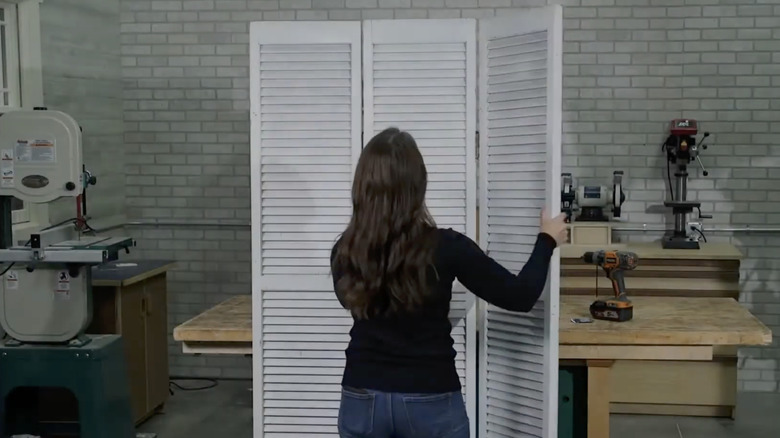
Privacy screens are a chic solution to covering large windows, but even simple room dividers can be surprisingly expensive. If you're looking for a more affordable solution, it's probably easier than you think to make your own stunning DIY privacy screen. Old window shutters can become wonderful upcycled panels for a room divider. The slatted design of window shutters is perfect for letting in light while hiding your home's interior. To craft a functional, folding privacy screen, you'll need at least three shutters, a couple of hinges, and some screws. This easy project will work with shutters of all shapes and sizes, allowing you to customize your screen to your space.
While a basic slatted privacy screen can cost around $150, repurposed window shutters will help you make a similar style for a fraction of the price. Building your divider from matching shutters creates a sleek, intentional style that mimics store-bought wooden privacy screens. Alternatively, mismatched shutters add a touch of whimsy to this homemade decor. Check thrift stores or secondhand sites for old window treatments, but if you can't find shutters, slatted folding doors will work just as well.
Though it will work well indoors to split up a room, this simple DIY privacy screen adds style to your backyard, as well. Depending on how you attach your panels, you can make a freestanding, folding divider or a flat screen. When used outdoors, mounting the screen to your porch banister or a fence will make your patio more secluded.
How to build a window shutter privacy screen with ease
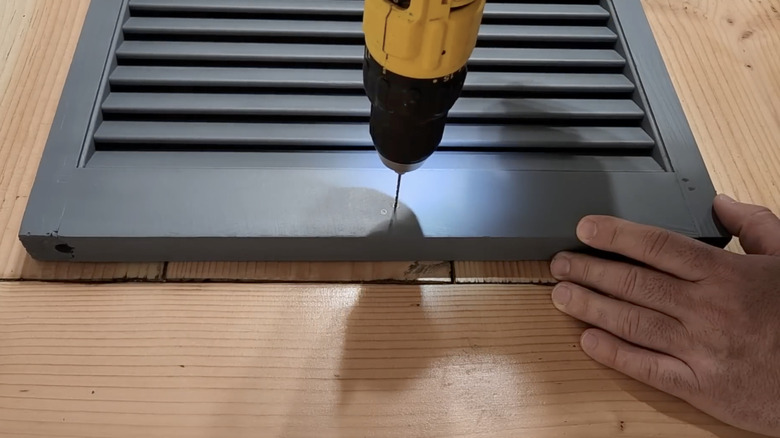
Start by cleaning your shutters to remove any dust and dirt. If you're not happy with their appearance, sand and paint the panels before assembling your privacy screen. Consider sealing your project if you plan to install the screen outside. Using hinges to fix the shutters together will allow you to fold the chic DIY room divider. Pre-drill holes in the wood, screw hinges onto two doors, and mount decorative hinges on the front of the doors rather than the sides for a cute look. Flip the conjoined shutters over, and attach a third panel with another hinge on the other side. This creates a zigzag shape to fold and expand your privacy screen.
Some shutters may already have screw holes, making it easier to attach the hinges. Alternatively, thread pieces of strong cord through the existing holes and tie the panels together. Stick furniture glides onto the bottom of the panels to prevent your privacy screen from scratching your floor when used inside.
With shorter shutters, this folding screen is perfect for concealing a porch when installed above the railing. Otherwise, fixed screens are sometimes more practical for outdoor use. Use pop rivets to secure the shutters side by side for a flat design. Screw the privacy screen into wooden posts or existing structures, like a fence or large wooden planters.