

Forget Poured Concrete: A Better-Looking Patio Alternative That Costs Less Over Time
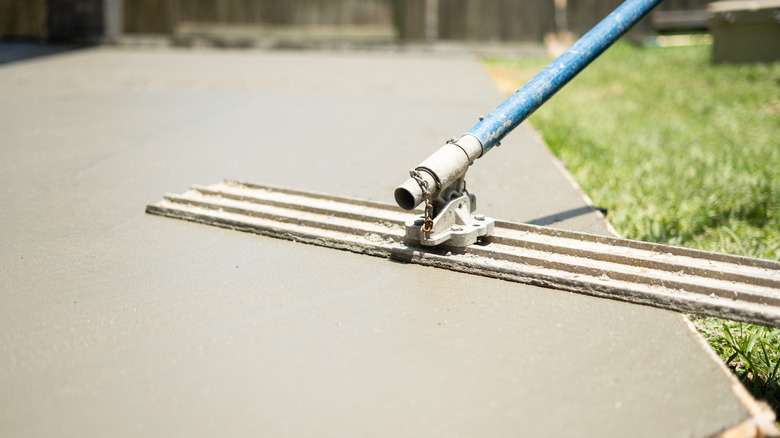
Patios are an excellent outdoor upgrade that can be designed with materials and layouts for any backyard. Poured concrete is a popular choice thanks to its relative affordability, often costing between $6 and $12 per square foot. However, over time, poured concrete can end up costing you more money in maintenance and repairs. Pavers, which can be made with concrete or eco-friendly clay, are more expensive upfront at $10 to $30 per square foot, but cost less over time thanks to their longevity, flexibility, and durability.
Let's look at durability to start. As part of their construction, concrete pavers are built with far more strength than a poured slab. This increased strength makes them far more weather-resistant and tolerant of heavy traffic. The added durability gives the pavers a lifespan of up to 50 years. This is twice the average 25-year lifespan for concrete slabs. Part of the reason poured concrete doesn't last as long is because of its onsite-application. It's left to cure outside, where it is subject to the weather, and is therefore more prone to early damage.
There's also aesthetics to consider. While concrete slabs can be stamped into interesting patterns, it is generally accepted that a patio built with pavers is going will have greater curb appeal. The colors and patterns of pavers can be shaped to offer a wider range of design choices that can increase your home's value, making them an exceptional return on investment.
Concrete pavers are the better choice
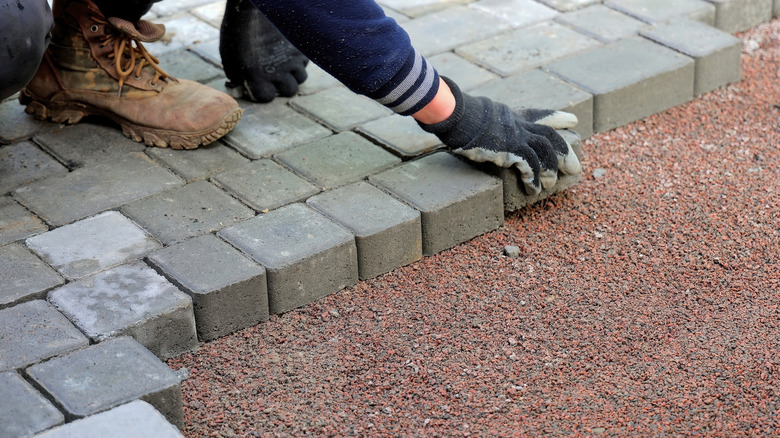
Besides durability and aesthetics, concrete pavers are more economical over time than poured slabs because of their flexibility. A concrete slab, by its very nature, is a single, inflexible piece. Because of this, it does not move with the soil, meaning that it can often crack, settle, or heave. In areas with significant freeze-thaw cycles, concrete slabs are also vulnerable to cracking and increased deterioration due to water freezing and thawing in the pores. Any extensive damage to the slab caused by soil or freezing often requires complete replacement, at a high cost.
Concrete pavers, on the other hand, offer much more flexibility. Because they are individual units, they can adjust to any fluctuation in the soil. They're also better for drainage as water can simply seep through the joints between the pavers. Plus, pavers are much easier to repair. If one paver is damaged or sinking, you can very easily replace it or quickly fix it with a screwdriver and some leveling sand.
Pavers also require far less maintenance than concrete does. Apart from clearing, adding more joint sand occasionally, and sealing every 2 to 5 years, there is not much that needs to be done to them. Concrete slabs need biannual resealing, and when cracks appear, they can be extremely difficult to hide, necessitating an expensive repair.