

How To Easily Fix Potholes In A Gravel Driveway With Tools You Already Own
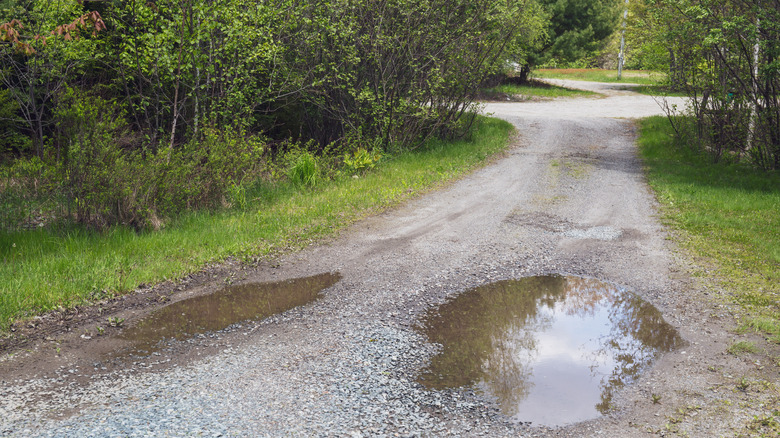
If the potholes in your gravel driveway are starting to look more like pot chasms, it's time to fix them. Unfortunately, you can't just pile more gravel over a pothole and call it a day. The new gravel won't be fully settled into the hole and will just roll back out again. Fortunately, you don't need any special equipment to fix it. If you have a shovel, gravel, and something to tamp and compact it with, you can get rid of the potholes. A hand tamper or plate compactor is ideal for this, but in a pinch, you can DIY one. It just needs to be weighted, flat on the bottom, and have a handle. Something like a sledgehammer attached to a wood board or a brick duct-taped to a broom handle may work.
Start by cleaning out the pothole. Scoop out any loose gravel or debris, then widen the hole slightly to reduce the risk of it trapping water. Once it's clear, add your new gravel to the hole. Make sure you know the types of gravel used in your driveway so you can match them for the cleanest fill. Spread it out across the hole and don't leave any gaps at the edges. Tamp it down, starting at the edges and working your way in. Once you feel it's adequately compacted, give it a gentle spray with water. Don't knock the gravel loose with your hose; just dampen it enough so the moisture helps everything settle into place. If it isn't even with the rest of your driveway, add more gravel and compact it again. You can also use your lawn mower to smooth your gravel driveway afterward.
Preventing future potholes
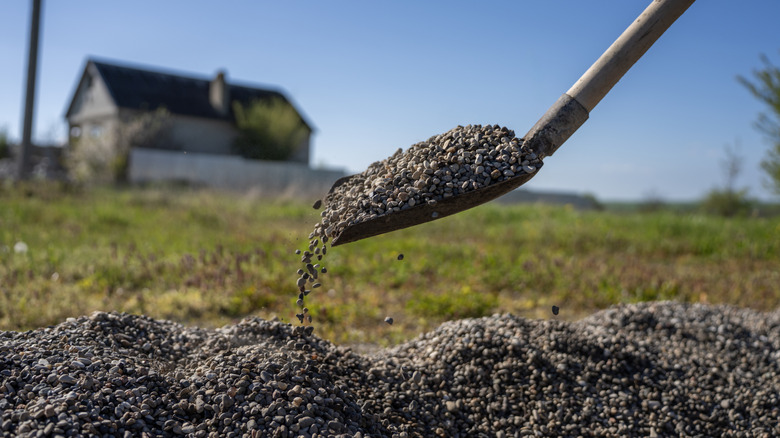
Once your existing potholes are filled in, it's a good idea to know what preventative steps to take to prevent them from coming back. Unfortunately, you likely won't be able to completely stop potholes from forming. Gravel will naturally shift over time due to the weather and regular use. However, you can reduce the number of potholes you have to deal with and stop them from becoming overwhelmingly large. If you're installing a new gravel driveway, you can add a gravel grid to help keep everything in place and reduce the risk of potholes, although it won't completely prevent them.
For existing gravel driveways, regular maintenance is the best solution. Keep an eye on your driveway and make note of problems before they turn into potholes. Note any areas where water tends to pool after a rainstorm or where your tires always seem to hit when coming home, as these are more likely to turn into potholes.
Plant roots and debris can also increase the risk of potholes, so remove weeds from your gravel driveway and don't let grass clippings or fallen branches linger. Make sure your driveway is graded correctly, so that water flows off of it rather than towards the center. As gravel shifts, you'll need to smooth and regrade it once or twice per year, adding new gravel as necessary. While maintaining your gravel driveway can feel like a chore, it'll save you a lot of trouble in the long run. Blowing leaves off your driveway and adding some fresh gravel every so often is a lot easier than fixing giant potholes.