

Plant This Herb By Your Birdbath For A Yard Full Of Pollinators
We may receive a commission on purchases made from links.
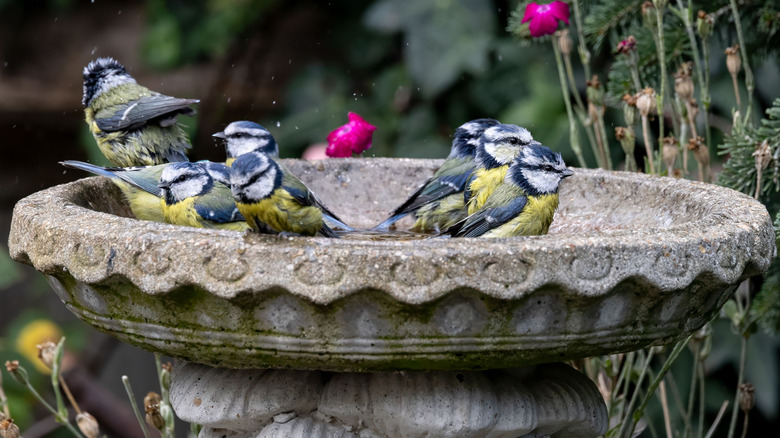
Birds make fantastic pollinators for a garden, so it makes sense that gardeners sometimes add a birdbath near the garden to attract even more. Most birdbaths are pretty set-and-forget, which is nice when you've got a list full of garden chores — though we do love adding solar fountains. like HAWAJOK'S 1.4W Solar Water Fountain Pump with 7 Nozzles, to keep the water circulating. But, if you want to make your birdbath the most popular spot around the neighborhood, you should probably plant some lavender (Lavandula) near it.
Not only is lavender super pretty and smells amazing, but pollinators like bees, goldfinches, and hummingbirds adore it, too. Their bright purple blooms are easy for birds to spot, so planting them near your birdbath is like setting up a luxury spa for our pollinating buddies. They get to cool down and socialize, grab a quick bite of nectar in your lavender bush, and then check out the rest of your garden, spreading pollen from plant to plant.
Growing lavender is easy, but it needs a few pieces set in place to flourish
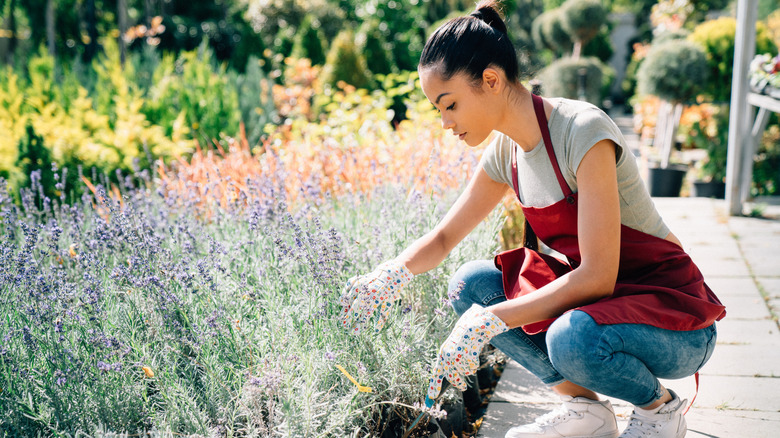
Once you get the setup right, lavender's hardy nature takes over, and once it starts blooming, the pollinators will head over shortly thereafter. The trick to successfully growing lavender is to first know which lavender you're planting, as there are a few varieties, each with its own quirks and colors. So, not only will you find one that fits your growing conditions, but you can also coordinate its color with your birdbath's for an aesthetically awesome garden.
The three most popular types are English lavender (Lavandula angustifolia), which comes in white and purple; French lavender (Lavandula stoechas), which comes in purple; and the hybrid Lavandin (Lavandula x intermedia), which comes in white, purple, and sometimes pink.
English lavender is the toughest, while French lavender is a little more finicky, and lavandin is the pickiest of the bunch. All need well-draining, rocky soil and don't tolerate having wet roots for long, so you'll need to add materials that improve your soil's drainage if it's clay-heavy. It also prefers alkaline soil over acidic, so you may also need to amend your soil's pH to be more alkaline. Full sun is a must; English lavender is a smidge more tolerant of some shade but its cousins are not. Remember that this is a Mediterranean herb, so it does best when it's dry and hot. Give it a good yearly pruning to keep it tight and shrubby, then use the chopped leaves as potpourri to make your home smell amazing.
Planting lavender near a birdbath requires a little planning
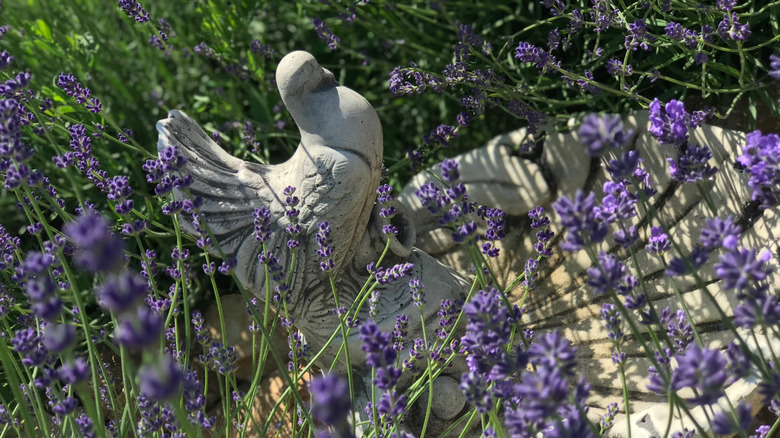
While lavender is pretty hardy, there are some caveats you'll need to plan around if you want to plant it near a birdbath. First, consider the sun. Lavender requires full sun to thrive, but having your birdbath in the same setting could mean the water evaporates from it faster, so you'd probably want to put the bath somewhere that gets a little more shade.
Also, remember that lavender likes to keep its "feet" dry. For the occasional bird hanging out in your bath, a few splashes wouldn't be a problem. But if your birdbath is fairly large and becomes popular, your lavender might end up with more water in its soil than it's comfortable with. Finally, you want to keep the immediate area around your birdbath clear, so that birds can bathe safely without worrying about a predator hiding in the shrub next door.
So, with that said, how close could you plant lavender to a birdbath so that both are at optimal settings? To keep your birds feeling safe, give it a circumference of about 10 feet of open space. Birds and other pollinators will still notice your lavender from that distance while keeping it safe from excess water. Plus, a 10-foot distance should provide ample room to find a semi-shady spot for the birdbath and a full-sun setup for your plant. But if you want that wildflower cottagecore look or don't have the space to give lavender and your birdbath 10 feet of distance, there are other flowers you can grow by your birdbath.