

Plant These 15 Flowers By Your Birdbath For A Backyard Full Of Birds & Butterflies
We may receive a commission on purchases made from links.
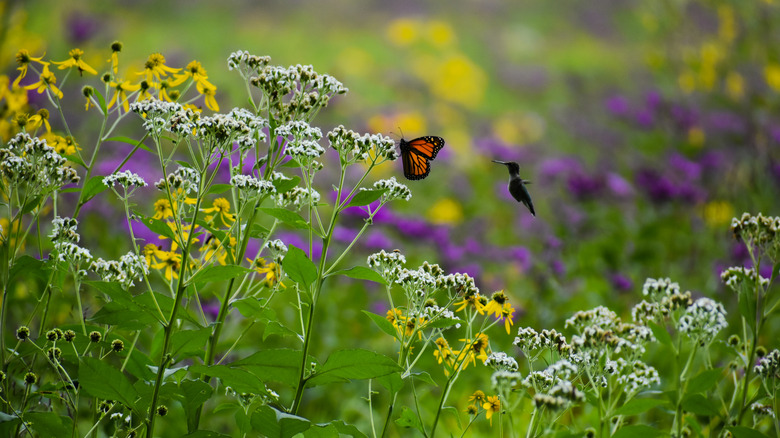
Relaxing in the backyard becomes even more enjoyable when you can listen to the cheerful songs of birds and watch pretty butterflies flit around. Having a birdbath is a great first step toward creating a bird-friendly garden at home, but you can attract even more visitors by adding plenty of flowers, too. Both birds and butterflies have the same basic requirements to survive: food, water, cover, and nesting sites. So, the right blooms will help them meet most of those needs in one place. These include coral honeysuckle, tickseed, purple coneflower, and New England aster. Some plants serve as both larval hosts and sources of nectar for butterflies, before producing seeds for birds to snack on.
If you want to see more birds and butterflies flying around the garden, then you'll need to be selective about the flowers you choose. Native plants are always best, as our beloved wildlife has grown alongside them for generations. Most butterflies' young can only eat leaves from these specific plants, and protein-rich insects for birds are less likely to visit non-natives. Plus, native plants are often much easier to grow and care for. Generally, native plants with nectar-rich blooms that go to seed will be the best for attracting an array of birds and butterflies.
Eastern red columbine
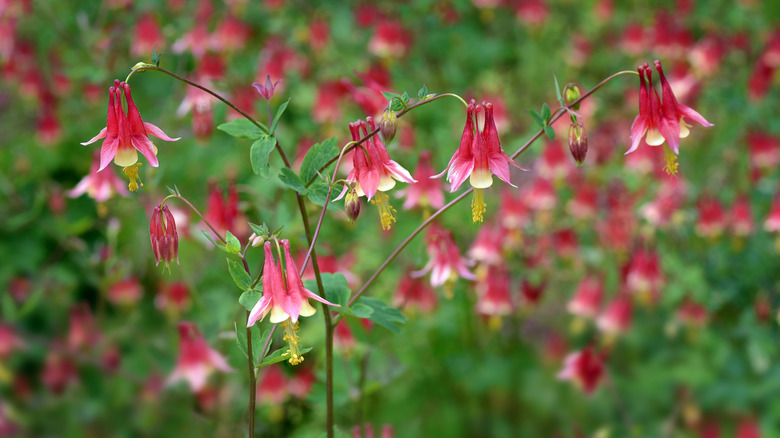
The bright, bell-like flowers of eastern red columbine (Aquilegia canadensis) are sure to bring an array of visitors to your yard. Butterflies, hummingbirds, and bumblebees will stop by to sip from the nectar-rich blooms. Ruby-throated hummingbirds are particularly fond of these flowers, which appear around the time the birds return from migration. Then, once it goes to seed, songbirds will flock in for a treat. Eastern red columbine returns year after year in USDA zones 3 to 8. Just plant it in a partially sunny area in rich soil and wait for the birds and butterflies to arrive.
Coral honeysuckle
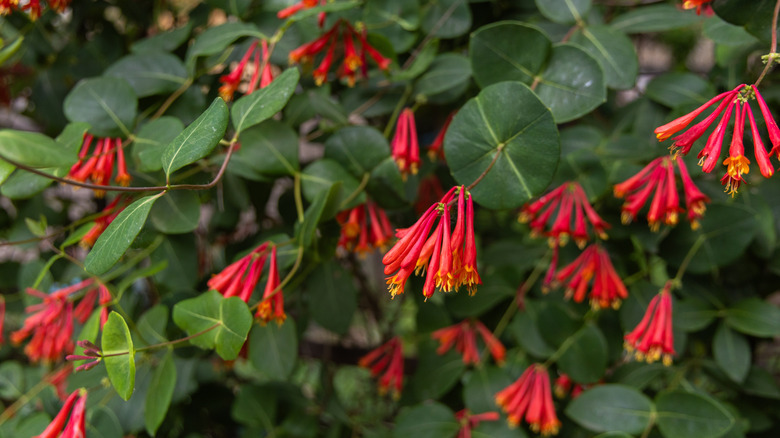
Coral honeysuckle (Lonicera sempervirens) is known as a hummingbird magnet, but butterflies and other pollinators also love this plant. Spring azure butterflies use it as a larval host, and in fall, songbirds can't get enough of its pretty red berries. This perennial vine is perfect for a trellis birdbath, such as the Sunnypark Antique Garden Iron Trellis, which gives it climbing support. Alternatively, you can plant it in well-drained soil and let it sprawl. Make sure to plant it in a sunny spot for the best flowering. It's hardy in USDA zones 4 to 9.
Tickseed
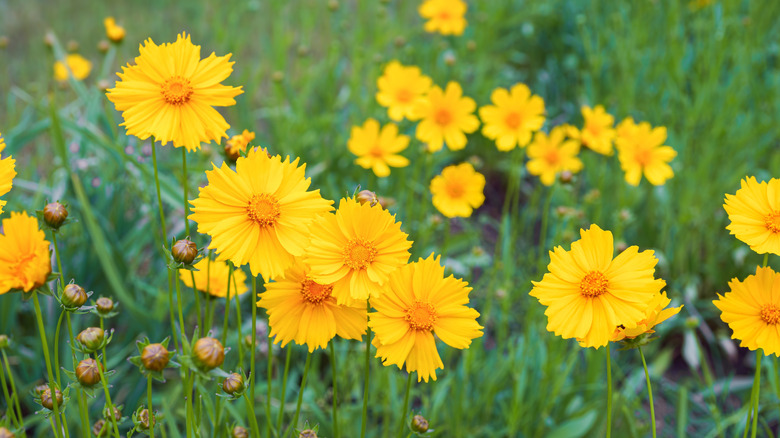
Although the name may give you pause, don't write off tickseed (Coreopsis lanceolata) just yet. No, it won't harbor an army of ticks, but it will fill your yard with butterflies and other pollinators in spring and summer. It gets its common name from the seeds, which have a tick-like appearance. Luckily, birds love these little black seeds. Tickseed is one of the easiest flowers to grow in USDA zones 4 to 9: As long as it has full sun and well-drained soil, it can tolerate heat, humidity, drought, and poor soil.
Foxglove beardtongue
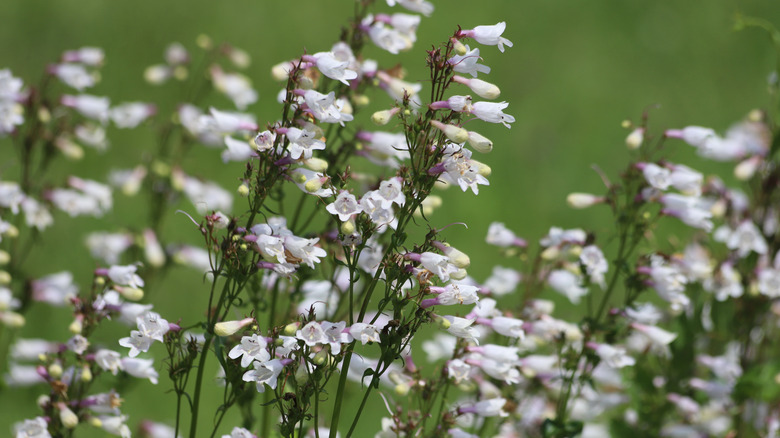
For a gorgeous plant that grows quickly without hassle, you can't go wrong with foxglove beardtongue (Penstemon digitalis). In spring and summer, the white or lavender tubular flowers lure in hummingbirds, butterflies, and bees. By summer, birds will be happy to find its capsules filled with seeds. This is another easy-to-grow perennial, only asking for well-drained soil and full sun to partial shade. Grow it near birdbaths in USDA zones 3 to 8.
Fire pink
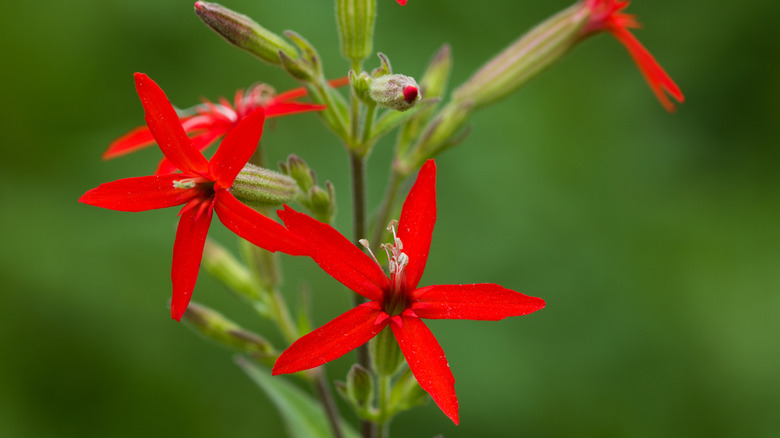
Fire pink (Silene virginica) can be a somewhat tricky wildflower to get your hands on — but if you do find it, make sure to add it to your garden. Its dainty red flowers are attractive to hummingbirds and butterflies in search of nectar. Juncos, sparrows, larks, pine siskins, and other songbirds appreciate the seeds that appear in summer, too. This low-maintenance perennial is easy to grow in USDA zones 4 to 8, and, because it thrives in dappled and partial shade, it's great to plant near birdbaths in shadier locations.
Black-eyed Susan
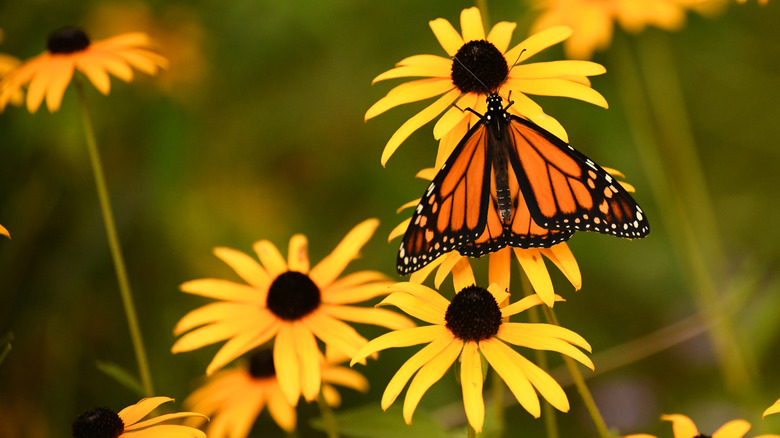
A bird and butterfly garden wouldn't be complete without a few black-eyed Susans (Rudbeckia hirta). These sunny, daisy-like flowers bring in a range of butterflies, and goldfinches relish the seeds that follow. It grows rapidly in USDA zones 3 to 8, and the flowers last from midsummer through fall. Plant it in moist, well-drained, moderately fertile soil in full to partial shade for the best flowering. Make sure to deadhead regularly to keep enjoying the blooms.
Purple coneflower
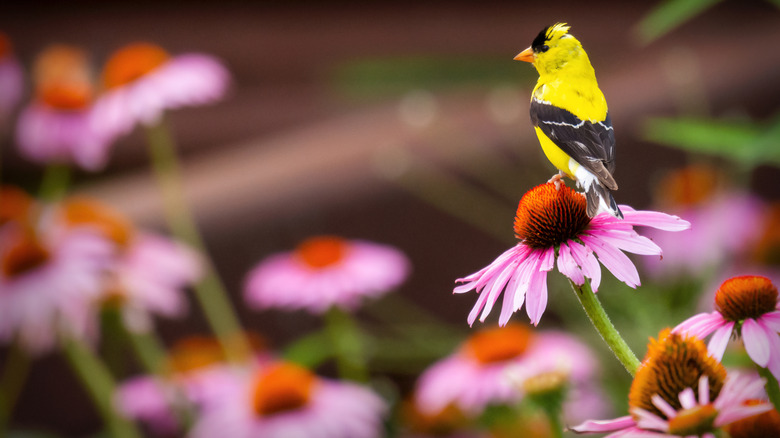
Purple coneflower (Echinacea purpurea) is another bird and butterfly garden staple. The pinkish-purple disk-shaped blooms last from early summer through fall, bringing in butterflies and other pollinators. Once it finishes flowering, goldfinches and other songbirds will swoop down to snag the seeds. Coneflower easily adapts to most soil types but thrives in well-drained loams in full sun to partial shade. It's hardy in USDA zones 3 to 8.
Bee balm
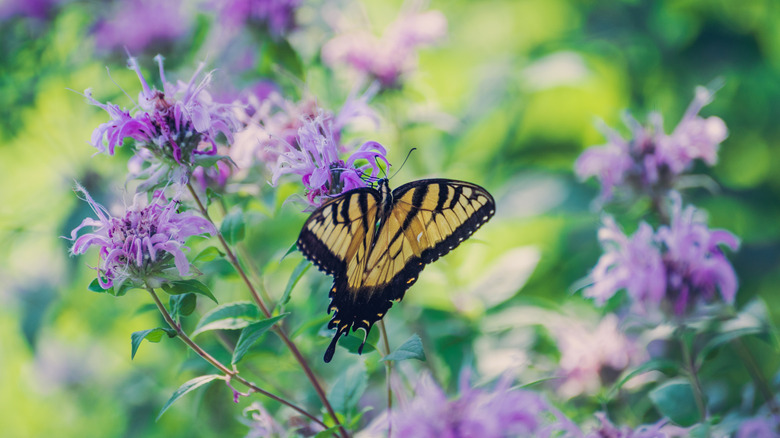
Although its common name is bee balm (Monarda fistulosa), this is a stunning plant that attracts butterflies as well. It features clusters of pink or purple tubular blooms that form showy, shaggy flowerheads. Not only are they like magnets to bees and butterflies, but hummingbirds are also drawn to their sweet nectar. Bee Balm is easily grown in USDA zones 3 to 9 — just give it plenty of sunshine and moderately moist soil, and it'll lure in all of your favorite pollinators from June to September.
Blue vervain
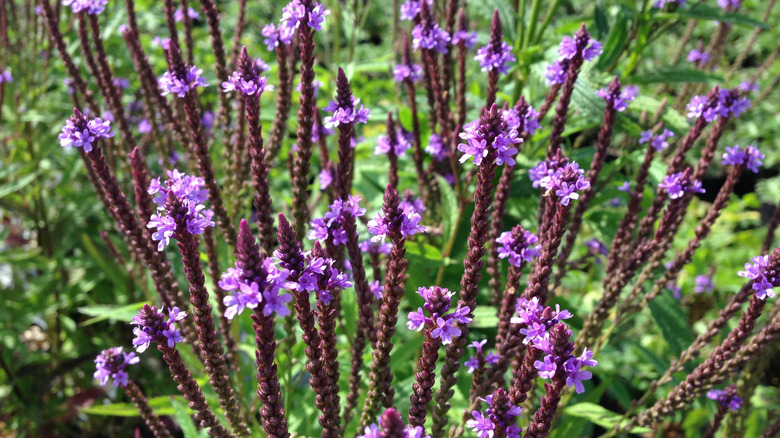
If you want to attract birds to your yard and garden without buying a feeder, make sure to plant blue vervain (Verbena hastata) next to your birdbath. The seeds are favorites among several species, including cardinals, juncos, and sparrows. Butterflies will also stop by to sip nectar from the pretty blue or purple flowers throughout the summer. Plus, it's a larval host for the common buckeye butterfly. Even better, it's easy to grow: In USDA zones 3 to 8, blue vervain happily grows in full sun to partial shade in moist soils.
Blazing star
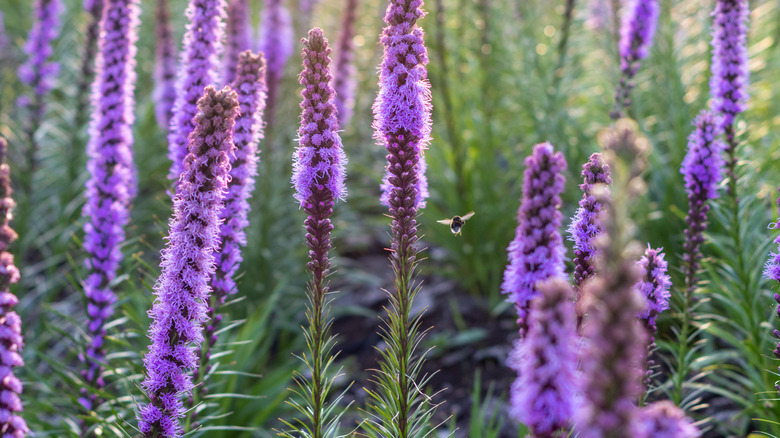
Blazing star (Liatris spicata) is a breathtakingly beautiful plant that's perfect for adding a burst of color near your birdbath in USDA zones 3 to 8. Each flowering stem is made up of pink, purple, or white tubular flowers that come together to create a tall, feathery spike. With so much nectar to go around, it's no wonder it brings in so many butterflies and other pollinators. Then, in fall, goldfinches will feast on the seeds. This is a beginner-friendly perennial that grows its best in moist, well-drained soil in full sun to partial shade.
Buttonbush
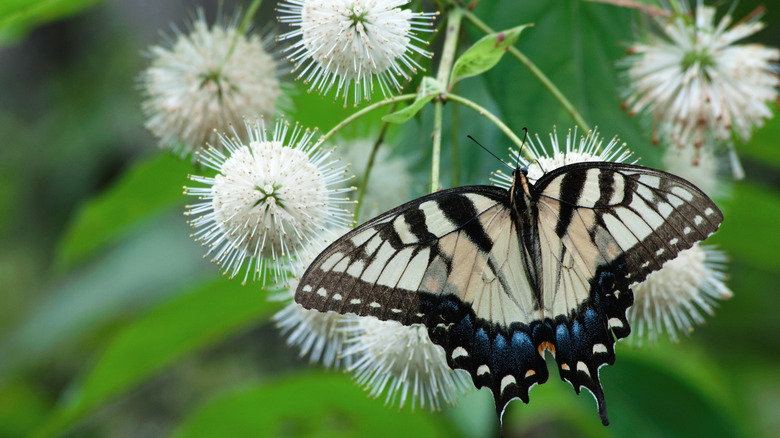
Buttonbush (Cephalanthus occidentalis) is one of the best plants to grow if your birdbath is near a pond or rain garden. You can plant it anywhere, however, provided it gets plenty of moisture and full to partial sun. No matter where you stick it in your yard, expect to see beautiful pollinators, like butterflies and hummingbirds, stop by the flowers. Once the fruits arrive in summer, songbirds will stop by to eat the seeds. Buttonbush is easy to grow in USDA zones 5 to 9.
Scarlet sage
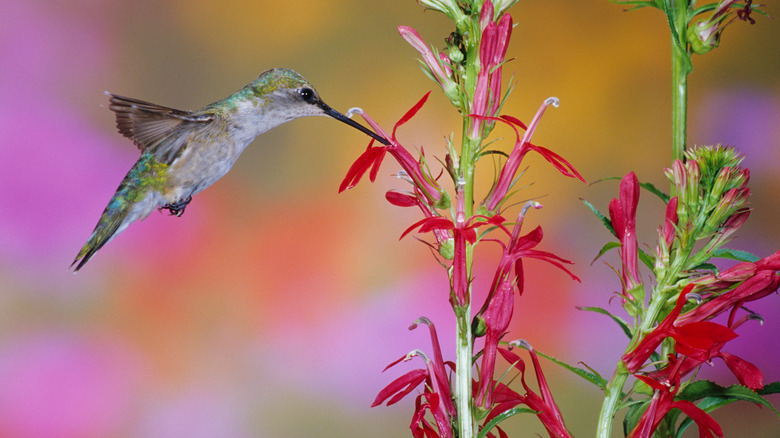
If you're looking for flowers that attract hummingbirds, look no further than scarlet sage (Salvia coccinea). The flower spikes are made up of bright red tubular blooms that hummingbirds can't resist. Butterflies are also drawn to the nectar, so you'll have plenty of colorful visitors to enjoy. Because it's only hardy in USDA zones 8 to 10, most gardeners treat scarlet sage as an annual. That said, it'll reseed in zones 6 to 8, so you still may be able to enjoy it the following year. Grow it in full sun to partial shade in well-drained soil.
Joe Pye weed
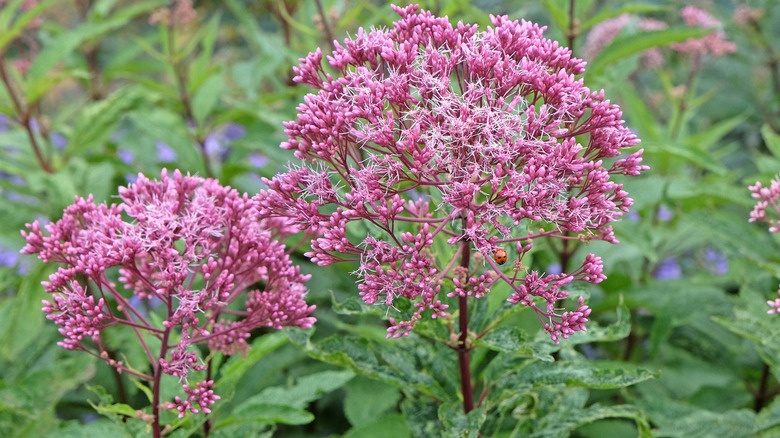
Joe Pye weed (Eutrochium maculatum) might sound problematic, but you won't be adding an invasive plant to your garden with this one. Instead, you'll get to enjoy pretty clusters of pink or purple flowers that lure in butterflies with nectar and birds with their seeds. It's native to Eastern North America and is best suited for USDA hardiness zones 3 to 8. Although it grows best in full sun, Joe Pye weed appreciates some afternoon shade from the hot summer sun. Keep the soil moist, and it'll grow happily.
Anise hyssop
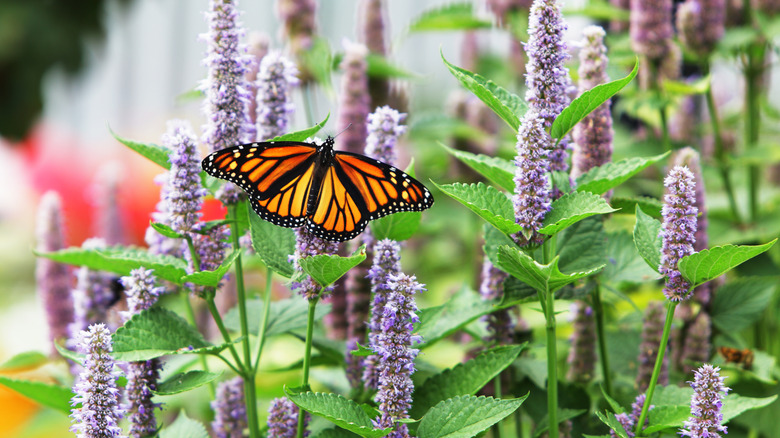
There are a lot of reasons to add anise hyssop (Agastache foeniculum) to your birdbath flower display. Not only is it highly sought after by birds and butterflies, but it can also help keep deer out of your garden. Rabbits aren't fond of it, either. This plant thrives in well-drained soil and full sun to partial shade. Native to the Midwest, it's a showy, easy-to-grow perennial in USDA zones 4 to 8.
New England aster
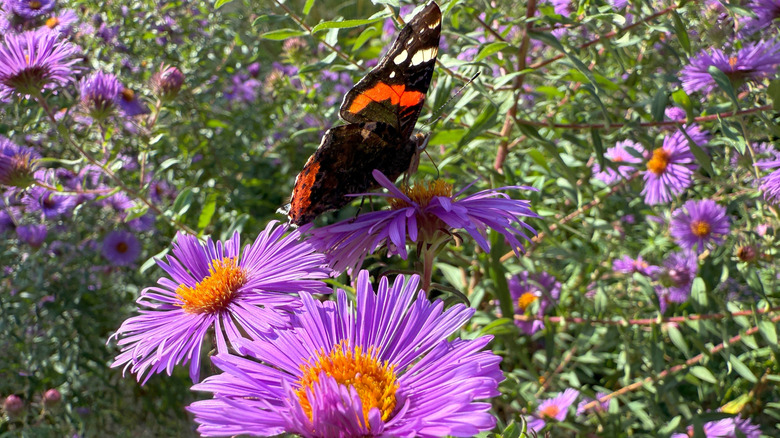
If you're a fan of colorful blooms that attract wildlife, then you may want to consider planting New England aster (Symphyotrichum novae-angliae). The flowers of this plant are extremely showy, featuring bright purple outer petals with a sunny yellow, central disk. Butterflies and bees relish the nectar inside — especially migrating Monarch butterflies on the hunt for food — and songbirds love eating the seeds in the fall. You can add this stunning plant to gardens in USDA zones 4 to 8. Plant it in an area with full to partial sun and moist, well-drained soil.