

Herbs To Plant If You Like Italian Cuisine
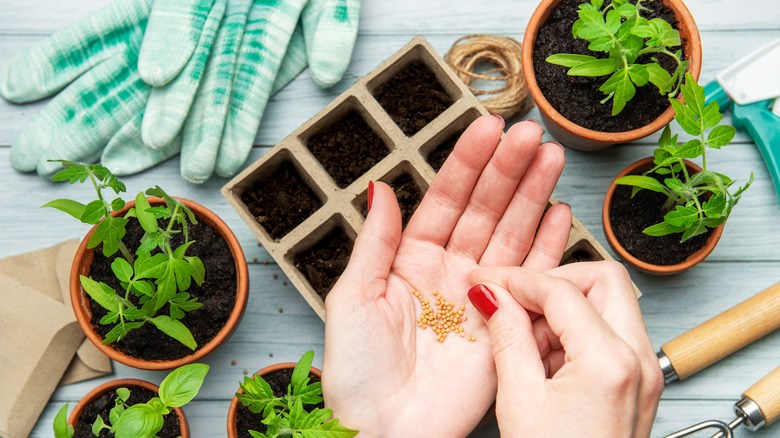
There's nothing quite like enjoying dinner out at an authentic Italian restaurant with its mouth-watering aromas and rich tomato sauces. Steaming bowls of pasta, perfectly baked pizza, and cheesy Italian dishes are the quintessential comfort food. If you enjoy recreating these recipes at home, you probably know how important fresh ingredients are. This is because true Italian cuisine is often made using farm-to-table ingredients, such as vine-grown, juicy tomatoes, olive oil, pressed garlic, and home-grown herbs like basil and oregano. Transforming your kitchen windowsill into a lush, thriving herb garden can help you save a surprising amount of money. Plus, having a fresh supply on hand can help make every single meal taste homemade.
Instead of paying premium prices for a clamshell of wilted greens, you can cultivate your own adorable kitchen herb garden featuring the most popular Italian ingredients. To capture the taste of Italy, there are six must-have plants to consider. First, you should start with sweet basil (Ocimum basilicum). Next, be sure to include oregano (Origanum vulgare) and parsley (Petroselinum crispum), which are staples in marinara and meatballs.
Round out your herb garden with Rosemary (Salvia rosmarinus), which is a sturdy, woody plant that's ideal for roasted potatoes. Finally, be sure to include mint (Mentha spicata) and thyme (Thymus vulgaris), which are the perfect additions to hearty Italian soups.
Creating your own Italian herb garden
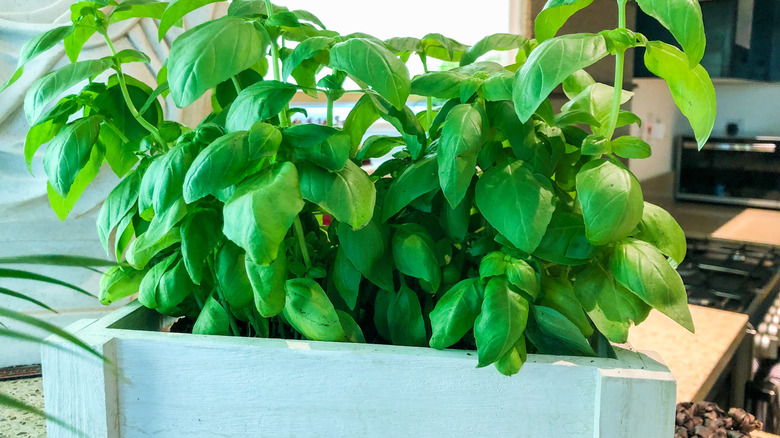
The best approach to creating your own Italian herb garden is to grow the plants together in a large, movable container. Keep in mind that mint is invasive, so you should plant this plant in its own pot submerged inside your larger container or plant it alone to prevent it from taking over. All of these plants grow in full sunlight, or more than six hours of direct sun per day, and well-draining soil, so be sure to place them in a sunny location and line the bottom of the container with gravel or rocks. Approximately once a week, water your herbs and soak the soil to the bottom. This ensures all the roots have enough moisture.
Herbs can grow year-round depending on where you live. Sweet basil thrives in zones 10a and 10b, acting like a tender annual in most places or a plant that comes back year after year. Parsley grows best in zones 5 to 9, acting like a biennial with a two-year life cycle. The reliable perennials that continue to grow year after year are oregano (zones 5 to 8), fresh mint (zones 4 to 9), thyme (zones 5 to 9), and rosemary (zones 8 and 9). You can locate what zone you're in by checking online with the United States Department of Agriculture (USDA).
If you plant outside of these zones, use a large container that can be moved indoors during cooler weather. By growing herbs inside during cold weather, you can easily care for the plants and enjoy fresh herbs year-round.