

What To Do If Your Lawn Mower Catches Fire
We may receive a commission on purchases made from links.
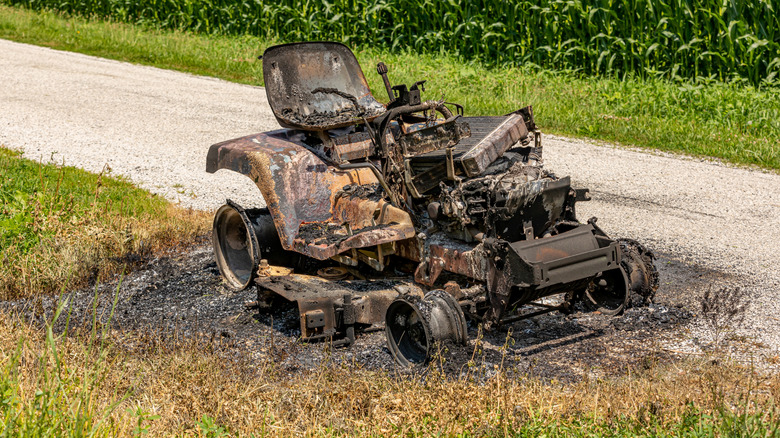
Lawn mowers can be stressful machines to deal with already, but having yours burst into flames will likely leave you stunned and panicked. It may seem unlikely, but lawn mowers are a surprisingly common fire hazard, and are sometimes responsible for causing houses and sheds to burn down. If your mower happens to catch fire while you're using it, immediately back away from the lawn care equipment and call emergency services. While you may be tempted to try to turn off the engine, gasoline mowers are dangerous once ignited and pose a huge safety risk. It's often best to stay away from the mower and keep yourself safe. In some cases, you may be able to attempt to extinguish the fire yourself, but it's vital to be cautious.
An all-purpose fire extinguisher may help you put the flames out quickly. Some people store an extinguisher on their riding mower in case of emergencies. Spraying or dumping water onto the mower from a distance or throwing a fire blanket over the machine could also help to control the situation until help arrives. However, the wisest option, as long as the mower isn't endangering a home or trees, is to stay away from the lawn equipment and wait for the fire department. Your lawn mower will likely end up burnt and ruined, vastly shortening the life expectancy of your lawn mower. Thankfully, there are steps you can take to prevent mower fires.
Reasons lawn mowers catch on fire

There are several issues that can cause a lawn mower to catch on fire. As you mow, grass often becomes stuck inside the deck of the machine. When the grass clippings are dry, they have the potential to ignite. The heat of your mower combined with grass stuck inside is the perfect recipe for disaster. Other times, you might accidentally run over a rock, creating a spark against the blade and igniting dry grass in the mower deck or on the lawn itself. When you're cutting grass that's extremely tall and dry, bigger clippings may get stuck inside the muffler or engine and start unexpected fires.
Additionally, gas caps that are not tightened properly or that have started to leak can cause your mower to ignite. Sometimes, the fire might occur while you're maintaining the machine rather than mowing. Attempting to refuel the gasoline or add oil while the mower is still hot may result in a dangerous situation. Lawn mowers that are stored immediately after use inside of an enclosed space, such as a garage or shed, pose an enormous risk. The hot engine and mechanical components of the mower may catch fuel vapors and dry grass clipping on fire inside your garage. Unfortunately, some faulty electric mowers can become engulfed in flames as well due to short circuiting, or due to overheated or overcharged lithium-ion batteries. Because of these risks, it's crucial to ensure you're properly maintaining and storing lawn care equipment.
Tips for preventing lawn mower fires
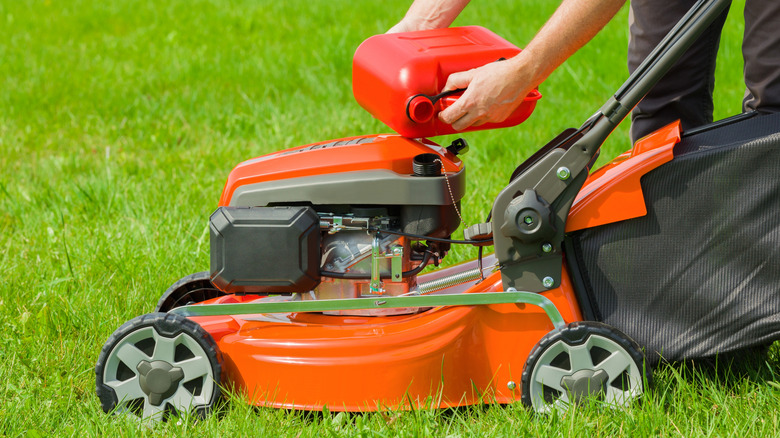
Lawn mower fires are terrifying, but there are ways to protect your equipment, yourself, and your home. One of the simplest safety measures is to regularly clean your lawn mower deck and to remove any clumps of grass. This chore can be made quick and easy by using a leaf blower to blow the grass right off your mower. Before you start mowing, take a moment to quickly check that the gas and oil caps are tight and not leaking. Additionally, clean up any fuel that may have spilled on the machine. Try to pick up any rocks that could fly up under the mower before cutting your grass. In super dry conditions, consider slightly wetting the grass before cutting, or hold off mowing until conditions cool down.
After you're finished mowing, it's crucial to allow the machine to cool off before you do anything. Whether you want to put the mower away, refuel it, or change the oil, it's vital to wait at least fifteen minutes until the engine, muffler, and other components have completely cooled off. Before working on your mower, it's a good idea to remove the spark plug to prevent it from accidentally starting. Finally, some warranties or insurance claims may cover fire damage for your lawn mower. It's best to check those clauses before an emergency happens.