

Skip The Fabric Softener: Here's How To Wash And Soften Sheets
Fabric softener is pretty high on the list of household cleaning products you don't really need. Sure, it can give your bed linens and other laundry a pleasant scent, reduces static electricity, and, true to its name, makes fabric feel softer. But there are a few downsides to fabric softener that can make it not worth the purchase price. When not properly diluted, it can stain fabrics. And, over time, it builds up on your laundry and in your washing machine.
The next time you wash your sheets, swap the fabric softener and detergent for something you probably already have in your pantry — distilled white vinegar. This kitchen staple already has a reputation as a laundry deodorizer. Vinegar also removes numerous stains from laundry, including coffee, blood, and grass stains. When added to the fabric softener dispenser of your machine or poured in just as the final rinse cycle gets started, it eliminates mold and mildew, breaks down oil and detergent build-up, and removes hard water deposits.
If that sounds too good to be true, rest assured there are some caveats to using vinegar in the wash. First off, it's not something to use every time you launder your bed sheets. Too-frequent use can cause your laundry to wear out faster and may damage your machine's seals and hoses. It can also damage certain types of fabric, such as silk, so save it for use with cotton or linen sheets only.
How to use vinegar to soften sheets
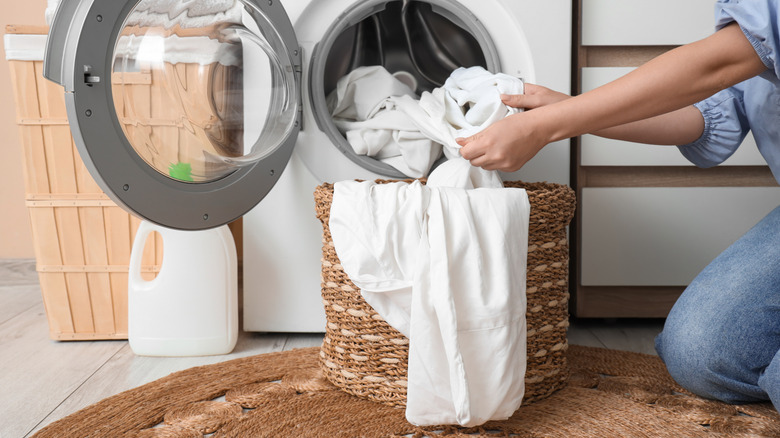
Replacing fabric softener with vinegar is pretty simple. First, make sure you're using distilled white vinegar, rather than apple cider or wine vinegar, which may stain your laundry. If your machine has a fabric softener dispenser, pour 1/2 cup of vinegar into it. If your machine doesn't have a separate dispenser, start a load and wait until it has reached the final rinse cycle. Then, pause the machine, open the lid, and pour the vinegar directly into the drum.
Vinegar also acts as a substitute for detergent, meaning you can skip adding detergent to the wash cycle, too. You should avoid using vinegar and detergent together since the former can disrupt the pH of the latter and make it less effective at lifting dirt off clothing, potentially even leading to more build-up. Another thing you don't want to add when using vinegar is bleach, even if you're washing white sheets. When vinegar and bleach mix, they produce chlorine gas, which can cause respiratory problems and eye irritation. Vinegar on its own should be sufficient for making your whites whiter, anyway.
Once the washing machine has finished its cycle, take the sheets out. Dry them in the dryer or hang them on a drying rack (however you usually dry your bed linen). Removing the sheets immediately keeps mold and mildew from forming. If you use a dryer, toss a crumbled up piece of aluminum foil in with the sheets to keep static electricity away. However, hanging your sheets to dry will eliminate static electricity without the need for crumbled foil.