

Skip Wood Mulch: Use A Cheaper Material That's Already In Your Yard
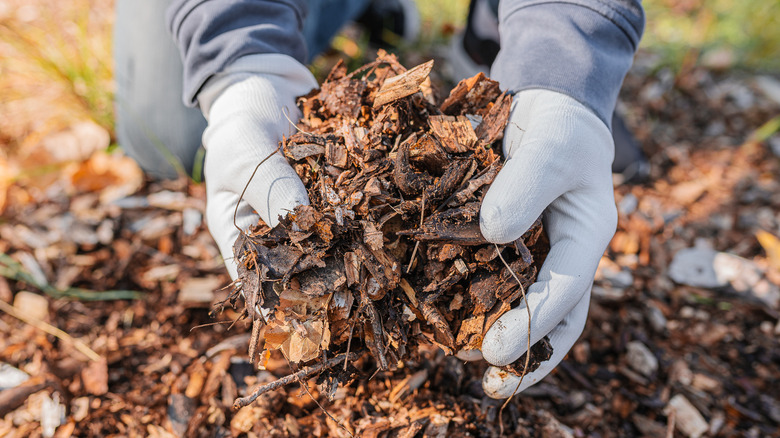
Mulch is one of the most beneficial things you can use to improve the health of your garden. This smart addition to flowerpots and garden beds holds in water, regulates the temperature of the soil, keeps weeds at bay, and acts as a frontline defense against erosion caused by the wind and rain. Organic mulch even adds nutrients to the soil as it decomposes over time.
Wood mulch is probably the first thing that comes to mind when thinking about mulching the garden, and it does have a ton of benefits. It isn't, however, the best choice in all situations. For one, wood mulch is expensive. And given that it decomposes, it will need to be replaced again and again. Dyed wood mulch can also contain synthetic dyes, heavy metals, and preservatives. The good news? There is a much cheaper alternative that you probably already have sitting in your backyard.
Leaf litter is a great alternative to wood mulch. Made up of shredded bits of dried leaves, leaf mulch has many of the same benefits as wood mulch, without some of the downsides. It suppresses weeds, protects and insulates the soil, and decomposes into compost, which adds nutrients and organic matter to the soil. Better yet, you can find it for free in your own backyard. If you don't have any trees of your own, try asking friends and neighbors if they have bags of leaves in the fall. Many will be happy to have you take them off their hands. Just make sure you don't use leaves from diseased trees or those treated with herbicides, as you may end up doing more harm than good.
How to use leaf litter in your garden
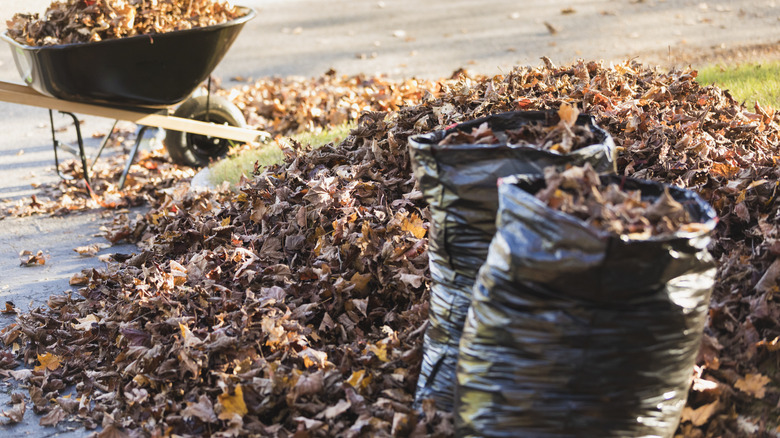
Leaf mulch is simple to create and apply. The first step to using leaf litter in your garden is to gather leaves. There is even a handy tool called a leaf vacuum that makes the job a breeze. This is best done during the fall when deciduous trees are already dropping their leaves. Diseased leaves can often be visually identified. In general, you should play it safe and avoid leaves that are covered in spots and blemishes or look particularly tattered coming off the tree. Once you have gathered leaves, it's time to shred them to prep them for your garden beds.
Shredding leaves is simpler than it sounds. A dedicated leaf shredder is great if you have one, but if you don't, fear not! You won't be stuck ripping up leaves by hand. The best tool for shredding leaves (if you don't have that leaf shredder) is your trusty lawnmower. Just toss the leaves on the ground and run the mower over them. What it leaves behind (pun intended) will be perfectly shredded, pure gardening gold.
From there, applying your freshly mulched leaves is easy. In garden beds, leaf mulch should be just a few inches deep. After spreading, make sure to water the area to keep your leaves from immediately blowing away. There are, of course, some downsides to using fallen leaves as mulch. Because leaves tend to form a mat that's denser than wood mulch, you will need to be careful about putting down more than a few inches. Too many leaves can block airflow and hold in moisture a bit too well. This can cause root rot and other diseases.